


The United Kingdom’s natural resources combine historic offshore oil and gas basins in the North Sea with a rapid expansion into world-leading offshore wind and marine energy. The nation holds 147 km³ of internal renewable freshwater reserves, significant industrial mineral deposits, and 77 million tonnes of coal reserves—though coal-fired electricity was completely phased out in 2024. What are the primary natural resources of the United Kingdom, and how is the UK navigating its post-fossil transition?
The United Kingdom is an island nation whose history and industrial development have been fundamentally shaped by its natural resources. From the coal seams and iron ores that powered the Industrial Revolution to the offshore hydrocarbon riches of the North Sea, Britain’s geological wealth has driven centuries of economic transformation. Today, within the broader context of Europe’s natural resources, the UK is spearheading a second energy revolution centered on offshore wind, marine currents, and grid decarbonization.
Table de contenidos
While mature oil and gas fields are undergoing natural structural depletion, Britain possesses abundant freshwater rivers, expanding forest cover, substantial industrial minerals (such as limestone, china clay, and potash), and some of the world’s most productive offshore wind basins. To benchmark how the UK’s natural capital compares globally, see our international directory on natural resources by country.
Where does the United Kingdom rank globally in oil production, coal reserves, and freshwater capacity? How does it protect its terrestrial wildlife and marine protected zones? The sections below evaluate Britain’s natural resources through official 2026 data and verified scientific benchmarks.
Natural Resources
Natural resources are matter or energy flows provided by the Earth that humanity extracts or harnesses to fulfill physical needs, drive industry, and maintain human well-being, as analyzed in our comprehensive guide to the types of natural resources.
- Renewable resources: replenished naturally through ongoing biogeochemical cycles or continuous solar, meteorological, and hydrological flows faster than the rate of consumption. Examples include offshore wind, solar power, tidal flows, freshwater, and timber (see renewable vs non-renewable resources).
- Non-renewable resources: finite geological reserves created over millions of years that do not regenerate within human lifetimes and deplete permanently through extraction. Examples include petroleum, natural gas, coal, and industrial minerals.
Examples of the Main Natural Resources of the United Kingdom
United Kingdom in Numbers: Threatened Biodiversity and Protected Land
At-risk species, habitat protection, and forest dynamics from official data.
| Threatened species | 128 mammals, birds, fish, and plants2022 |
|---|---|
| Protected terrestrial area | 28.4% of land area2025 |
| Marine protected areas | 46.8% of marine waters2025 |
| Forest cover | 13.3% of land area2023 |
| Annual change in forest area | +85 km² per year (2018–2023) |
| Total land area | 241,930 km²2023 |
Oil and Gas Resources in the United Kingdom
In 2021, crude oil production in the United Kingdom reached 810,531 barrels per day, positioning the country 11th globally in crude extraction. Concentrated primarily across the UK Continental Shelf (UKCS) in the North Sea and west of Shetland, offshore oil and natural gas have anchored domestic energy security and maritime engineering expertise for decades.
Examples of Mineral Resources in the United Kingdom
The UK retains significant proven coal reserves, recorded at 77 million tonnes in 2016. In addition to historic coal basins, the UK extracts essential non-metallic and construction mineral resources, including industrial limestone, china clay (kaolin) in Cornwall and Devon, silica sand, gypsum, halite (rock salt), and polyhalite potash from the Woodsmith mine in North Yorkshire.
Water Resources of the United Kingdom
In 2020, the United Kingdom possessed internal renewable freshwater reserves of 147 km³, ranking 49th globally according to FAO AQUASTAT. This water resource base supports dense urban populations, extensive agricultural irrigation in the south and east, and industrial cooling.
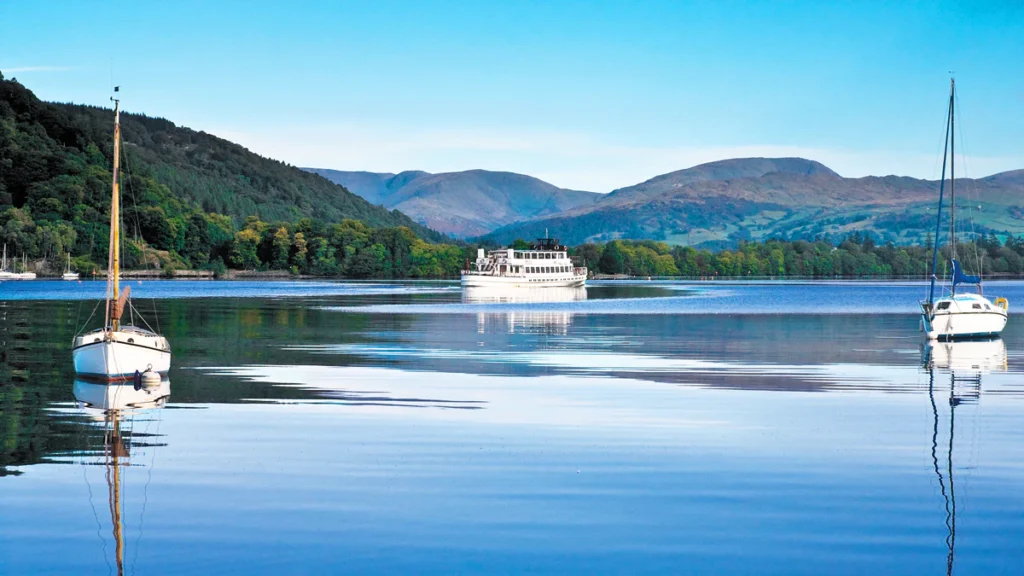
Major river systems include the River Severn (the longest in the UK), the River Thames flowing through London, the Trent, the Great Ouse, and the Spey and Tay in Scotland. In addition, the UK features major lake bodies such as Lough Neagh in Northern Ireland, Loch Ness and Loch Lomond in Scotland, and Lake Windermere in England.
Average Precipitation and Soils of the United Kingdom
The United Kingdom receives an average annual precipitation of 1,220 mm, ranking 61st globally. Oceanic westerly air masses create pronounced regional variation: western uplands in the Scottish Highlands, the Lake District, and Snowdonia receive over 2,000 mm to 3,000 mm annually, feeding peatlands and reservoirs, while eastern lowlands receive under 600 mm, where nutrient-rich brown earths and fen soils support productive cereal and vegetable farming.
Renewable Electricity Generation and Hydropower in the United Kingdom
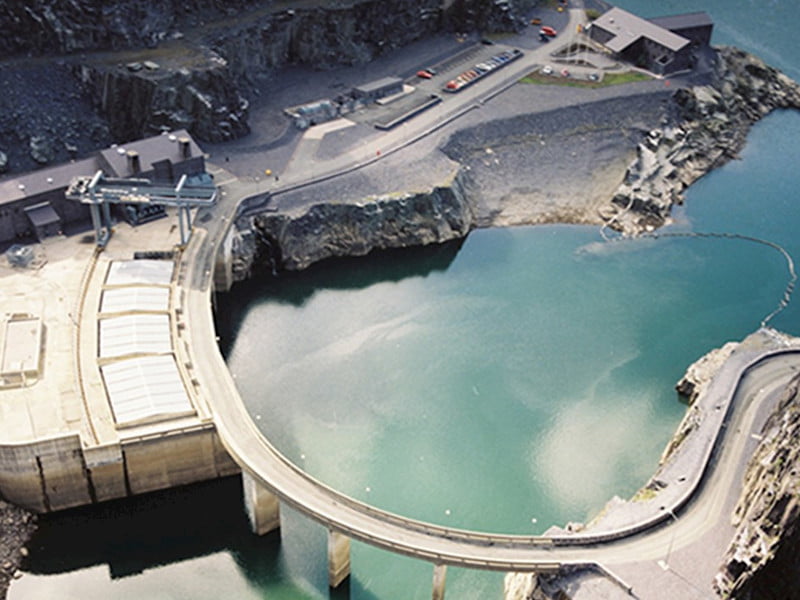
The United Kingdom is a global pioneer in clean energy resources, with total annual generation surpassing 332,800 GWh. While run-of-river hydro is modest, Britain utilizes strategic pumped-storage hydroelectric facilities—exemplified by the 1,728 MW Dinorwig Power Station in Snowdonia, Wales, and Cruachan in Scotland—to provide rapid grid balancing for its vast offshore wind network.
Forest Resources of the United Kingdom
Forests cover 13.19% of the UK’s land area, representing 31,900 km² according to World Bank indicators. While low compared to the European average (roughly 38%), active afforestation programs are expanding woodland cover annually.
The UK’s forest resources comprise ancient semi-natural broadleaf woodlands (pedunculate oak, sessile oak, beech, birch, and ash) alongside commercial conifer plantations (principally Sitka spruce) managed for structural timber and carbon sequestration.
Environmental Performance and Natural Resource Protection in the United Kingdom
The United Kingdom ranks among the global vanguard in environmental stewardship, achieving an overall score of 72.6 and 5th position globally in the Environmental Performance Index (EPI 2024, Yale University). Terrestrial protected areas cover 28.4% of land, while designated Marine Protected Areas (MPAs) span 46.8% of British territorial waters.
National Parks of the United Kingdom: The Protected Wealth of Natural Resources
Biodiversity: Animal and Plant Resources of the United Kingdom
Birds of the United Kingdom
The United Kingdom records 266 regularly breeding and resident bird species, ranking 138th globally. Because of its expansive coastlines and islands, Britain hosts globally significant seabird breeding colonies, including Atlantic puffins, northern gannets, and Manx shearwaters.
The European robin (Erithacus rubecula) is widely recognized as the nation’s favorite bird, while iconic raptors like the red kite and white-tailed eagle have been successfully reintroduced across upland reserves.
Fish and Amphibians of the United Kingdom
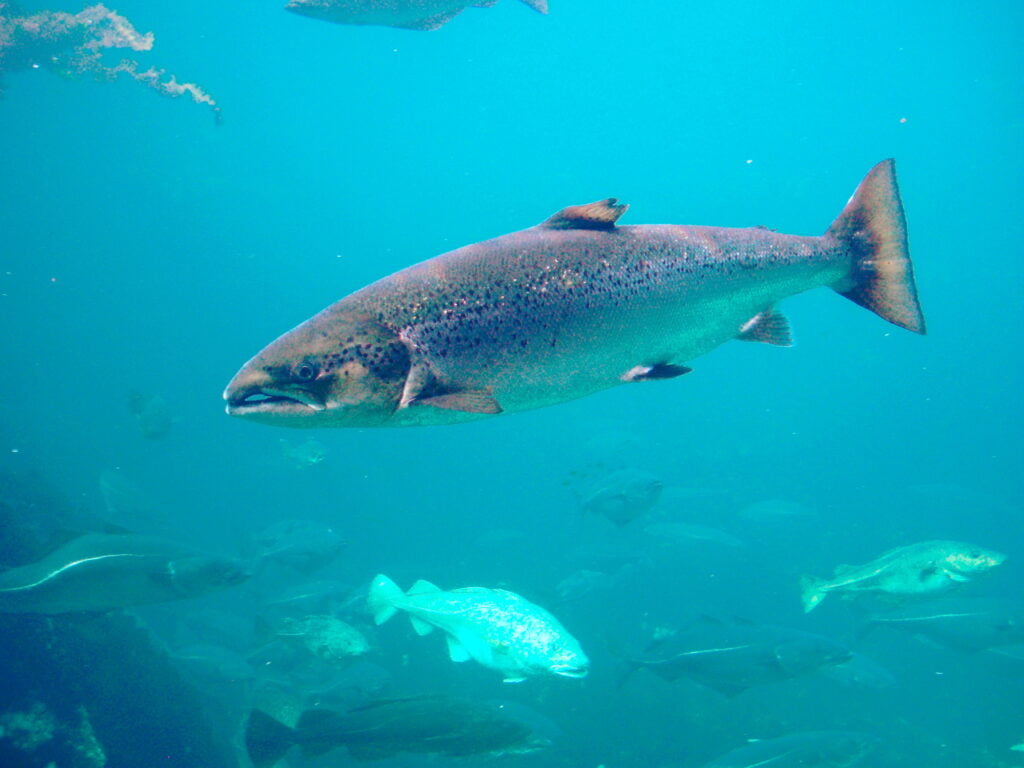
The UK sustains 15 native amphibian species, including the protected great crested newt (Triturus cristatus), the common toad, and the natterjack toad. In freshwater rivers and marine waters, over 300 fish species are recorded, with Atlantic salmon (Salmo salar), brown trout (Salmo trutta), cod, haddock, and mackerel sustaining recreational and commercial fisheries.
Reptiles of the United Kingdom
The UK is home to 5 native reptile species, ranking 138th globally. These include the adder (Vipera berus)—the UK’s only venomous snake—alongside the harmless grass snake, smooth snake, common lizard, and slow worm (a legless lizard).
Organizations Protecting or Researching Natural Resources in the United Kingdom
- RSPB (Royal Society for the Protection of Birds) – Protects wild birds, conserves critical coastal and upland habitats, and operates extensive nature reserves.
- Woodland Trust – The UK’s largest woodland conservation charity, dedicated to planting native trees and protecting ancient woodlands.
- The Wildlife Trusts – Grassroots movement of 46 local wildlife trusts restoring land, rivers, and living landscapes across the UK.
- National Trust – Protects historic countryside, coastal land, and nature reserves across England, Wales, and Northern Ireland.
- Marine Conservation Society – Champions clean seas, sustainable seafood sourcing, and marine protected area enforcement.
- Friends of the Earth – Environmental campaigning organization advocating for clean energy, biodiversity preservation, and climate action.
- NatureScot – Scotland’s public nature agency advising on natural heritage, biodiversity restoration, and national parks.
Offshore Wind Power and the Evolving Electricity Matrix
In 2024, wind energy generated a record 29.2% of total UK electricity, with offshore wind arrays in the North Sea and Irish Sea serving as the primary drivers. For the first time in modern British history, renewable sources surpassed half of all electricity generation, contributing 50.8% of the power mix (DESNZ (DUKES), 2024). When combined with civil nuclear generation, low-carbon sources delivered 64.7% of the national electricity matrix.
North Sea Oil and Gas: Structural Basin Decline
Hydrocarbon extraction from the UK Continental Shelf continues its long-term natural descent. Total basin output stood at approximately 1.09 million barrels of oil equivalent per day (boepd) in 2024, down substantially from its historical peak of 4.4 million boepd achieved around the year 2000 (NSTA, 2025). Crude oil output hovers around 630,000 bpd and is projected to decline further as fields deplete (EIA, 2024).
Declining Emissions and the Historic End of Coal Power
UK greenhouse gas emissions fell by 3.6% in 2024 to 371 MtCO2e—the lowest level recorded since 1872 (Carbon Brief, 2024). In September 2024, the Ratcliffe-on-Soar power station shut down permanently, making the United Kingdom the first G7 economy to completely end coal-fired electricity generation and closing a 142-year chapter that began in London in 1882.
Environmental Performance and Terrestrial Habitat Restoration
The UK earned 72.6 points in the 2024 Environmental Performance Index (Yale EPI, 2024), placing 5th in the world among 180 assessed nations. The country scores exceptionally high in power sector decarbonization and drinking water sanitation, though nature recovery initiatives focus on reversing historic depletion of biodiversity in agricultural landscapes.
Frequently Asked Questions
How much electricity does the UK generate from wind power?
Wind power contributed 29.2% of total UK electricity generation in 2024, establishing a new national record, with the vast majority generated by large-scale offshore wind farms in the North Sea (DESNZ (DUKES), 2024).
Does the UK still produce oil in the North Sea?
Yes, but output is in structural decline: the basin produced approximately 1.09 million barrels of oil equivalent per day in 2024, compared to its peak of 4.4 million boepd around 2000 (NSTA, 2025).
Sources and References Used
- List of Countries by Mineral Production – Wikipedia
- Economic Data by Country – The Global Economy
- Forest Area (km²) – World Bank
- Forest Area (% of Land Area) – World Bank
- Crude Oil Reserves by Country – The Global Economy
- AQUASTAT Water and Agriculture Statistics – FAO
- Average Annual Precipitation (mm) – World Bank
- Yale Center for Environmental Law & Policy — Environmental Performance Index 2024
- Bird Species by Country – Mongabay
- Amphibian Species by Country – Mongabay
- Reptile Species by Country – Mongabay
The UK Department for Energy Security and Net Zero (DESNZ) reported that renewable electricity generated more than 50% of the nation’s power in 2024, driven by rapid expansion in offshore wind farms in the North Sea.
Last updated: August 19, 2026 (Review of official indicators and natural resource technical factsheet)

Leave a Reply