


Iraq’s natural resources are anchored by colossal petroleum wealth, ranking 5th in the world with proven reserves of 145 billion barrels (EIA 2024 / OPEC) and producing 4.4 million barrels per day as OPEC’s second-largest producer. Hydrocarbons generate 88% of state revenue and over 90% of merchandise exports, supplemented by natural gas, sulfur, and large phosphate reserves in Akashat. Geographically, Iraq is sustained by the historic Tigris and Euphrates rivers and the Mesopotamian Marshes, providing 89.86 km³ of freshwater reserves, although over 50% originates outside national borders. What natural resources define Iraq?
Iraq occupies the historic Mesopotamian basin between the Tigris and Euphrates rivers in western Asia. Geographically positioned at the geographic heart of the Middle East, its territory spans fertile alluvial floodplains, rugged northern Zagros mountains, and vast western deserts.
Table de contenidos
Petroleum is overwhelmingly the most valuable non-renewable natural resource in Iraq. However, the nation’s resource matrix also encompasses substantial natural gas deposits, sulfur, phosphate, fertile sedimentary soils, and freshwater ecosystems that birthed the earliest agricultural civilizations. To understand Iraq’s position within regional energy networks, explore our guide to Asia natural resources.
What are the primary natural resources of Iraq? What minerals lie beneath its surface, how does the country rank among global energy producers, and how do transboundary river dynamics govern its ecological future?
Natural Resources
Natural resources are materials or energy sources provided by Earth that are utilized by humans. Every manufactured product originated from natural resources.
- Renewable resources: resources that regenerate naturally faster than the rate of consumption. Examples include solar radiation, wind currents, hydroelectric water flows, and living biodiversity.
- Non-renewable resources: finite geological assets that, once extracted, cannot be replenished on human timescales. Examples include crude oil, natural gas, metals, and industrial minerals.
Key Natural Resources of Iraq
Iraq: Key Environmental Indicators
A numerical overview of territorial status and biological assets.
| Forest cover | 1.9 % of land area2023 |
|---|---|
| Forest area | 8,250 km²2023 |
| Annual forest area change | stable (2018–2023) |
| Protected land area | 1.5 % of territory2025 |
| Threatened species | 79 mammals, birds, fish and plants2022 |
| Renewable freshwater per capita | 799 m³ per year2022 |
Petroleum and Natural Gas Reserves in Iraq
Crude oil is the driving engine of Iraq’s economy. According to official figures from the OPEC Annual Statistical Bulletin (2024) and the U.S. Energy Information Administration (EIA, 2024), Iraq holds approximately 145 billion barrels of proven crude oil reserves—ranking 5th globally and representing roughly 8.5% of the world’s total oil endowment.
Iraq pumped an average of 4.4 million barrels per day in 2024, maintaining its position as OPEC’s second-largest crude producer behind Saudi Arabia. Production is concentrated in southern super-giant oilfields near Basra, including Rumaila (one of the largest oilfields on Earth), West Qurna, Zubair, and Majnoon, alongside the historic northern Kirkuk basin.
In natural gas, Iraq holds estimated proven reserves of roughly 131 trillion cubic feet (ranking 12th globally), the majority of which is associated gas produced alongside crude oil. While historically substantial volumes of associated gas were flared due to lack of midstream processing, major infrastructure projects—including the Gas Growth Integrated Project (GGIP) with TotalEnergies and the Basrah Gas Company (BGC)—are actively capturing flared gas to generate domestic electricity and reduce import dependency.
Strategic Mineral Resources
Beyond hydrocarbons, Iraq possesses significant non-fuel mineral resources that remain partially undeveloped:
- Sedimentary Phosphate: The Akashat deposit in the western Anbar province contains an estimated 1.7 billion tonnes of phosphate, part of Iraq’s roughly 10 billion tonnes of indicated phosphate resources, making Iraq the holder of roughly 3% of global phosphate resources.
- Native Sulfur: The Mishraq deposit south of Mosul holds one of the largest continuous sulfur reserves in the world, extracted for agricultural and chemical manufacturing.
- Metallic Minerals: Sedimentary and igneous formations in the northern Kurdistan region host unexploited veins of iron ore, zinc, lead, and barite.
Water Resources: The Tigris, the Euphrates and Transboundary Dependency
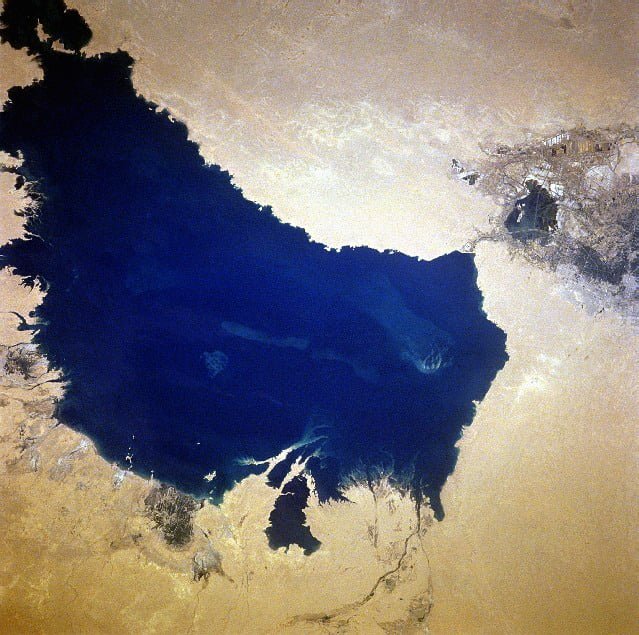
Iraq possesses approximately 89.86 km³ of total natural renewable freshwater resources (ranking 68th worldwide according to FAO AQUASTAT, 2020 data). Unlike many of its arid desert neighbors, Iraq is blessed with a twin-river system: the Tigris River (1,850 km) and the Euphrates River (2,800 km), which converge in southern Iraq at Qurna to form the Shatt al-Arab discharging into the Persian Gulf.
However, Iraq faces an acute transboundary vulnerability: more than 50% of its renewable water resources originate outside national borders (FAO AQUASTAT). Headwaters for both rivers lie in Turkey, with major Tigris tributaries entering from Iran. Upstream damming (such as Turkey’s Southeastern Anatolia Project, GAP) combined with recurring climatic droughts has reduced river inflows into Iraq by more than 40% over the past four decades, causing severe water deficits and marine saltwater intrusion into agricultural lands in Basra.
Precipitation, Salinity and Agricultural Soils
Iraq’s average annual precipitation is 216 mm (ranking 144th globally), varying from over 1,000 mm in northern Zagros peaks to less than 100 mm in southern plains. The lower Mesopotamian plain consists of deep alluvial silt deposited over millennia. However, centuries of intensive furrow irrigation combined with poor drainage have caused acute soil salinization, leaving roughly three-quarters of irrigated land affected by some degree of salinity.
Hydroelectric Infrastructure and Power Generation
In 2024, Iraq generated 149.7 TWh of electricity, of which only 2.4 TWh (about 1.6%) was renewable, and hydropower supplied 2.0 TWh (Ember). The premier facility is the Mosul Dam on the Tigris River, featuring an installed capacity of 1,050 MW and storing up to 11 billion m³ of water, supported by the Haditha Dam on the Euphrates (660 MW), Dukan Dam, and Darbandikhan Dam in the Kurdistan Region.

Forest Resources of Iraq
Iraq possesses approximately 8,250 km² of forested area, representing 1.90% of its land surface according to World Bank and FAO 2023 data (World Bank). Natural forests are almost exclusively confined to the moist northern and northeastern Zagros mountains in Iraqi Kurdistan, featuring oak woodlands (Quercus brantii and Quercus infectoria), wild pistachio, and riverine willow corridors.
Environmental Performance and Protected Areas
In the 2024 Environmental Performance Index (Yale EPI), Iraq achieved a score of 30.3, ranking 172nd out of 180 countries (Yale EPI, 2024). Protected areas currently encompass only 1.5% of total terrestrial area. The most ecologically vital conservation area is the Mesopotamian Marshes (Ahwar of Southern Iraq), inscribed as a UNESCO World Heritage site in 2016 for its unique biodiversity and cultural heritage.
National Parks and Nature Reserves of Iraq
Biodiversity: Animal and Plant Life of Iraq
Avian Diversity and Wetland Sanctuaries
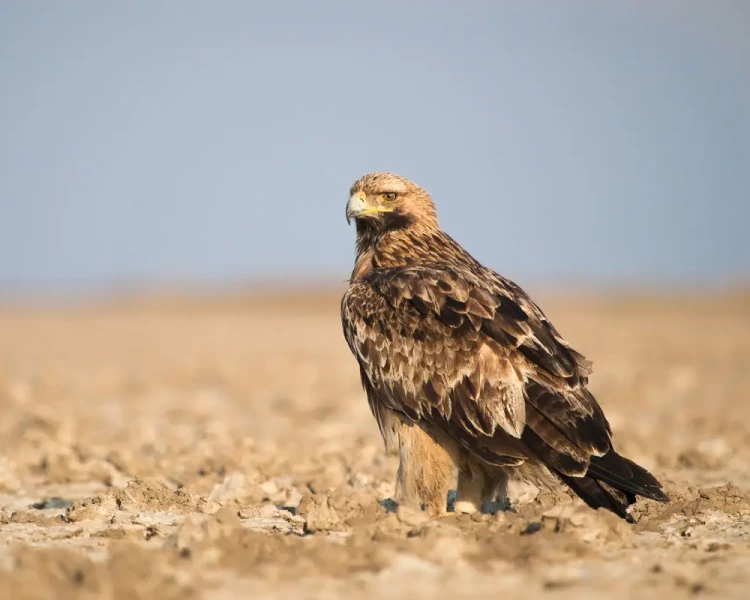
Iraq harbors 421 recorded bird species (BirdLife International, 2026). The Mesopotamian Marshes (Hawizeh, Central, and Hammar marshes) represent the primary freshwater wetland ecosystem in western Eurasia, serving as a critical flyway junction for migratory waterfowl. However, 20 bird species face global conservation threats. Flagship species include the vulnerable Eastern imperial eagle (Aquila heliaca), the endangered Basra reed warbler (Acrocephalus griseldis), the Iraq babbler (Argya altirostris), and marbled teal.
Fish Fauna
Iraq’s river systems host 317 recorded fish species (ranking 151st globally). The Tigris-Euphrates basin supports iconic cyprinid species that underpin domestic fisheries, notably the bunnei (Mesopotamichthys sharpeyi), mangar (Luciobarbus esocinus), and the shabbout (Arabibarbus grypus). Approximately 19 fish species are threatened by water diversion, salinity spikes, and invasive species.
Mammals of Iraq
According to the IUCN Red List (2024), Iraq hosts 15 threatened mammal species. Wetland mammals include the endemic Maxwell’s smooth-coated otter (Lutrogale perspicillata maxwelli), while desert plateaus support the Arabian sand gazelle (reem) and striped hyena.
Reptiles
Iraq is home to 116 recorded reptile species (ranking 66th globally). Prominent native reptiles include the Mesopotamian spiny-tailed lizard (Saara loricata) and the endangered Euphrates softshell turtle (Rafetus euphraticus), whose breeding sandbanks have been altered by river flow alterations.
Organizations Protecting Natural Resources in Iraq
- Nature Iraq: Premier Iraqi conservation NGO accredited by BirdLife International and IUCN, dedicated to biodiversity monitoring and marshland restoration.
- Ministry of Environment of Iraq: State regulatory ministry overseeing national environmental protection laws and climate change adaptation.
- Ministry of Water Resources of Iraq: Government authority directing irrigation infrastructure, dams, and international river water negotiations.
- Wetlands International (Iraq Marshes): Global conservation agency supporting the ecological rehabilitation of the Mesopotamian Ahwar marshes.
- UNEP Iraq: United Nations Environment Programme office supporting sustainable land management, dust storm mitigation, and ecological governance.
- FAO Iraq: Food and Agriculture Organization mission strengthening agricultural water efficiency and modern irrigation systems.
Petro-Dependence and Economic Vulnerability
Petroleum forms the backbone of the Iraqi state, generating 88% of government revenue, 91% of merchandise exports, and 53% of real GDP in 2025 (World Bank, 2025). This extreme fiscal concentration exposes public finances to volatile global oil cycles, emphasizing the necessity of investing energy revenues into renewable water networks, sustainable agriculture, and non-fossil industry.
Frequently Asked Questions
How much crude oil does Iraq hold in reserves? Iraq possesses 145 billion barrels of proven crude oil reserves, ranking 5th in the world behind Venezuela, Saudi Arabia, Iran, and Canada (EIA, 2024 / OPEC).
Where does Iraq get its freshwater? Iraq relies primarily on the Tigris and Euphrates river systems; however, more than 50% of its renewable water resources originates outside national borders in Turkey and Iran (FAO AQUASTAT).
Authoritative Information Sources
- Iraq Country Analysis and Petroleum Data – U.S. Energy Information Administration (EIA)
- OPEC Annual Statistical Bulletin: Iraq Statistics – Organization of the Petroleum Exporting Countries
- AQUASTAT Basin Survey: Euphrates and Tigris – Food and Agriculture Organization (FAO)
- Iraq Economic Monitor and Natural Resource Metrics – World Bank
- Environmental Performance Index 2024: Iraq – Yale Center for Environmental Law & Policy
- Avian Checklist and Conservation Indicators: Iraq – BirdLife International
To explore more about regional resources, consult our comprehensive guide to Asia natural resources or view our full international guide in the natural resources by country directory.
Last updated: September 26, 2026
Leave a Reply