

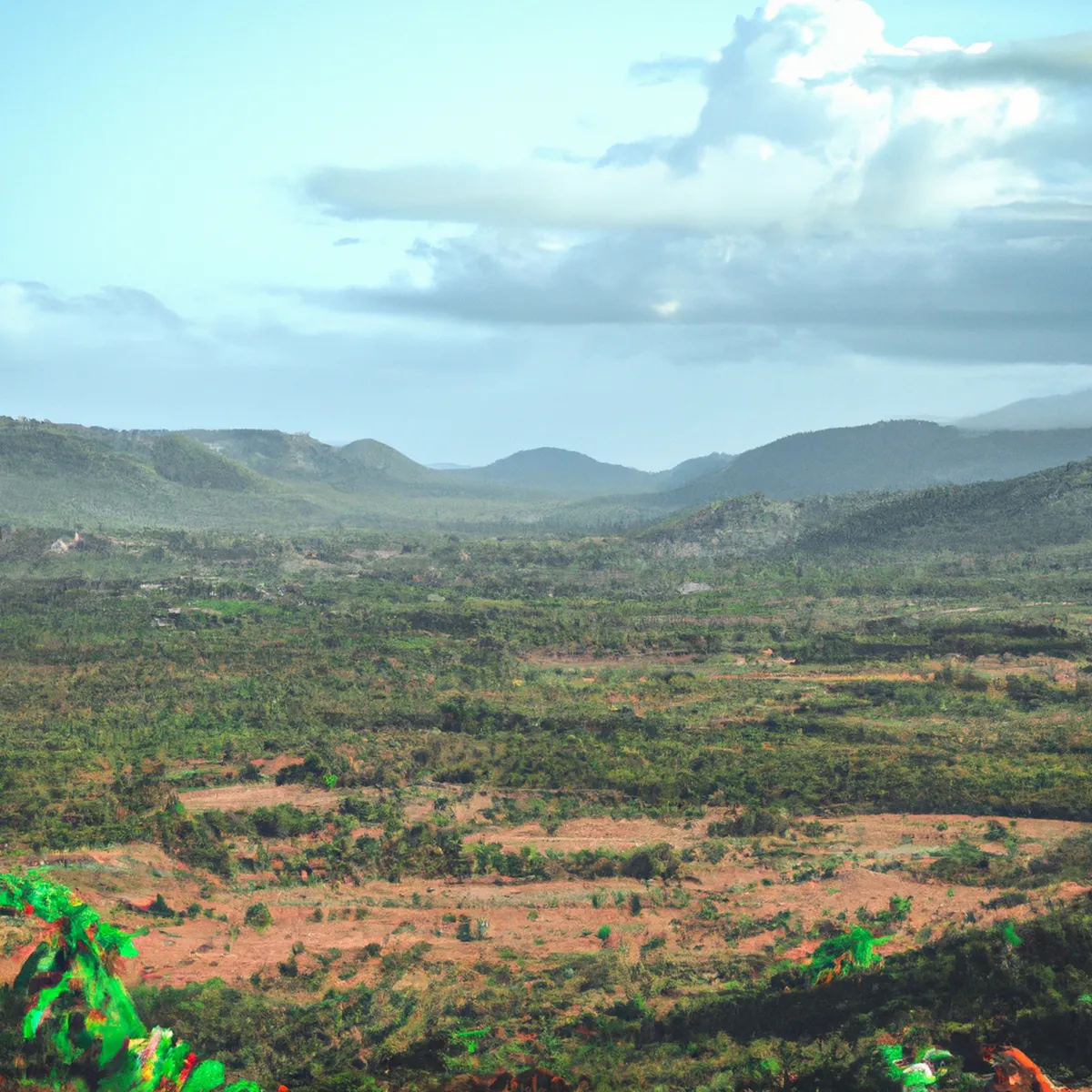
The natural resources of the Dominican Republic are led by extensive forests, freshwater reserves, and world-class mineral deposits: forest cover spans 44.99% of its territory (21,684 km²), renewable freshwater reaches 21 km³ (FAO), and the Pueblo Viejo mine holds over 25 million ounces of gold reserves alongside major ferronickel extraction. What are the key natural resources of the Dominican Republic?
The Dominican Republic is a Caribbean nation endowed with a wide variety of natural resources. From its white-sand coastal shorelines to its cloud-forest-capped mountain peaks in the Cordillera Central, the country displays remarkable ecological diversity.
Table de contenidos
Furthermore, the country holds significant metallic mineral wealth, centered on gold and nickel, alongside emerging solar, wind, and hydroelectric energy infrastructure.
What is the natural wealth of the Dominican Republic? What mineral resources does it hold, and how does it compare internationally? How abundant are its freshwater reserves, and what animal and plant species inhabit the country?
Natural Resources
Natural resources are physical materials and energy sources provided by the Earth that are useful and necessary for human society. All manufactured products originate from natural resource foundations.
- Renewable resources: resources that naturally regenerate through biogeochemical cycles faster than they are consumed, such as solar radiation, wind, hydroelectric water flows, and agricultural crops.
- Non-renewable resources: finite geological assets that cannot regenerate on human timescales, including metallic minerals (gold, ferronickel, bauxite) and fossil fuels. Explore our detailed guide comparing renewable vs. non-renewable resources.
Examples of the Main Natural Resources of the Dominican Republic
Environmental Balance of the Dominican Republic
What international indicators show about the nation’s environmental protection and resource sustainability.
| Protected terrestrial area | 26.3% of territory2025 |
|---|---|
| Marine protected areas | 13.3% of territorial waters2025 |
| Forest cover | 45.0% of territory2023 |
| Threatened species | 160 mammals, birds, fish and plants2022 |
| Electricity from renewable sources | 17.1% of total generation2021 |
| Total land area | 48,198 km²2023 |
Natural Resources Map of the Dominican Republic by Region
Regional distribution of the country’s primary economic activities and natural assets.
| Resource | Reserves / Production | Source |
|---|---|---|
| Freshwater | 21 km³; 107th globally | FAO |
| Mean precipitation | 1,410 mm/year | World Bank |
| Forest cover | 44.99% of territory (21,684 km²); 2023 | World Bank 2023 |
| Threatened species | 160 species (2022) | World Bank 2022 |
| Electricity production | 19,414 GWh (1,519 GWh hydropower) | EIA |
Water Resources of the Dominican Republic
The Dominican Republic possesses renewable freshwater reserves of approximately 21 km³, placing it 107th in the global ranking according to FAO AQUASTAT. For a broader comparative analysis, read our guide on global water resources.
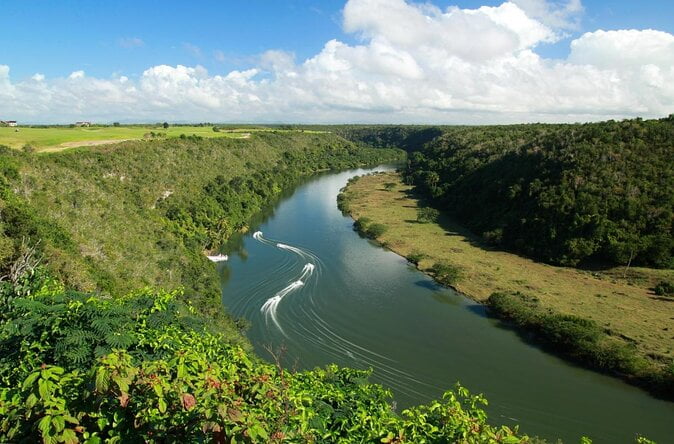
The country’s river basins originate primarily in the Cordillera Central, including the Yaque del Norte (the longest river in the country at 296 km) and the Yaque del Sur, as well as the Yuna River. Lake Enriquillo, a hypersaline endorheic lake located 44 meters below sea level, constitutes the largest body of water in the Caribbean.
Average Rainfall and Soils of the Dominican Republic
The Dominican Republic experiences an average annual precipitation of 1,410 mm, ranking 56th globally according to the World Bank. Rainfall distribution varies significantly: the northeastern Samaná peninsula receives over 2,200 mm annually, while the arid southwestern Hoya de Enriquillo receives under 600 mm.
This precipitation pattern creates a diverse edaphic mosaic: fertile, deep alluvial soils in the Cibao Valley support intense cacao, coffee, rice, and tobacco cultivation, while coastal plains host extensive sugarcane plantations.
Renewable Electricity and Hydropower Production in the Dominican Republic
According to EIA statistics, the Dominican Republic generates 19,414 GWh of total electricity annually, of which 1,519 GWh is supplied by hydroelectric plants. The primary hydroelectric installation is the Tavera-Bao Complex in Santiago Province, with an installed capacity of 220 MW. Discover more about sustainable power in our guide to energy resources.
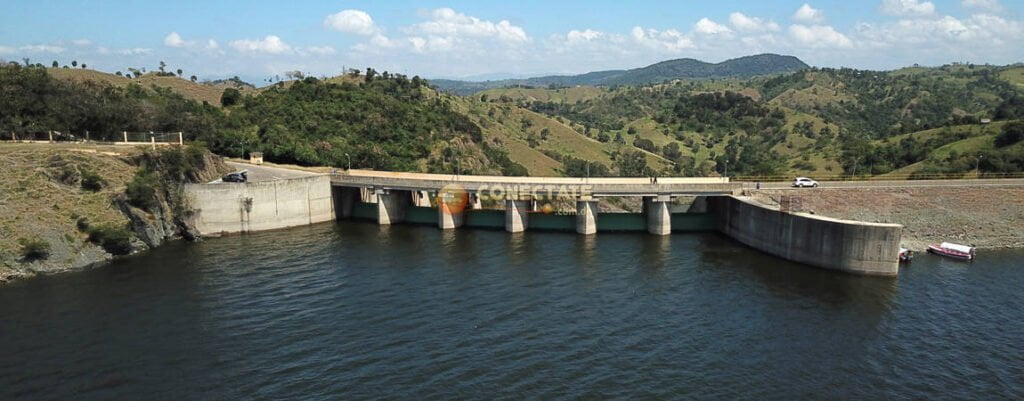
This multipurpose dam represents one of the nation’s key clean energy assets, displacing fossil fuel imports and reducing carbon dioxide emissions while supplying irrigation to thousands of farming hectares.
Forest Resources of the Dominican Republic
The Dominican Republic boasts substantial forest capital, having reversed historical deforestation through proactive reforestation and protected area policies. According to the World Bank, in 2023 forest cover represented 44.99% of national land area, equivalent to 21,684 km² (over 2.16 million hectares), ranking 77th globally. Explore our detailed guide on forest resources.
Forest ecosystems range from sea-level coastal mangroves and dry subtropical forests to moist montane broadleaf forests and native Hispaniolan pine (Pinus occidentalis) stands in the Cordillera Central.
Environmental Performance and Protection of Natural Resources in the Dominican Republic
In the 2024 Environmental Performance Index (EPI) developed by Yale University, the Dominican Republic obtained a score of 42.2, positioning it in 111th place globally. Terrestrial and marine protected areas together cover approximately 23.9% of the country’s sovereign space (World Bank, 2025), preserving vital ecological corridors.
Natural Parks of the Dominican Republic: The Hidden Wealth of Natural Resources
Biodiversity: Animal and Plant Resources of the Dominican Republic
Birds of the Dominican Republic
The Dominican Republic hosts more than 300 bird species, with 32 species strictly endemic to the island of Hispaniola. Highlights include the national bird, the Palmchat (Dulus dominicus, the sole member of its family), the Hispaniolan Trogon (Priotelus roseigaster), the Hispaniolan Emerald humming bird, and the Ridgway’s Hawk (Buteo ridgwayi, critically endangered).

Fish and Amphibians of the Dominican Republic
Freshwater and estuarine ecosystems host diverse ichthyofauna alongside 48 species of amphibians—nearly all belonging to the genus Eleutherodactylus (rain frogs) and displaying near 100% island endemism. In coastal waters, coral reef habitats shelter parrotfish, snappers, groupers, and seasonal populations of migrating humpback whales in Samaná Bay.
Mammals of the Dominican Republic
Due to island biogeography, native terrestrial mammals are few but scientifically extraordinary. The two surviving native non-volant terrestrial mammals of Hispaniola are the Hispaniolan Solenodon (Solenodon paradoxus)—one of the few venomous mammals on Earth—and the Hispaniolan Hutia (Plagiodontia aedium). Both represent ancient lineages under critical threat from habitat fragmentation and invasive predators.

Reptiles of the Dominican Republic
The country shelters over 140 reptile species with approximately 83% endemism, including the American Crocodile (Crocodylus acutus) population in Lake Enriquillo, the Rhinoceros Iguana (Cyclura cornuta), Ricord’s Iguana (Cyclura ricordii), and dozens of species of Anolis lizards.
The Pueblo Viejo mine is the largest mining project in the Dominican Republic and one of the largest gold operations in Latin America, holding proved and probable reserves exceeding 25 million ounces (USGS, 2013). It is jointly operated by Barrick (60%) and Newmont (40%), with an extended productive life projected beyond 2040 (Barrick, 2025).
Gold and Nickel: The Mines Defining the Subsoil
Pueblo Viejo, located 100 km northwest of Santo Domingo in Sánchez Ramírez Province, reported proven and probable reserves of roughly 800,000 kg of gold, 5 million kg of silver, and 257,000 tonnes of copper, yielding over 35,000 kg of annual gold output during peak operation (USGS, 2013). Barrick has implemented major plant and tailings expansions to convert resources into lasting reserves (Barrick, 2025). Strategic nickel extraction centers on the Falcondo facility in Bonao, featuring a processing capacity of 29,000 tonnes per year of nickel contained in ferronickel. Explore our guide on mineral resources.
Mineral Exports: Supplying Global Commodity Markets
Prior to full gold scale-up, the Dominican Republic exported 33,900 tonnes of ferronickel valued at US$290 million annually (USGS, 2013), positioning the country as the 13th largest nickel producer globally. The commissioning of commercial gold bullion exports from Pueblo Viejo in 2012 permanently transformed the Dominican trade balance, elevating gold to the nation’s leading export commodity by value.
Insular Biodiversity: Species of Hispaniola
The IUCN Red List classifies 63 Dominican animal species as Endangered or Critically Endangered, reflecting the acute vulnerability of Hispaniola’s insular evolutionary fauna (IUCN Red List, 2025). Strict habitat protection remains essential to prevent extinctions among endemic amphibians, reptiles, and specialized mammals.
Protected Areas: Territorial Conservation Network
The Dominican Republic maintains 141 officially gazetted protected areas, according to Protected Planet, 2025. These reserves encompass approximately 26.3% of the terrestrial territory in 2025 (World Bank, 2025), safeguarding key watershed headwaters and the country’s extensive ecotourism assets.
Organizations Protecting or Studying the Natural Resources of the Dominican Republic
- Ministerio de Medio Ambiente y Recursos Naturales: National governing ministry responsible for environmental protection, natural resources, and protected area regulation.
- Jardín Botánico Nacional Dr. Rafael M. Moscoso: Premier scientific botanical institution conducting research, herbarium cataloging, and conservation of native flora.
- Grupo Jaragua: Conservation NGO dedicated to preserving biodiversity and protected landscapes in the Jaragua-Bahoruco-Enriquillo Biosphere Reserve.
- Consorcio Ambiental Dominicano (CAD): Collaborative institutional network advancing community-based forestry and watershed management.
- Fundación Propagas: Private foundation funding environmental education, cloud forest preservation, and endemic fauna conservation initiatives.
Frequently Asked Questions
What is the primary mineral resource of the Dominican Republic? Gold from the Pueblo Viejo mine in Sánchez Ramírez province, representing the largest mining project in the country with reserves exceeding 25 million ounces (USGS, 2013), operated in a joint venture by Barrick and Newmont (Barrick, 2025).
What proportion of Dominican territory is environmentally protected? Approximately 26.3% of the terrestrial land surface is under formal protection (World Bank, 2025), distributed across 141 national parks, wildlife refuges, and natural monuments (Protected Planet, 2025).
Authoritative Information Sources Used
- Wikipedia: Lists of Countries by Mineral Production
- The Global Economy: Economic Data by Country
- World Bank: Forest Area (sq. km) – Dominican Republic
- World Bank: Forest Area (% of Land Area) – Dominican Republic
- World Bank: Agricultural Land Area (sq. km) – Dominican Republic
- Worldometer: Global Coal Reserves by Country
- FAO AQUASTAT: Global Information System on Water and Agriculture
- World Bank: Average Precipitation in Depth (mm per year)
- Yale University: Environmental Performance Index (EPI 2024)
- Our World in Data: Endemic Bird Species by Country
- Our World in Data: Endemic Mammal Species by Country
According to the Central Bank of the Dominican Republic, the extractive mining sector contributed roughly 3% of national GDP in 2023, primarily anchored by gold, ferronickel, and silver exports. Discover more regional context in our overview of Latin America’s natural resources.
Last updated: June 13, 2026. Data verified against official environmental and economic records.

Leave a Reply