


Finland’s natural resources are concentrated in its forests, which cover 73.72% of the territory, and in minerals such as iron, copper and nickel. Timber tops the list, and the country ranks fourth in the world in the 2024 Environmental Performance Index, with 73.8 points. Which of Finland’s natural resources are the most valuable?
Finland is a country in the Nordic region of Europe, surrounded by seas, forests and lakes. Its climate is cold, with long, snowy winters.
Contents
Finland’s natural resources are varied and abundant, notably its extensive forests, which cover more than 70% of the territory. It also has significant mineral reserves, such as iron, copper and nickel.
It also has wide biodiversity, with emblematic animal and plant species such as the brown bear and the birch.
What are Finland’s natural resources? What natural wealth does it have? Which minerals does it have, and how does it rank? How much water and energy does it have? How is its land used, and how is its biodiversity protected?
Natural resources
Natural resources are materials or energy sources provided by or found on Earth that are useful to humans. Every product we manufacture is made up of natural resources.
- Renewable resources: these can be restored by natural processes faster than the rate at which they are consumed. Examples include solar radiation, wind, hydroelectric power, water when used properly, and plant and animal life.
- Non-renewable resources: once extracted, these are depleted and cannot regenerate. Examples include hydrocarbons, metals and minerals.
Examples of Finland’s main natural resources
Finland in figures: threatened biodiversity
Species at risk and protected areas, with the latest available data.
| Threatened species | 23 mammals, birds, fish and plants2022 |
|---|---|
| Protected land area | 13.9% of land area2025 |
| Marine protected areas | 11.8% of its waters2025 |
| Forest cover | 73.7% of land area2023 |
| Annual change in forest area | stable (2018–2023) |
| Land area | 303,960 km²2023 |
Gas resources in Finland
Finland does not produce natural gas of its own; the natural gas it consumes is imported.
Examples of Finland’s mineral resources
Finland produced 1,243 kilograms of platinum in 2022, according to the world platinum production list (Wikipedia), and the Kevitsa mine in Lapland is the country’s main producer.
Water resources of Finland
Finland has 110 km³ of renewable freshwater resources, which placed it 59th in the world ranking of water reserves in 2020. This Nordic country is known for its many lakes and rivers, the most notable being the Tornio and Kemijoki rivers and Lake Saimaa, the largest in the country.
Average rainfall and soils of Finland
Finland has an average annual rainfall of 536 mm, which places it 121st in the world. Finnish soils are predominantly acidic and poor in nutrients, which makes it difficult for certain plants and crops to grow.
Peatlands and marshes are also important ecosystems in the country.
Renewable electricity and hydropower production in Finland
Finland is committed to renewable energy: in 2025 it generated 46.5 TWh of electricity from renewable sources — 56% of its total generation of 82.3 TWh — and hydropower alone supplied 12.4 TWh (Ember, 2025). The Imatra hydroelectric plant, with 192 MW, is the country’s largest.
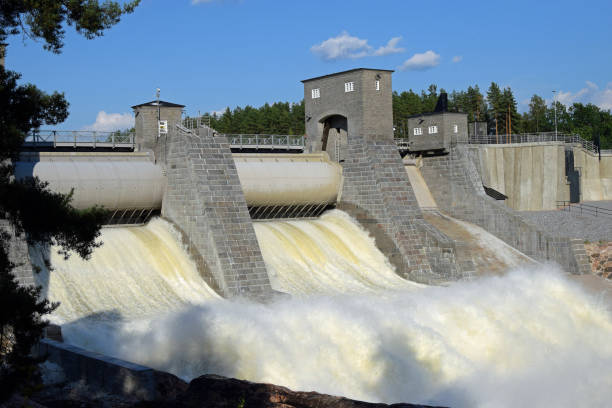
Finland is a benchmark in the use of clean, sustainable energy sources.
Forest resources of Finland
Finland is known as one of the world’s leading forest regions, with a forest area of 224,090 km², which represents 73.72% of its land area (World Bank, 2023). This natural resource is used to produce paper, timber and other forest products.
Finland also ranks 23rd in the world for forest area.
Environmental performance and protection of Finland’s natural resources
Finland is a country that values and protects its natural resources. In the Environmental Performance Index (EPI 2024), Finland scored 73.8 and ranked fourth. One of the reasons for its success is its commitment to terrestrial and marine protected areas, which make up 13.08% of its total territorial area.
Natural parks of Finland: the hidden wealth of natural resources
Biodiversity: animal and plant resources of Finland
Birds of Finland
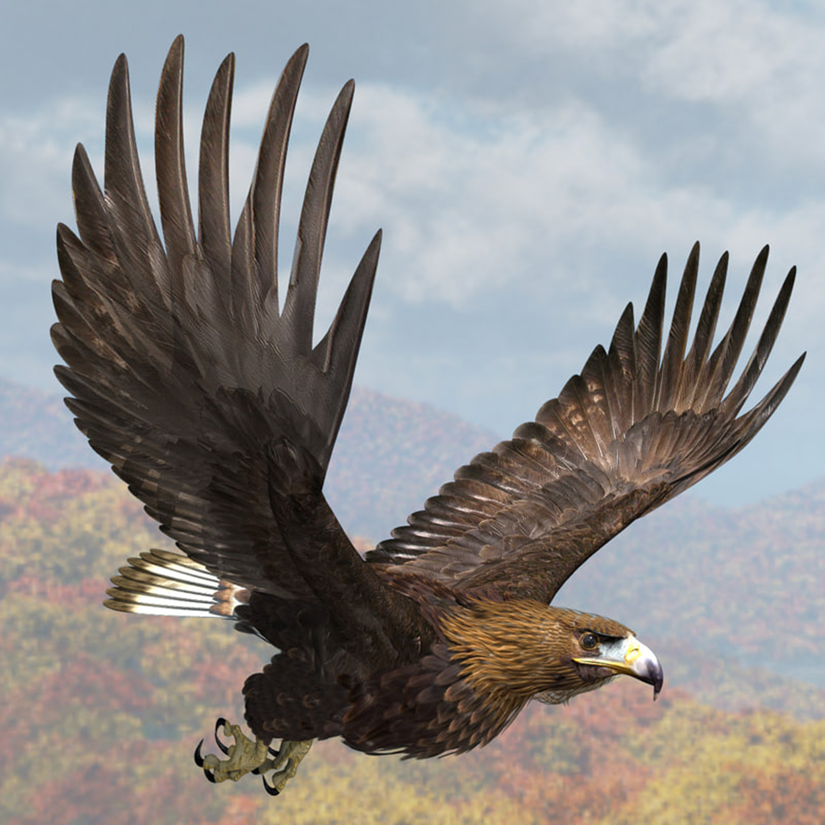
Finland has a great diversity of birds, with a total of 424 species.
However, 11 of these species are endangered, so it is essential to protect and conserve this valuable natural resource.
Fish and amphibians of Finland
Finland has a diversity of amphibian and fish species; its main amphibian is the common frog and its main fish is the Atlantic salmon. Its number of amphibian species is relatively low, at 6, and it ranks 91st in the world.
Its total number of fish species, meanwhile, is 112, and it ranks 192nd in the world.
Reptiles of Finland
Finland has a total of 6 reptile species, placing it 137th in the world for number of reptile species. It is not a country with great reptile diversity.
A notable species is the common European adder (Vipera berus), which is protected in Finland.
Plants of Finland
Finland has a great diversity of vascular plants, with a total of 1,300 species recorded in 2020, placing it 99th in the world. The silver birch stands out: it is abundant in Finnish forests and is considered a national symbol.
Organizations that protect or study Finland’s natural resources
- Metsähallitus – Protects and manages Finland’s forests and wildlife.
- WWF Finland – Works to protect biodiversity and reduce the ecological footprint in Finland.
- Finnish Environment Institute (SYKE) – Conducts research and provides information on the Finnish environment.
- BalticSea2020 – Works to protect the Baltic Sea and its natural resources.
- Greenpeace Finland – Campaigns for environmental protection and the promotion of renewable energy in Finland.
- Luontolive – Offers live streams of Finnish wildlife and promotes environmental awareness.
- Finnish Ministry of the Environment – Responsible for environmental policy and environmental protection in Finland.
Finland is the most forested country in the European Union: forests cover about 74% of its territory, according to the World Bank, 2022. That forest cover, together with a mineral deposit unique in the bloc and an almost fossil-free electricity mix, defines its natural resource profile.
The most forested country in the EU
Forests covered 73.7% of Finland’s land area in 2022, the highest share in the European Union. The Finnish Forest Industries Federation confirms that more than 75% of the country is covered by boreal forest, the basis of its timber, pulp and paper industry. Sources: World Bank, 2022 and Metsäteollisuus, 2023.
Kemi: the EU’s only chromium deposit
The Kemi mine, operated by Outokumpu, is the only active chromium mine in the entire European Union. It extracts about 2.4 million tonnes of chromite ore a year and supplies European stainless steel production. Sources: Outokumpu, 2024 and Kemi, the EU’s only chromium mine (Outokumpu, mine operator, 2026).
Almost fossil-free electricity
In 2024, 95% of the electricity produced in Finland came from fossil-free sources: nuclear, wind, hydro and solar. Nuclear power covered 38% of demand, and wind overtook hydro for the first time, with 19.9 TWh. Source: Statistics Finland, 2025.
A global environmental benchmark
Finland ranked 4th in the world, with 73.8 points, in Yale University’s Environmental Performance Index. It stands out for environmental health and climate change mitigation. Source: Yale EPI, 2024.
Frequently asked questions
What is Finland’s main natural resource? Forests: they cover 73.7% of the territory, the highest share in the European Union, and support the timber, pulp and paper industry, according to the World Bank, 2022.
Does Finland produce strategic minerals? Yes. The Kemi mine is the only active chromium deposit in the European Union and produces about 2.4 million tonnes of chromite a year, according to Outokumpu, 2024.
Sources used
- Forest area (km²) – World Bank
- Forest area (% of land area) – World Bank
- Arable land area (km²) – World Bank
- Water and agriculture statistics – FAO
- Precipitation (mm) – World Bank
- Environmental Performance Index – Environmental Performance Index
- Bird species – Mongabay
- Amphibian species by country – Mongabay
- Plant species – Mongabay
- Reptile species by country – Mongabay
- Endemic bird species by country – Our World in Data
The Natural Resources Institute Finland (Luke) reported in 2023 that forests cover more than 75% of the country’s territory, with forest biomass volume growing steadily.
Last updated: September 26, 2026

Leave a Reply