


Chad’s natural resources include oil, with production of 144,000 barrels a day in 2024, as well as gold, uranium, titanium and bauxite. What are Chad’s most important natural resources? The country has 41.7 km³ of renewable freshwater resources, rivers such as the Chari and the Logone, and forests covering 3.43% of its territory.
Chad, a Central African nation, is rich in natural resources. The country is home to a variety of ecosystems, from savanna to desert, which support rich biodiversity.
Contents
Chad also has significant deposits of oil, gas and uranium. Agriculture is another important source of income, thanks to crops such as cotton, sorghum and peanuts.
Despite Chad’s natural resources, poverty and political instability are persistent and limit its sustainable development.
What are Chad’s main natural resources? What is the country’s natural wealth like? Which minerals are found there, and how does it rank globally? How diverse are Chad’s animals and plants?
Natural resources
Natural resources are materials or energy sources provided by or found on Earth that are useful to humans. Every product we manufacture is made up of natural resources.
- Renewable resources: these can be restored by natural processes faster than the rate at which they are consumed. Examples include solar radiation, wind, hydroelectric power, water when used properly, and plant and animal life.
- Non-renewable resources: once extracted, these are depleted and cannot regenerate. Examples include hydrocarbons, metals and minerals.
Examples of Chad’s main natural resources
Chad in data: water and energy
Freshwater availability and the share of renewables in electricity generation.
| Renewable freshwater per capita | 813 m³ per year2022 |
|---|---|
| Electricity from renewable sources | 4.6% of total generation2021 |
| Forest cover | 3.2% of land area2023 |
| Protected land area | 21.0% of land area2025 |
| Land area | 1,259,200 km²2023 |
| Threatened species | 44 mammals, birds, fish and plants2022 |
Oil resources in Chad
Chad has significant oil production, which reached 144,000 barrels per day in 2024 and places it among the leading oil producers in Central Africa. Its oil reserves were also estimated at 1,500,000,000 barrels for 2022, placing it 38th in the world for oil reserves.
It is worth highlighting that Chad is a country with important natural resources: the country also has gold deposits in several parts of its territory, including some that are mined in the southwest. There are also other minerals such as uranium, titanium and bauxite.
Water resources of Chad
Chad has 41.7 km³ of renewable freshwater resources, which placed it 88th in the world ranking of water reserves in 2020. This African country is home to two major rivers, the Chari and the Logone, which are vital for agriculture and fishing in the region.
Lake Chad is also the country’s largest body of water and is shared with neighboring Cameroon, Niger and Nigeria. Despite these water sources, Chad faces challenges in managing and distributing drinking water, which affects its population and economy.
Average rainfall and soils of Chad
Chad has an average annual rainfall of 322 mm, placing it 135th in the world for this indicator.
Forest resources of Chad
Chad has forest area covering 3.43% of its territory, equivalent to 43,130 km². Although this is not a large amount, it is an important resource for the country.
Most of the country’s woodland lies in the southern Sudanian savanna belt, in regions such as Moyen-Chari and Logone Oriental. Globally, Chad ranks 68th for forest area.
Environmental performance and protection of Chad’s natural resources
Chad is a country with a wealth of natural resources. In the Environmental Performance Index (2024), Chad scored 35.9 and ranked 153rd. Chad is landlocked, so all of its protected areas are on land; they cover 21% of its territory.
Natural parks of Chad: the hidden wealth of natural resources
Biodiversity: animal and plant resources of Chad
Birds of Chad
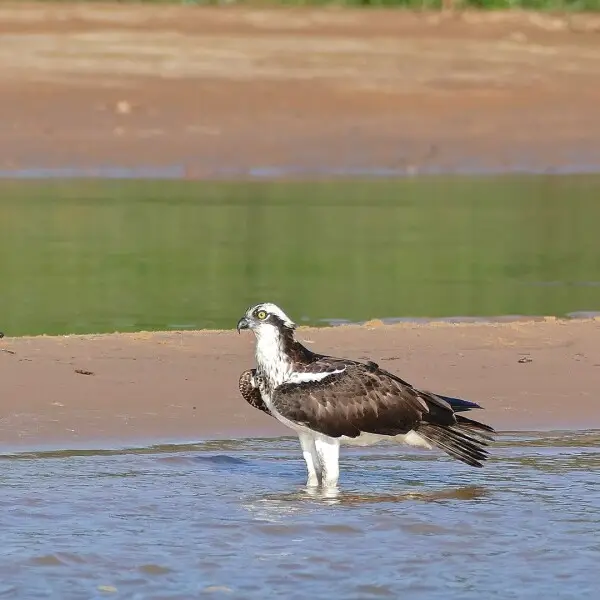
Chad has a rich diversity of birds, with a total of 524 species recorded in 2018, placing it 68th in the world for number of bird species. Although it had no endemic bird species in 2020, it is important to note that 16 of its bird species are endangered.
Among the most notable species is the osprey, a key species and an important resource for the country’s biodiversity.
Fish and amphibians of Chad
Chad has rich biodiversity and is home to 20 amphibian species and 138 fish species; its flagship fish is tilapia.
Globally, Chad ranks 77th for number of amphibian species and 183rd for number of fish species.
Mammals of Chad
Chad has a great diversity of mammal species, although unfortunately 16 of them are threatened. It has no endemic mammal species.
Reptiles of Chad
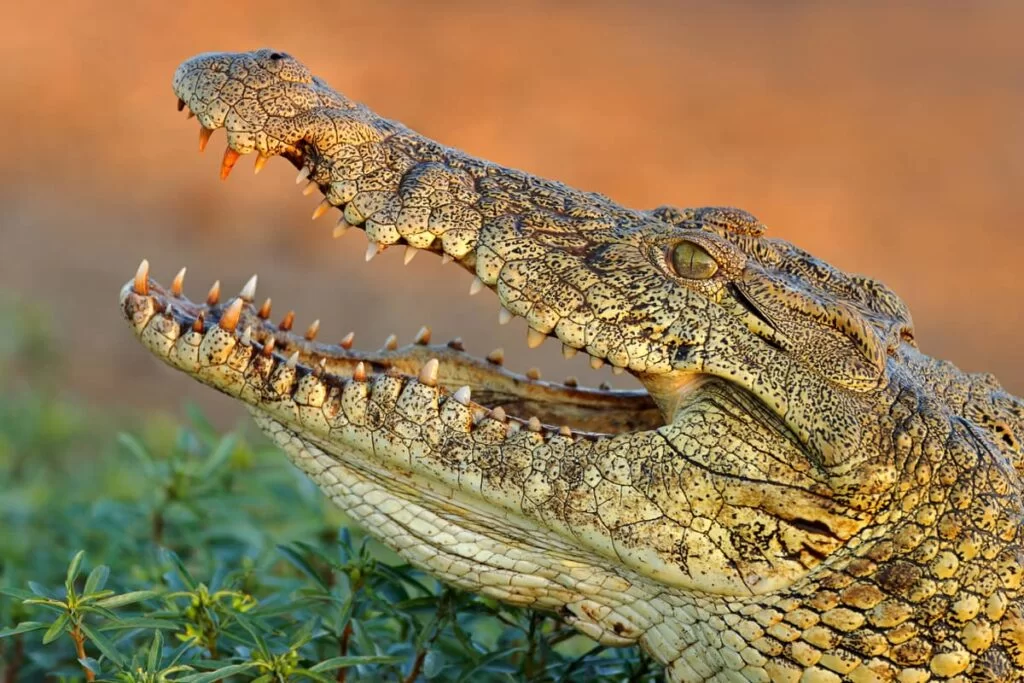
Chad has a rich diversity of reptiles, with a total of 91 species recorded in 2019, placing it 82nd in the world. This natural resource is very important for the country, and its flagship species is the Nile crocodile, which lives in the rivers and lakes of Chadian territory.
Organizations that protect or study Chad’s natural resources
- International Union for Conservation of Nature (IUCN) – Works to conserve biodiversity and natural resources in Chad.
- World Wide Fund for Nature (WWF) – Protects Chad’s wildlife and plants and promotes the sustainable use of natural resources.
- Food and Agriculture Organization of the United Nations (FAO) – Works on sustainable natural resource management and food security in Chad.
- Greenpeace – Campaigns against deforestation and pollution in Chad.
- Convention on Biological Diversity (CBD) – Promotes the conservation and sustainable use of biodiversity in Chad.
- United Nations Environment Programme (UNEP) – Works on sustainable natural resource management and environmental protection in Chad.
- African Development Bank (AfDB) – Finances sustainable development and environmental protection projects in Chad.
Lake Chad, which gives the country its name, has lost more than 90% of its surface area since the 1960s. It shrank from 22,772 km² in 1966 to an average of just 1,876 km² in 2013–2016; the source puts the contraction at about 95%. The causes combine prolonged droughts, overgrazing and the diversion of its rivers to irrigation projects (Wikipedia, Lake Chad, 2013–2016).
Oil, the backbone of the economy
Since 2003, crude oil has been Chad’s main source of foreign exchange. The sector accounts for about 15% of GDP, provides 41% of government revenue and makes up 76% of exports (World Bank, 2025). The Doba fields were discovered in 1985, and ExxonMobil operated them until their nationalization in 2023 (Wikipedia, Economy of Chad, 2003–2023).
Livestock and cotton, the pulse of the non-oil economy
Agriculture and livestock farming account for about 40% of GDP (World Bank, 2025). In 2018 the country had 107 million head of livestock, 29 million of them cattle. Much of this livestock is exported “on the hoof” to Cameroon and Nigeria, a traditional trade that in the 1960s and 1970s accounted for between 25% and 30% of merchandise exports. Cotton, grown on a large scale since 1929, totaled 120,000 tonnes in 2018 (Wikipedia, Agriculture in Chad, 2018).
Natron and subsoil minerals
Natron (sodium carbonate) has traditionally been extracted on the shores of Lake Chad, in the wadis of Kanem and near Faya-Largeau; in the late 1980s it was the only mineral mined in the country, and black natron was exported to Nigeria. The subsoil also holds gold-bearing quartz in the Biltine prefecture and deposits of uranium, tin and tungsten in the Aouzou Strip and the Tibesti Mountains, although a 1971 survey found no rich deposits (Wikipedia, Mining in Chad, 1980s).
Sources used
- Forest area (km²)
- Forest area (% of land area)
- Arable land area (km²)
- Water and agriculture statistics
- Precipitation (mm)
- Environmental Performance Index
- CO2 emissions (tonnes per capita)
- Bird species
- Amphibian species by country
- Mammal species
- Endemic mammal species
- Plant species
- Reptile species by country
- Endemic bird species by country
Last updated: September 26, 2026

Leave a Reply