

Colombia is one of the 17 megadiverse countries, which together are home to 70% of the world’s biodiversity, which makes it vital to protect the environment as the country develops economically. Its national parks system has 61 protected areas covering about 23.3 million hectares, including marine areas, and its Human Development Index reached 0.788 in 2023, according to UNDP. Is Colombia’s economic development sustainable?
In Colombia, as in many other countries, sustainable development is increasingly being discussed. Beyond the discussion, there are also many sustainable projects, programs and policies that aim to make economic development in the country more sustainable.
Contents
Colombia is a country of enormous biodiversity. In fact, it is one of the 17 megadiverse countries, which together are home to 70% of the world’s biodiversity, which makes protecting the environment vitally important during economic development.
More: Colombia’s main natural resources
The country’s economic growth up to the early 2010s brought great benefits to its people: poverty, violence and inequality fell, life expectancy rose, the quality of health care and education improved, and gross income per capita increased, among other gains. It also brought changes to the environment, including the following:
Sustainable development trends in Colombia
Per capita carbon dioxide emissions in Colombia and Latin America
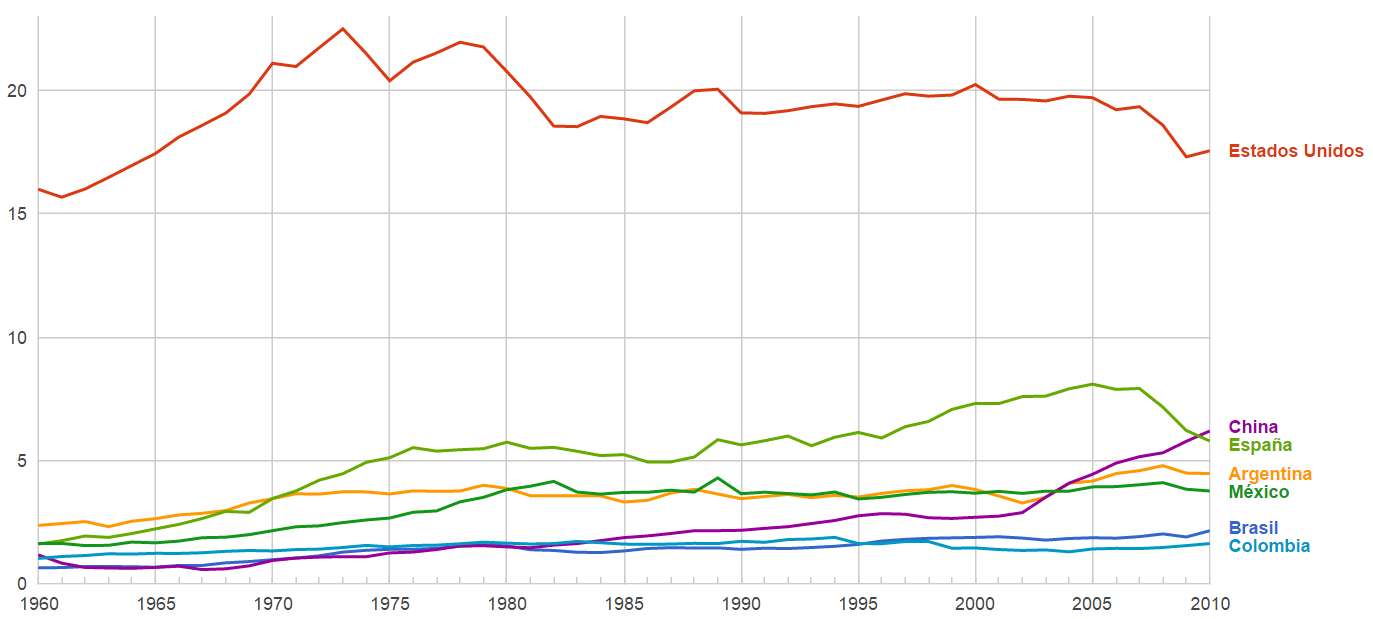 Between 1980 and 2008, per capita carbon dioxide emissions in Colombia fell slightly, from 1.7 to 1.5 metric tons per person, despite the economic development the country experienced; by 2024 they had risen again to about 1.8 metric tons per person.
Forest area of Colombia and other countries
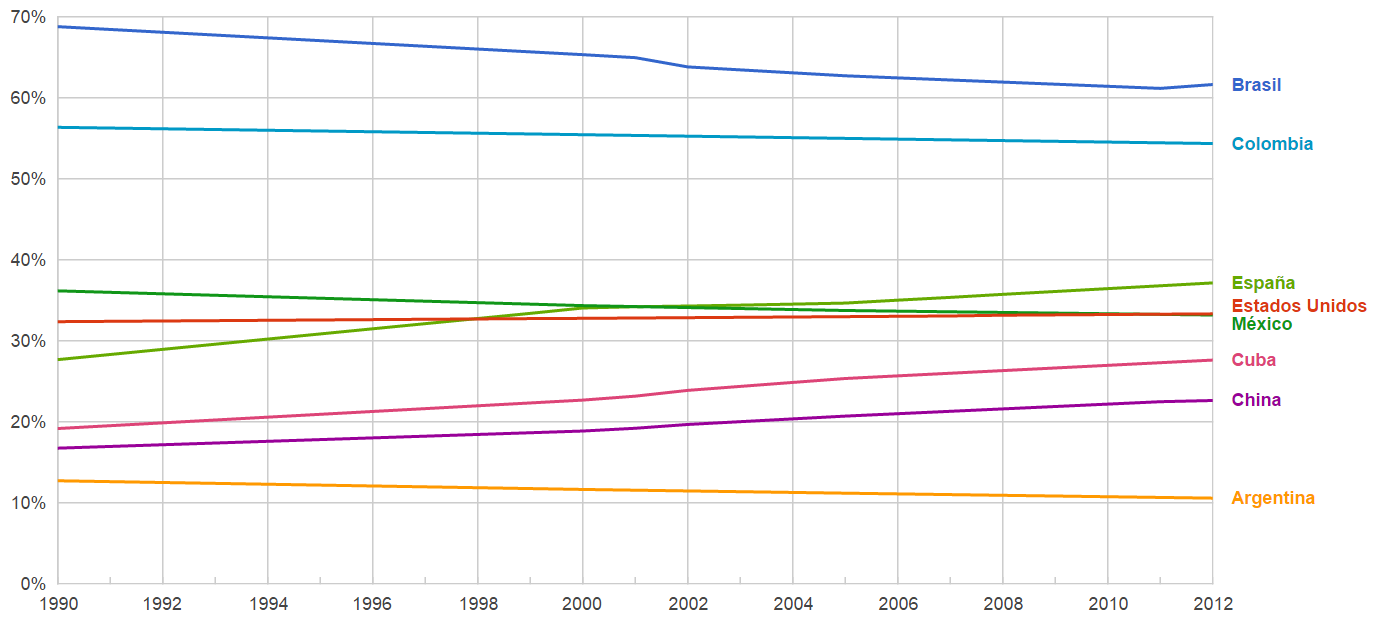
The country’s forest area has decreased slightly: in 1990, 56.3% of its land area was forest, and 20 years later it was 54.5%. Meanwhile, in some countries, such as Spain, Cuba and the United States, forest area has increased.
Purchasing power parity in Colombia and other countries
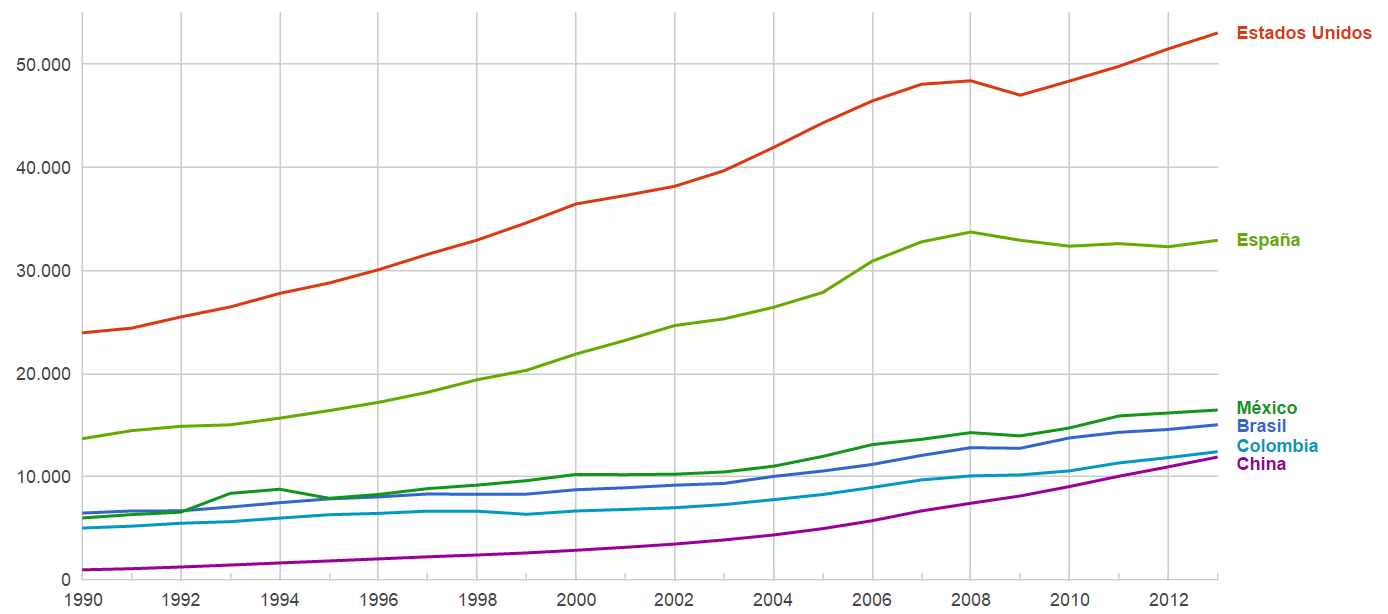
GDP per capita measured at purchasing power parity (PPP) increased significantly between 1990 and 2012, meaning that people’s average income grew, especially after 2002.
Human Development Index in Colombia and other countries
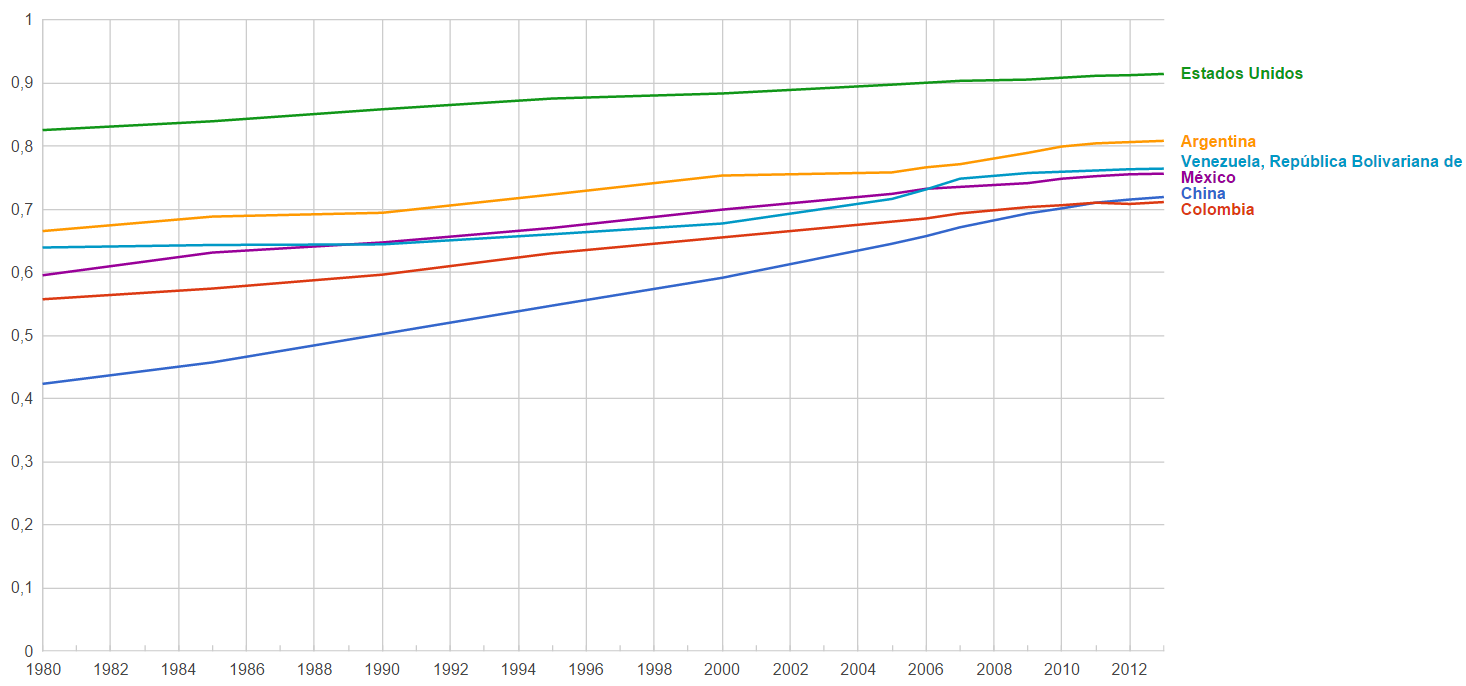
This index summarizes countries’ performance in improving quality of life, not just their economic performance. The country has made significant progress, going from a score of 0.56 in 1980 to 0.72 in 2012 in the UNDP data available at the time; the 2025 Human Development Report puts it at 0.788 for 2023. Even so, it still lags behind other countries.
Based on the selected indicators, which cover the period up to the early 2010s, Colombia’s economic development was generally sustainable. Although there is always room for improvement, economic growth had improved Colombians’ quality of life without greatly harming the environment.
Examples of sustainable development in Colombia
A great example of sustainable development in Colombia is the islands of Providencia and Santa Catalina, in the San Andrés and Providencia archipelago.
These islands are covered in extensive tropical forests and surrounded by coral reefs that are considered among the most important in the world. They also have an enormous diversity of flora and fauna and crystal-clear waters.
The islands are vulnerable to environmental degradation from improper land use, deforestation and pollution. Water is also scarce.
The islands’ development has been based mainly on creating tourism options, essentially ecotourism, and on other economic activities such as fishing. This development was transforming the island’s environment: some corals and patches of forest had been affected, but on the whole they remained well preserved.
Before Hurricane Iota struck the islands directly in November 2020, damaging or destroying an estimated 98–99% of the structures on Providencia, the island had managed to combine tourism and other economic activities with environmental conservation.
Natural parks of Colombia

One effective policy for achieving sustainable development in Colombia has been the creation of natural parks. The country had 57 protected areas in its national parks system in 2013, covering more than 12% of its land area; as of June 2026, the system had 61 protected areas covering about 23.3 million hectares, including marine areas.
They are vitally important for sustainable development because they are spaces for environmental conservation that host ecosystems of strategic importance to the country for the environmental and intangible goods and services they provide.
The parks also contribute to biodiversity conservation, food security and genetic diversity, while helping to make plant species less vulnerable to pests and diseases.
The parks conserve water resources of great importance to the country: around 75% of the country’s lagoons and marshes and 62% of its aquifers. They also supply the water needed for irrigation, industrial processes and daily life; some 30 million Colombians depend on the water they provide.
Another very important function of these conservation areas is climate regulation. Andean forests help regulate rainfall cycles, the Amazon rainforest pumps millions of tonnes of water into the water cycle, and the páramos (high Andean moorlands) are important cooling systems for the Earth.
On May 24, 2013, Corales de Profundidad National Natural Park was created as area number 57 of the Sistema de Parques Nacionales Naturales de Colombia (National Natural Parks System of Colombia), located in the marine zone of the Colombian Caribbean. Covering approximately 142,192.15 ha, it includes the slope where the continental shelf ends, home to deep-water coral communities classified as biodiversity “hotspots.”
Red de Desarrollo Sostenible en Colombia (Sustainable Development Network, RDS)
Charts of selected countries from Google Public Data.
More:
The 2030 SDGs in Colombia
Sustainable Development Goals
The UN Millennium Development Goals (2000–2015) in Colombia
National Parks of Colombia
Colombia’s Plan Nacional de Desarrollo 2022–2026 (National Development Plan), adopted by Law 2294 of 2023 for the 2022–2026 presidential term, placed a strong emphasis on the energy transition and biodiversity protection.
Last updated: September 26, 2026

Leave a Reply