

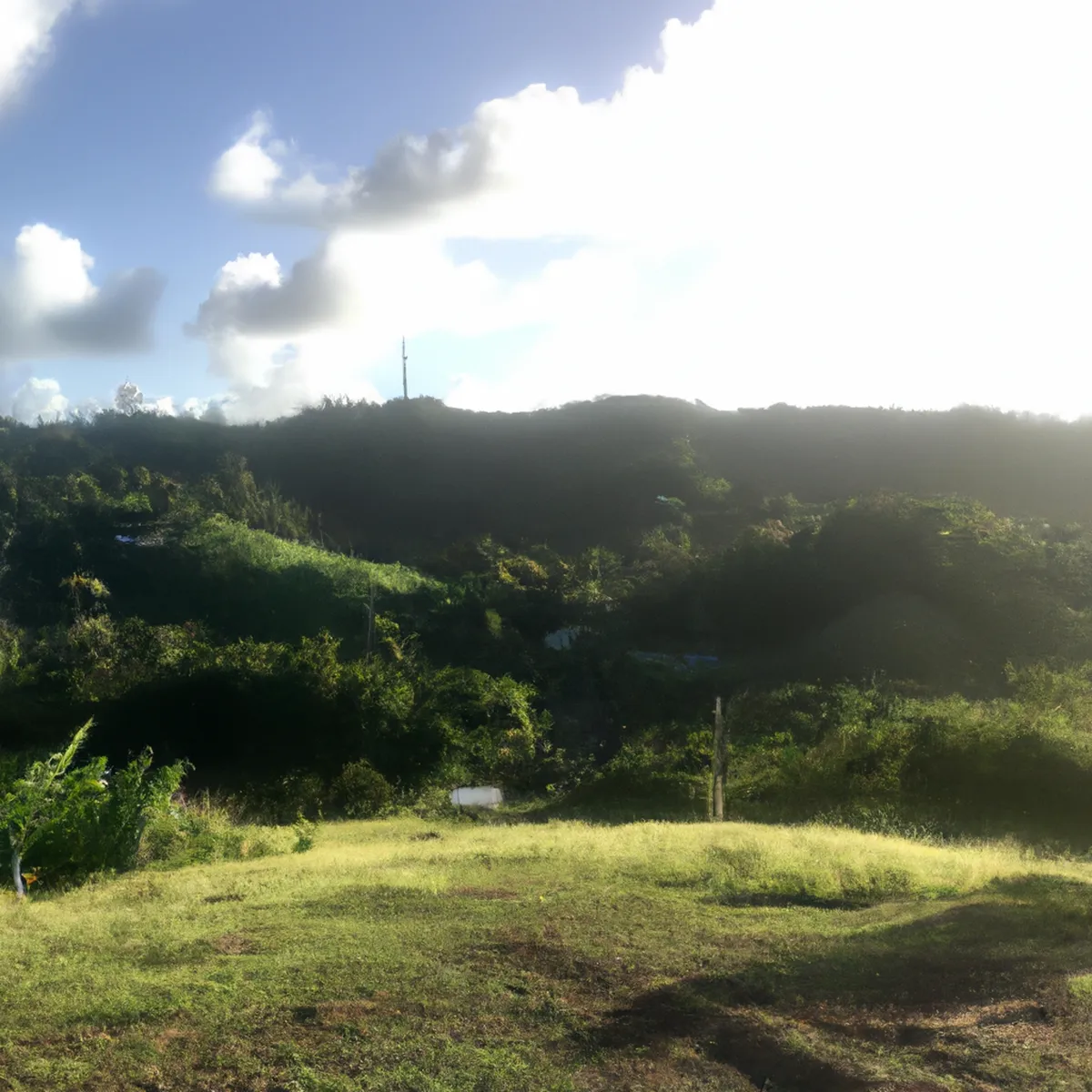
Trinidad and Tobago’s natural resources combine hydrocarbons with rich Caribbean biodiversity. The country produces 53,730 barrels of oil a day and about 26 billion cubic meters of natural gas a year (2023), and forests cover 44.24% of its land. What are Trinidad and Tobago’s most important natural resources? It is also home to 454 bird species and 1,041 fish species.
Trinidad and Tobago is a Caribbean country with a great diversity of natural resources. From its white-sand beaches and lush tropical forests to its vast hydrocarbon reserves, the country offers unique wealth in terms of both biodiversity and economic resources.
Contents
Fishing and agriculture are also important sources of income for the nation. Trinidad and Tobago’s natural resources are a vital source of livelihoods for its people, which makes their preservation and sustainable development extremely important for the country.
What are Trinidad and Tobago’s most important natural resources? What natural wealth does the country have? What are its mineral resources, and how does it rank globally? How much water is available, and how is energy generated? What variety of animals and plants is found in Trinidad and Tobago?
Natural resources
Natural resources are materials or energy sources provided by or found on Earth that are useful to humans. Every product we manufacture is made up of natural resources.
- Renewable resources: these can be restored by natural processes faster than the rate at which they are consumed. Examples include solar radiation, wind, hydroelectric power, water when used properly, and plant and animal life.
- Non-renewable resources: once extracted, these are depleted and cannot regenerate. Examples include hydrocarbons, metals and minerals.
Examples of Trinidad and Tobago’s main natural resources
Trinidad and Tobago conservation profile
How much of the territory is protected and which species are at risk.
| Protected land area | 30.6% of land area2025 |
|---|---|
| Marine protected areas | 0.1% of its waters2025 |
| Threatened species | 128 mammals, birds, fish and plants2022 |
| Forest cover | 44.2% of land area2023 |
| Annual change in forest area | −4 km² per year (2018–2023) |
| Agricultural land | 10.5% of land area2023 |
| Resource | Reserves / production | Source |
|---|---|---|
| Oil | 53,730 barrels/day (2023); ranked 50th | The Global Economy 2023 |
| Natural gas | 26.0 billion m³/year (2023); ranked 27th | EIA |
| Renewable freshwater | 3.84 km³ (2020); ranked 133rd | FAO |
| Forest area | 44.24% (≈2,270 km²), 2023 | World Bank |
| Average rainfall | 2,200 mm/year (2019); ranked 21st | World Bank |
| Environmental performance (EPI) | 52.5; ranked 50th | Yale EPI 2024 |
Oil and gas resources in Trinidad and Tobago
Trinidad and Tobago has significant natural resources, including oil. In 2023, its daily oil production reached 53,730 barrels, which ranks it 50th in the world for production (The Global Economy, 2023).
The country also has abundant natural gas resources, which allowed it to produce about 26.0 billion cubic meters in 2023. It ranks 27th among the world’s natural gas producers (CIA World Factbook).
Water resources of Trinidad and Tobago
Trinidad and Tobago has 3.84 km³ of renewable freshwater resources, which placed it 133rd in the world ranking of water reserves as of 2020. This Caribbean island nation has significant water resources: the Caroni and Ortoire rivers are the most notable.

Average rainfall and soils of Trinidad and Tobago
Trinidad and Tobago ranks 21st in the world for average annual rainfall, with 2,200 mm in 2019.
In general, Trinidad and Tobago’s soils are nutrient-rich and very fertile because of the region’s high humidity.
Forest resources of Trinidad and Tobago
Trinidad and Tobago’s forest area covered 44.24% of its territory in 2023, equivalent to about 2,270 km² (World Bank, 2023). This Caribbean country ranks 143rd in the world for forest area.
This natural resource is very important for the region’s economy and environment, and the main forest region is the Northern Range.
Environmental performance and protection of Trinidad and Tobago’s natural resources
Trinidad and Tobago has an Environmental Performance Index (2024) score of 52.5 and ranks 50th on the index (Yale EPI 2024). In addition, protected areas cover 30.6% of its land area, but only 2.0% of its total territorial area once marine waters are included (World Bank, 2025). The link between the protection of natural resources and the country’s environmental performance is worth highlighting.
Natural parks of Trinidad and Tobago: the hidden wealth of natural resources
Biodiversity: animal and plant resources of Trinidad and Tobago
Birds of Trinidad and Tobago
Trinidad and Tobago is an invaluable resource for bird lovers, with an impressive 454 bird species, which places it 96th in the world (Mongabay/World Rainforests). It also has 3 endemic bird species.
However, 5 bird species are endangered, which makes their conservation a priority. A standout is the hermit hummingbird, a beautiful bird found in the island’s tropical forests.

Fish and amphibians of Trinidad and Tobago
In 2019, 40 amphibian species were recorded, which places the country 65th in the world (Mongabay/World Rainforests) for number of species.
The country also has a total of 1,041 fish species, and its main species is the parrotfish. Trinidad and Tobago ranks 51st in the world for number of fish species (Mongabay/World Rainforests). However, 37 of these fish species are threatened.
Mammals of Trinidad and Tobago
Trinidad and Tobago has a total of 125 mammal species, 2 of which are endangered. Globally, the country ranks 93rd for number of mammal species (Mongabay/World Rainforests).
It is important to stress that biodiversity conservation is fundamental to the country’s sustainable development and the protection of its wildlife; a standout species is the howler monkey.
Reptiles of Trinidad and Tobago
Trinidad and Tobago has a rich diversity of reptiles, with a total of 30 recorded species (Mongabay/World Rainforests). Among the most notable species is the eyespot gecko (Gonatodes ocellatus), a lizard found only on Tobago.
Plants of Trinidad and Tobago
Trinidad and Tobago has a great diversity of vascular plants, with a total of 2,274 species recorded in 2020, which places it 85th in the world. Among the most notable species is the chaconia (Warszewiczia coccinea), the country’s national flower.
Organizations that protect or study Trinidad and Tobago’s natural resources
- Environmental Management Authority – Protects and manages Trinidad and Tobago’s natural resources and environment.
- Trinidad and Tobago Field Naturalists' Club – Promotes the study and conservation of Trinidad and Tobago’s flora, fauna and ecosystems.
- Reef Check Trinidad and Tobago – Monitors and protects Trinidad and Tobago’s coral reefs through research and education.
- BirdsCaribbean Trinidad and Tobago – Protects birds and their habitats in Trinidad and Tobago through research and education.
The Pitch Lake at La Brea, in southwestern Trinidad, is the world’s largest natural deposit of asphalt (bitumen): about 0.405 km² (100 acres) of pitch, up to 76 meters deep, with estimated reserves of 10 million tonnes (Wikipedia, citing National Museums Liverpool). This unique geological pit coexists with a resource profile dominated by a single element: natural gas.
Natural gas and Atlantic LNG
Trinidad and Tobago extracts gas from 31 producing fields, 25 of them offshore, and accounted for 0.91% of world natural gas production in 2023 (Offshore Technology, 2023). That gas feeds the Atlantic LNG complex at Point Fortin and is the feedstock for the country’s entire petrochemical industry, two activities that outpace oil as export drivers.
Ammonia: the world’s largest exporter
With 11 plants concentrated in the Point Lisas industrial estate and an installed capacity of 5.67 million tonnes a year, Trinidad and Tobago is the world’s largest ammonia exporter and controls between 15% and 20% of seaborne ammonia; its shipments were around 3.6 million tonnes in 2024 (Ammonia Energy, 2024). The same gas sustains its methanol industry.
A single-resource electricity mix
That entire economy depends on the same input. Fossil fuels, almost entirely gas, generated 99.9% of the country’s electricity in 2024, while low-carbon sources contributed just 0.07% (Low Carbon Power, 2024). It is one of the least diversified electricity mixes in the Caribbean, against an official target of 30% renewables by 2030.
Sources used
- Lists of countries by mineral production – Wikipedia
- Economic data by country – The Global Economy
- Forest area (km²) – World Bank
- Forest area (% of land area) – World Bank
- Oil reserves – The Global Economy
- Water and agriculture statistics – FAO
- Precipitation (mm) – World Bank
- Environmental Performance Index – Environmental Performance Index
- Bird species – Mongabay
- Amphibian species by country – Mongabay
- Mammal species – Mongabay
- Endemic mammal species – Our World in Data
- Plant species – Mongabay
- Reptile species by country – Mongabay
- Endemic bird species by country – Our World in Data
The World Bank noted in 2023 that Trinidad and Tobago has significant oil and natural gas reserves, which form the basis of its economy and have made it a high-income country, although its GDP per capita (about US$18,700 in 2024) is lower than that of The Bahamas or Barbados.
Last updated: September 26, 2026

Leave a Reply