


Denmark’s natural resources combine North Sea oil, at about 62,800 barrels a day in 2024 (34th in the world), with fertile land and renewable energy. The country generated 32.5 TWh of renewable electricity in 2025, has forests on 15.78% of its territory and receives an average of 703 mm of rainfall a year. What are Denmark’s natural resources?
Denmark is a Scandinavian country in northern Europe. It has a wide variety of natural resources that are very important for its economy and its biodiversity.
Table de contenidos
These include its long coastlines, which offer great opportunities for fishing and tourism; its fertile land, where a wide variety of food is grown; and its rich wildlife and plant life, which include unique and protected species.
What are Denmark’s natural resources? How much water and energy does the country generate? How diverse are its animals and plants? How does it protect its biodiversity?
Natural resources
Natural resources are materials or energy sources provided by or found on Earth that are useful to humans. Every product we manufacture is made up of natural resources.
- Renewable resources: these can be restored by natural processes faster than the rate at which they are consumed. Examples include solar radiation, wind, hydroelectric power, water when used properly, and plant and animal life.
- Non-renewable resources: once extracted, these are depleted and cannot regenerate. Examples include hydrocarbons, metals and minerals.
Examples of Denmark’s main natural resources
Denmark’s environmental scorecard
What international indicators say about conservation in the country.
| Protected land area | 16.4% of land area2025 |
|---|---|
| Marine protected areas | 27.1% of its waters2025 |
| Forest cover | 15.8% of land area2023 |
| Threatened species | 40 mammals, birds, fish and plants2022 |
| Renewable electricity | 79.0% of total generation2021 |
| Land area | 40,000 km²2023 |
| Resource | Reserves / production | Source |
|---|---|---|
| Oil | ≈62,800 barrels/day (2024); 34th | Danish Energy Agency |
| Natural gas | ≈3,550 million m³ (2025) | OPEC |
| Renewable freshwater | 6 km³ (2020); 130th | FAO |
| Average rainfall | 703 mm/year; 96th | World Bank |
| Forest area | 15.78% (6,312.6 km²), 2023 | World Bank |
| Renewable electricity | 32.5 TWh (2025) | Ember |
Oil and gas resources in Denmark
In 2024 Denmark produced a total of approximately 62,800 barrels of oil a day (Danish Energy Agency), which places it 34th in the world for production of this resource. It also had oil reserves of 551,000,000 barrels in 2022, which places it 46th in the world ranking. The country’s main oil-producing region is the North Sea.
Its natural gas production was about 3.55 billion cubic meters in 2025 (OPEC Annual Statistical Bulletin 2026).
It also has other nonmetallic minerals such as clays (kaolin and bentonite), stone (dimension stone and limestone), lime, chalk, peat and salt. The country is the only producer of moler, a natural mixture of diatomite and smectite clay used to make insulating bricks.
Water resources of Denmark
Denmark has 6 km³ of renewable freshwater resources, which placed it 130th in the world ranking of water reserves in 2020. Although it has no large bodies of water, Denmark has many rivers and lakes that are important for its economy and tourism.
Its most important rivers include the Gudenå and the Skjern, and its main lake is Lake Arresø.

Average rainfall and soils of Denmark
Denmark has an average annual rainfall of 703 mm, which places it 96th in the world ranking. Denmark’s soils are generally fertile and well suited to agriculture.
Renewable electricity and hydropower production in Denmark
In 2025, Denmark generated 32.5 TWh of electricity from renewable sources — 94% of its total generation of 34.5 TWh — while hydropower supplied only about 20 GWh (Ember, 2025). The country’s main hydroelectric plant is Tangeværket, on the Gudenå River.
Forest resources of Denmark
Denmark’s forest area covers 15.78% of its territory, equivalent to 6,312.6 km² according to 2023 data (World Bank). Although it is not one of the world’s major forest regions, this Scandinavian nation has managed to use this resource sustainably and responsibly. Denmark ranks 127th in the world for forest area.
Environmental performance and protection of Denmark’s natural resources
Denmark scores 67.7 on the Environmental Performance Index (EPI 2024, Yale University), which places it 10th among the index’s 180 countries. In addition, terrestrial and marine protected areas make up 23.8% of the country’s total territorial area (World Bank, 2025), which shows its commitment to conserving natural resources.
Natural parks of Denmark: the hidden wealth of natural resources
Biodiversity: animal and plant resources of Denmark
Birds of Denmark
Denmark has an impressive diversity of birds, with a total of 275 species recorded in 2018. Of these, 9 species are endangered.
A representative species of Denmark is the mute swan, which can be found throughout the country.

Fish and amphibians of Denmark
Denmark has a diversity of natural resources, including a variety of amphibian and fish species. A total of 16 amphibian species have been recorded in the country, placing it 81st in the world ranking.
Some 221 fish species have also been identified, the main one being cod. However, Denmark ranks 169th in the world for number of fish species.
Mammals of Denmark
A representative mammal species is the red fox. Two threatened mammal species were recorded in Denmark in 2016.

Reptiles of Denmark
Denmark has a total of 6 reptile species, which places it 137th in the world for diversity of these animals. It is not a country with a great variety of reptiles; a representative reptile of the country is the common European adder.
Plants of Denmark
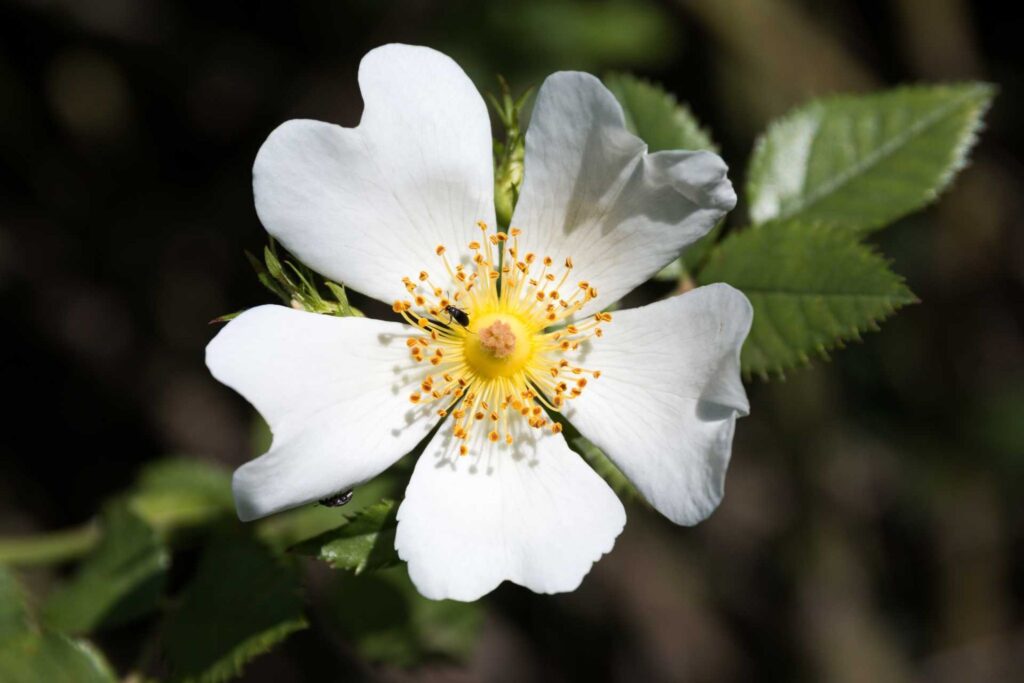
Denmark has a diversity of 1,583 vascular plant species, ranking 94th in the world. A striking species is the dog rose (Rosa canina).
Organizations that protect or study Denmark’s natural resources
- Miljøministeriet (Danish Ministry of Environment): Danish ministry responsible for national environmental and nature policy.
- Miljøstyrelsen (Danish Environmental Protection Agency): national authority that regulates the environment, coastal nature and marine areas.
- Naturstyrelsen (Danish Nature Agency): manages state-owned natural areas and protects Danish biodiversity.
- Danmarks Naturfredningsforening (Danish Society for Nature Conservation): Denmark’s largest nature and environmental conservation organization.
- DCE – Nationalt Center for Miljø og Energi (Danish Centre for Environment and Energy, Aarhus University): national scientific center that researches the environment and energy.
- WWF Verdensnaturfonden (WWF Denmark): Danish branch of the largest independent nature conservation organization.
In 2024 wind power supplied 59.3% of Denmark’s electricity generation, up from 57.91% in 2023, the largest share of wind in the electricity mix of any country in the world (Wind power in Denmark, Wikipedia, 2024). The resource that defines the country is not underground but in the wind over the North Sea and the Baltic.
Wind power: from the world’s first offshore wind farm to Vestas and Ørsted
Denmark installed the world’s first offshore wind farm, Vindeby, which went into operation in 1991 with 11 turbines and 4.95 MW of capacity (Vindeby Offshore Wind Farm, Wikipedia). That industry produced two Danish giants: Vestas, the world’s largest wind turbine manufacturer (Wind power in Denmark, Wikipedia), and Ørsted, formerly DONG Energy and majority-owned by the Danish state (50.1%), the largest offshore wind developer, with about 30% of installed capacity worldwide outside mainland China by 2022 (Ørsted, Wikipedia). In 2023 the country had a cumulative 7,510 MW of wind power: 4,860 MW onshore and 2,650 MW offshore.
North Sea oil and gas: a declining resource
The country’s other historic resource, North Sea hydrocarbons, is running out. Oil production peaked in 2005 and in 2013 fell below self-sufficiency; reserves are expected to be exhausted by around 2047 (Energy in Denmark, Wikipedia). As a net exporter of crude oil, Denmark fell from 32nd in the world in 2008 to 57th in 2023.
Export agriculture: pork and dairy
With 63% of its territory devoted to agriculture (2017 data), Denmark is a pig-farming powerhouse: it produces about 28 million pigs a year and exports nearly 90% of that output (Agriculture in Denmark, Wikipedia). Dairy products account for more than 20% of the country’s total agricultural exports.
Sources used
- Economic data by country – The Global Economy
- Forest area (km²) – World Bank
- Forest area (% of land area) – World Bank
- Oil reserves – The Global Economy
- Coal reserves – Worldometers
- Water and agriculture statistics – FAO
- Precipitation (mm) – World Bank
- Environmental Performance Index – Environmental Performance Index
- Bird species – Mongabay
- Amphibian species by country – Mongabay
- Mammal species – Mongabay
- Endemic mammal species – Our World in Data
- Plant species – Mongabay
- Reptile species by country – Mongabay
- Endemic bird species by country – Our World in Data
According to the Danish Energy Agency, wind power generated more than 55% of the country’s electricity in 2023, cementing Denmark’s position as a world leader in this technology.
Last updated: September 26, 2026
Leave a Reply