

The Amazon holds the most valuable natural resources on the planet: more than half of the world’s remaining tropical rainforest (some 5.5 million km²), close to one in every ten known species on Earth, roughly 56.8 billion tonnes of above-ground carbon, and a river that discharges around 15% of all the fresh water reaching the oceans. So what exactly are the Amazon’s natural resources, and why are they strategic for nine South American countries?
The natural resources of the Amazon make up the greatest ecological inheritance in the world. The Amazon rainforest covers around 5.5 million km² and accounts for more than half of the tropical rainforest still standing on the planet, while its drainage basin extends over at least 6 million km², according to NASA (NASA Earth Observatory 2020). Forests, mighty rivers, strategic minerals and biodiversity without equal all coexist in that territory.
Table de contenidos
The region is shared by nine countries and territories: Brazil, Peru, Colombia, Ecuador, Bolivia, Venezuela, Guyana, Suriname and French Guiana. Brazil holds close to 60 % of the rainforest, followed by Peru (13%) and Colombia (10%) (Wikipedia/ter Steege et al. 2026). That distribution makes the Amazon a shared natural resource whose management depends on cooperation between nations.
This guide works through the Amazon’s main natural resources — water, forests, biodiversity, minerals and energy — with verified data from sources such as NASA, the USGS, INPE, Amazon Conservation and the scientific community, and sets out the threats putting this irreplaceable ecosystem at risk.
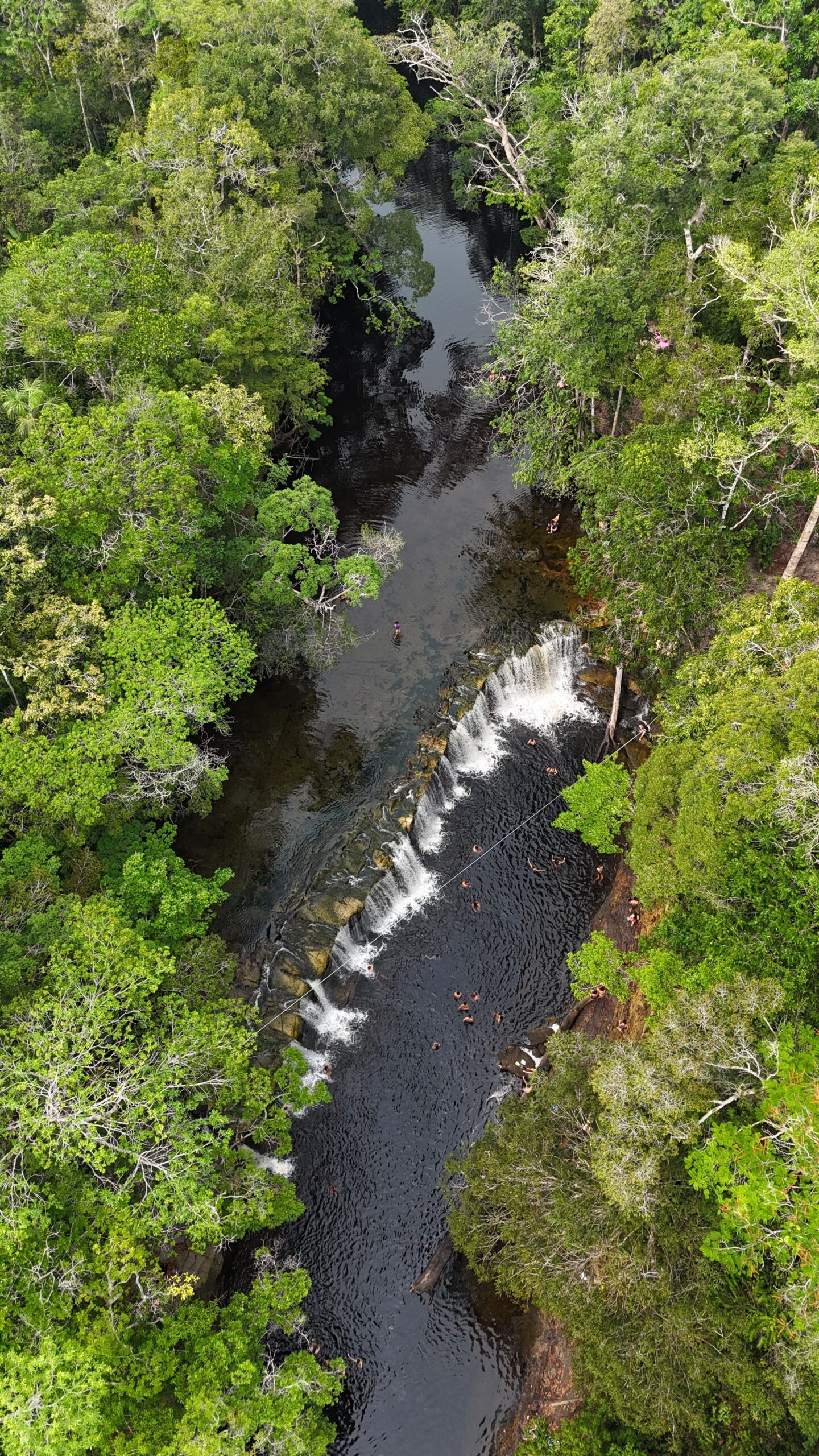
What makes the Amazon so special? Which of its resources are renewable and which are not? What part does it play in regulating the global climate, and why does its deforestation worry the entire world? Before answering, it is worth recalling what natural resources are.
Natural Resources
Natural resources are materials or energy sources provided by or found on Earth that are useful to humans. Every product we manufacture is made up of natural resources.
- Renewable resources: these can be restored by natural processes faster than the rate at which they are consumed. Examples include solar radiation, wind, hydroelectric power, water when used properly, and plant and animal life.
- Non-renewable resources: once extracted, these are depleted and cannot regenerate. Examples include hydrocarbons, metals and minerals.
The Amazon countries in figures: environmental indicators
Total and average for the 8 countries of the Amazon basin with comparable data, calculated from each country’s figures.
| Countries included | 8 with comparable data |
|---|---|
| Land area | 13,332,998 km² |
| Forest cover | 57.4% of the territory2023 |
| Forest area | 7,654,662 km²2023 |
| Protected land area | 29.8% of the territory2025 |
| Annual change in forest area | −19,346 km² per year (2018–2023) |
| Agricultural area | 27.6% of the territory2023 |
The figures cover the full territory of the countries with sovereignty over the basin, not just the area of the biome. French Guiana is excluded, as it is a department of France and does not appear as a country in the statistics.
What is the Amazon, and how many countries does it cover?
The Amazon is the largest tropical rainforest in the world and covers roughly 80% of the Amazon River basin (NASA 2020). It is a mosaic of forests, wetlands, flooded savannas and thousands of watercourses that work as a single natural system. Each Amazon country manages its share of this resource: you can go deeper into the natural resources of Brazil, the natural resources of Peru and the natural resources of Colombia, the three territories with the largest area of rainforest.
The rainforest is not spread evenly between the countries. The chart below shows the approximate split of Amazon forest cover according to data compiled by the scientific community.
Water resources: the Amazon River
Water is perhaps the Amazon’s most impressive natural resource. The Amazon River runs some 6,400 km and is the largest river in the world by discharge: on its own it accounts for around 15% of all the fresh water that rivers discharge into the world’s oceans — more than four times the flow of the Congo (USGS). Some estimates put that share as high as 20%, but the USGS figure of 15% is the most widely cited benchmark.
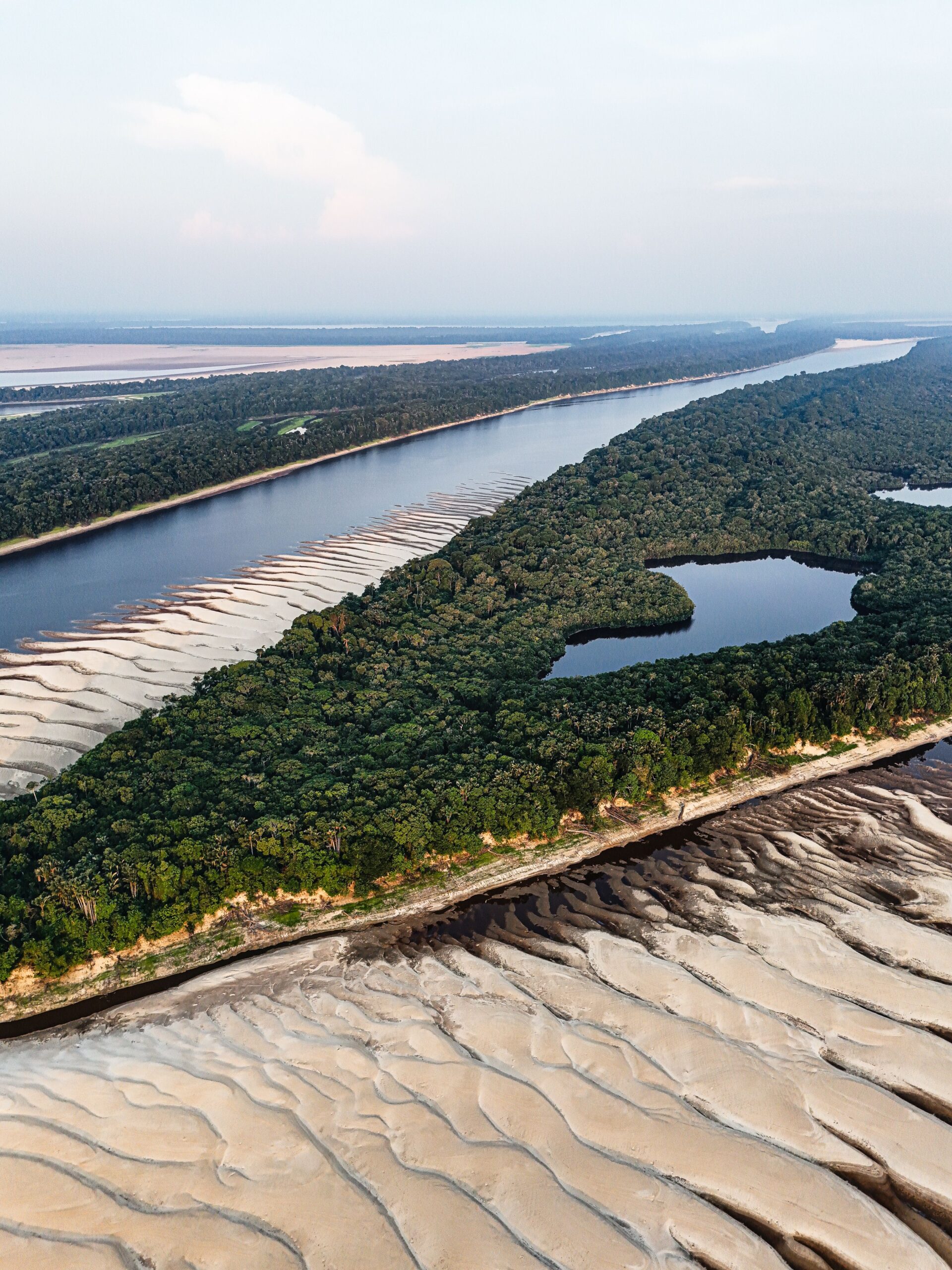
With an average flow of close to 215,000 m³ per second (Wikipedia 2026), the Amazon basin is a renewable water resource of enormous value: it sustains fishing, transport, riverside farming and the rainfall cycle of the whole continent. That water potential also feeds hydroelectric powerprojects, although large dams create environmental and social tensions across the region.
Forest resources: the largest rainforest on the planet
Timber, fibers, resins, fruits and the active compounds behind medicines make the Amazon’s forests a forest resource of incalculable value. The rainforest is home to some 16,000 different tree species and more than 40,000 plant species (Wikipedia/ter Steege et al. 2026), many of them still undescribed by science.
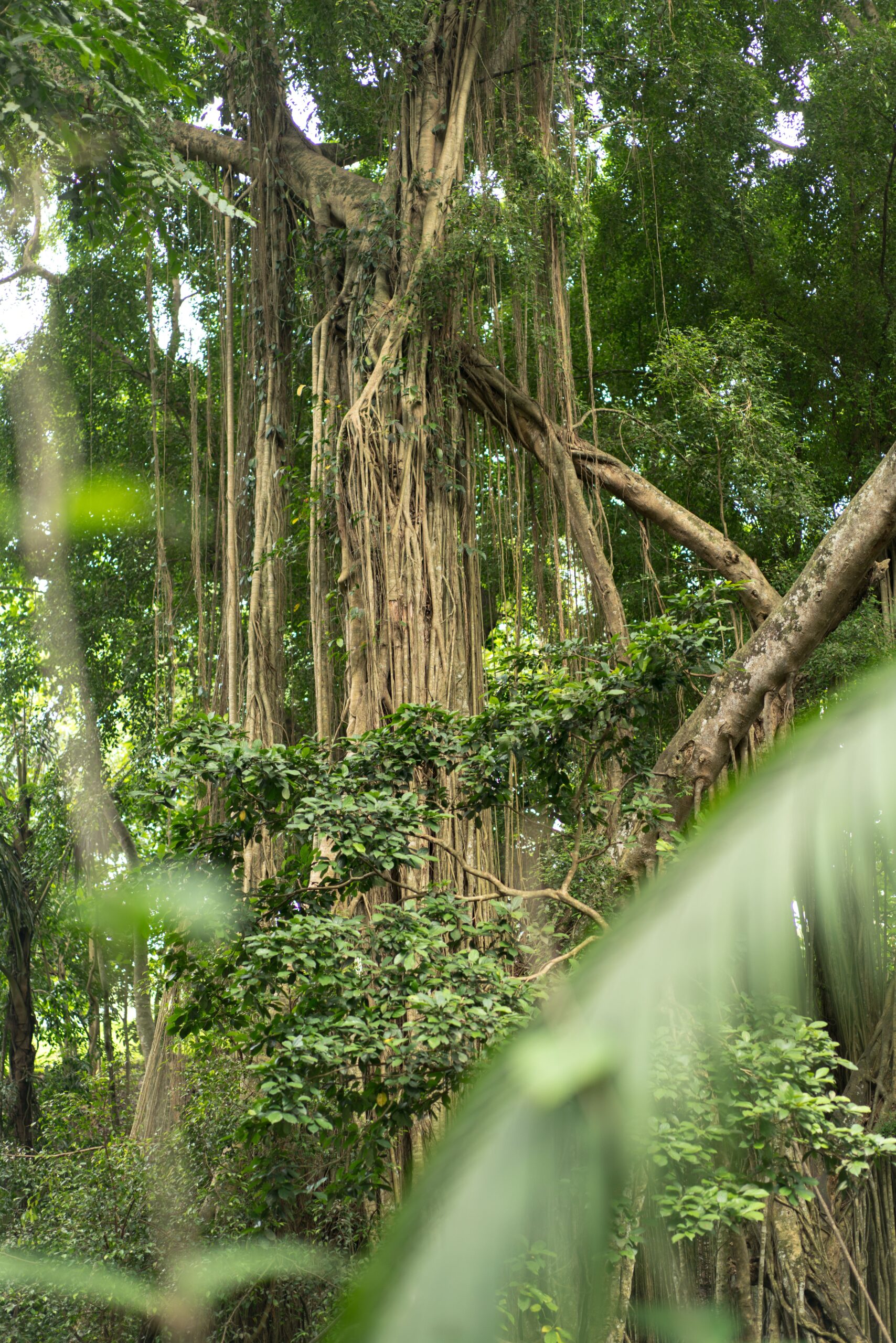
These forests are an example of a renewable resource, as long as they are used below their rate of regeneration. Sustainable use of non-timber forest products — rubber, Brazil nuts, açaí — shows that it is possible to earn a living while keeping the forest standing, a central principle of the sustainable economy.
Biodiversity: unique wildlife and plant life
Biodiversity is the Amazon’s most famous natural resource. It is estimated to be home to one in every ten known species on Earth (Wikipedia 2026); NASA puts it another way: the region holds close to a fifth of the world’s terrestrial species (NASA 2020).
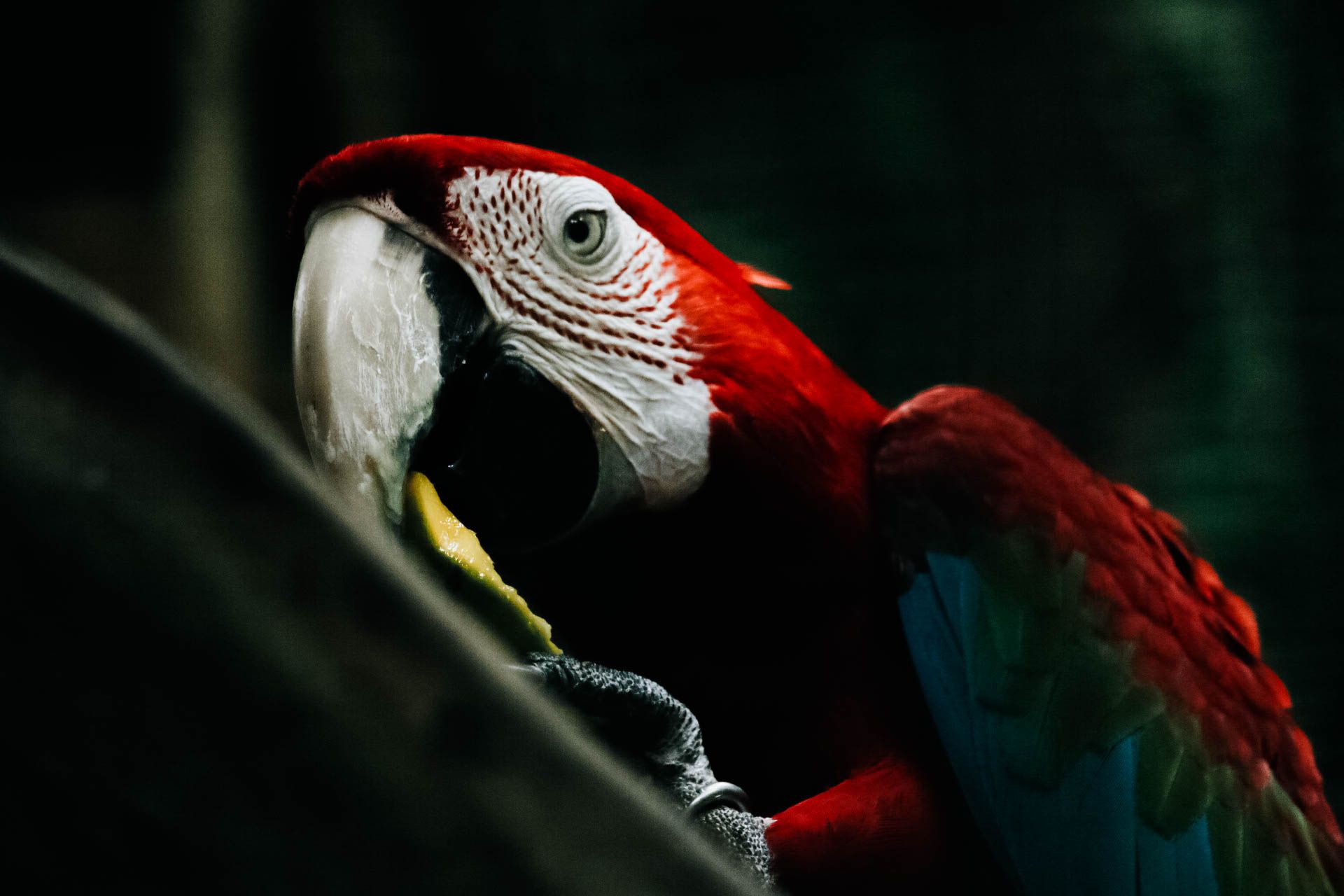
Scientific inventories record around 1,294 bird species, 427 mammals, 428 amphibians, 378 reptiles and some 2,200 fish species in the basin (Wikipedia 2026). Macaws, jaguars, pink river dolphins, anacondas and poison dart frogs are only some of its iconic inhabitants. This biological wealth is also a strategic gene bank for the agriculture, medicine and biotechnology of the future.
Carbon stocks and the Amazon’s climate role
Beyond its visible resources, the Amazon provides an invisible, global service: storing carbon. An analysis based on NASA satellite data calculated that the rainforest held some 56.8 billion metric tonnes of carbon above ground as of 2022 (Amazon Conservation/MAAP 2024). Brazil holds 57% of that carbon and Peru 15%.
Between 2013 and 2022 the Amazon still gained some 64.7 million net tonnes of carbon, which keeps it a net sink, though an increasingly fragile one (MAAP 2024). If deforestation and fires continue, the rainforest could turn into a net CO₂ emitter, worsening climate change across the region.
Mineral and energy resources
The Amazon subsoil holds significant non-renewable resources. The Brazilian state of Pará is home to Carajás, one of the world’s largest iron deposits, alongside reserves of gold, copper and manganese. The region also contains oil and gas blocks worked in Ecuador, Peru and Brazil, though there is no single authoritative figure for its total hydrocarbon reserves.
These non-renewable natural resources are an economic engine for the Amazon countries, but extracting them carries a high environmental cost. Mining was responsible for close to 9% of Amazon deforestation between 2005 and 2015, according to a study published in Nature Communications (Sonter et al./Mongabay 2017). Illegal gold mining also contaminates rivers with mercury and harms the health of local communities.
Deforestation and environmental threats
The greatest threat to the Amazon’s natural resources is forest loss. According to the PRODES system run by Brazil’s National Institute for Space Research (INPE), deforestation in the Brazilian Amazon in the August 2024-July 2025 cycle came to 5,796 km², 11% lower than the previous year and the lowest level since 2014 (INPE/Mongabay 2025).
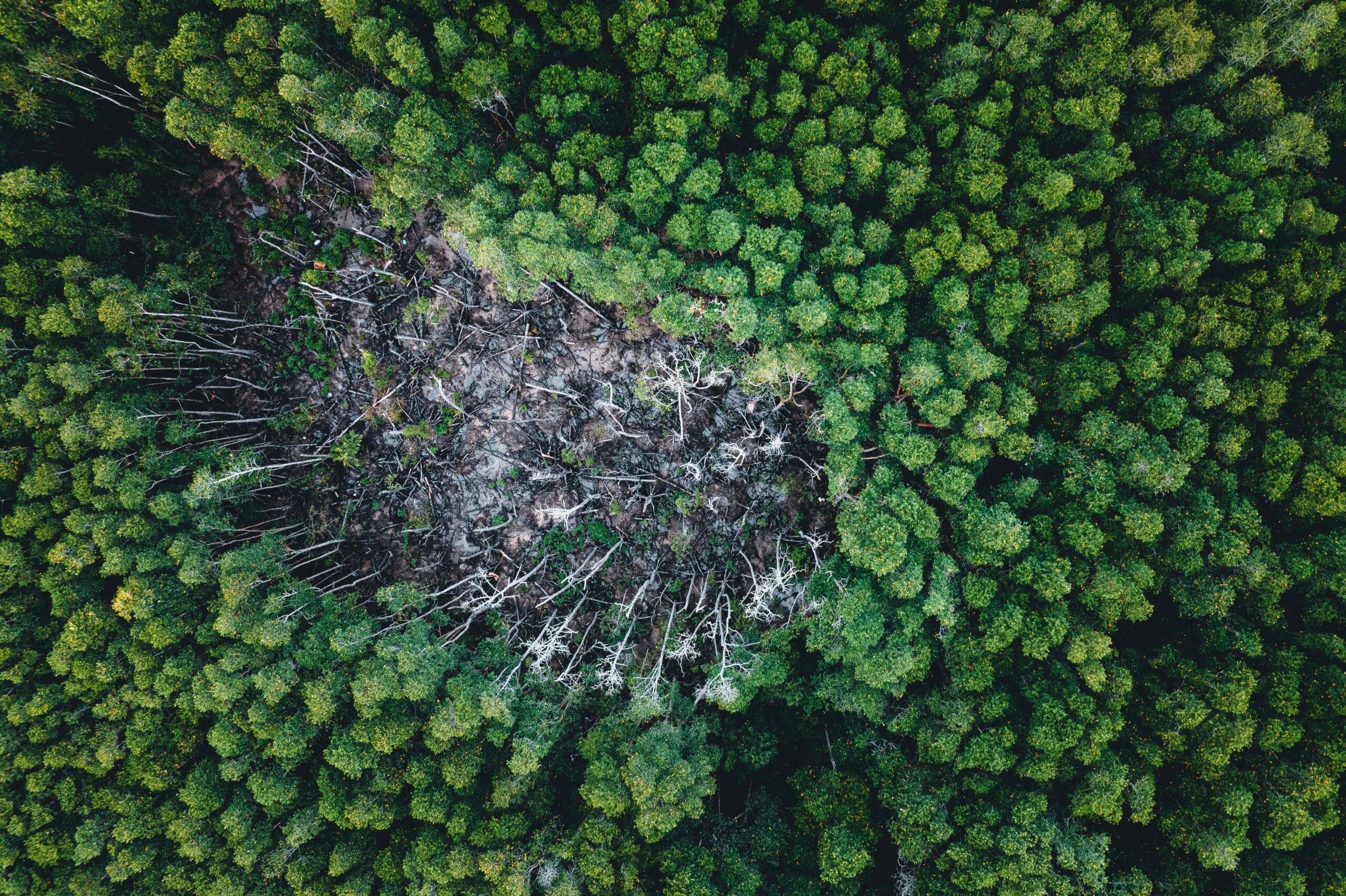
The recent trend is positive, but the pressure remains enormous: cattle ranching, agriculture, road building, mining and fires keep fragmenting the rainforest. Protecting this resource demands firm public policy and sustainable development projects that offer economic alternatives to Amazon communities.
The peoples of the Amazon
The Amazon is not empty territory. It is home to more than 30 million people belonging to some 350 ethnic groups, and around 3,344 Indigenous territories (Wikipedia 2026)are recognized there. Depending on where the basin’s boundaries are drawn, some estimates put the total population at close to 47 million.
Indigenous peoples are the historic guardians of these resources: numerous studies show that territories under their management have far lower rates of deforestation. Recognizing their rights is therefore one of the most effective conservation strategies in the region.
The Amazon countries and their resources
Each Amazon nation manages a part of this vast natural inheritance. For a detailed look at the natural resources of the countries that share the rainforest, see these country guides:
- Natural resources of Brazil — around 60% of the Amazon rainforest.
- Natural resources of Peru — second country by rainforest area (13%).
- Natural resources of Colombia — close to 10% of the Amazon.
- Natural resources of Ecuador — Andean Amazon and oil reserves.
- Natural resources of Bolivia — Amazon forests in the north of the country.
- Natural resources of Venezuela — Amazon and Guiana Shield.
- Natural resources of Guyana — Guiana Shield rainforests.
Managing these resources also sits within the UN Sustainable Development Goals, which set concrete targets on life on land and climate action for 2030.
Sources used
- NASA Earth Observatory — Mapping the Amazon (2020)
- Wikipedia — Amazon rainforest (data from ter Steege et al., 2026)
- Wikipedia — Amazon River (2026)
- USGS — The Amazon: measuring a mighty river
- Amazon Conservation / MAAP #215 — Carbon across the Amazon (2024)
- Mongabay / INPE PRODES — Amazon deforestation 2025
- Mongabay — Mining and deforestation (Sonter et al., 2017)
The natural resources of the Amazon — water, forests, biodiversity, carbon and minerals — are an inheritance shared by nine countries and essential to the planet’s climate balance. Protecting them is not only an environmental responsibility but an opportunity for sustainable development for the more than 30 million people who call the world’s largest rainforest home.
Related articles
Last updated: September 13, 2026
Leave a Reply