


Ghana’s natural resources are headlined by its status as Africa’s top gold producer (141 tonnes in 2024, ranking 6th globally), the world’s second-largest cocoa producer, and 56.2 km³ of freshwater resources anchored by Lake Volta—the world’s largest artificial reservoir by surface area. Ghana also holds 660 million barrels of crude oil reserves, 80,074 km² of tropical forest, and rich West African biodiversity.
Ghana, situated along the Gulf of Guinea in West Africa, is renowned for its rich cultural history and extensive natural resource endowment. Across its territory lies a wealth of economic assets, ranging from precious metals and offshore hydrocarbons to tropical timber and fertile agricultural lands. Within our regional hub for Africa natural resources and our global directory of natural resources by country, this guide analyzes Ghana’s essential physical and biological capital.
Table de contenidos
In addition, Ghana boasts remarkable biological diversity across its tropical forests and savannahs, supporting animal and plant species that provide sustainable livelihoods and substantial economic revenue.
What is the full scope of Ghana’s natural wealth? Where does the country rank globally in mineral reserves and agricultural production? How are its soils, water bodies, and forests safeguarded for future generations?
Key Fact: Natural Resources
Natural resources are materials or energy sources provided by nature and found on Earth that are useful to humanity. Every manufactured product is built from natural resources.
- Renewable natural resources: these can be restored by natural processes faster than the rate of consumption. Examples include solar radiation, wind, hydroelectric power, properly managed water, and plant and animal biomass. For comparative dynamics, see our guide to renewable vs non-renewable resources.
- Non-renewable natural resources: once extracted, these finite reserves are depleted and cannot regenerate on a human timescale. Examples include hydrocarbons, coal, and metallic minerals. For full classifications, explore our guide to types of natural resources.
Examples of Ghana’s Main Natural Resources
Ghana in Data: Threatened Biodiversity
Species at risk and protected territory, with latest available data.
| Threatened species | 263 mammals, birds, fish and plants2022 |
|---|---|
| Protected land area | 15.3 % of the territory2025 |
| Marine protected areas | 0.0 % of territorial waters2025 |
| Forest cover | 35.2 % of the territory2023 |
| Annual forest area change | +72 km² per year (2018–2023) |
| Land area | 227,533 km²2023 |
Oil and Gas Resources in Ghana
Ghana is a significant West African petroleum producer, with an output of 179,890 barrels of crude oil per day in 2021. In 2022, its proved oil reserves were estimated at 660,000,000 barrels, placing the nation 42nd worldwide, centered primarily in the offshore Jubilee and TEN (Tweneboa, Enyenra, Ntomme) fields.
With annual natural gas production of 554 million cubic meters, Ghana ranks 72nd globally, utilizing offshore associated gas to power domestic thermal electricity generation.
Mineral Resources of Ghana
Ghana is Africa’s leading producer of gold, achieving an extraction volume of 141 tonnes in 2024 and holding estimated reserves of 1,000 tonnes. It ranks 6th globally in gold output. The cornerstone of Ghanaian gold mining is the legendary Obuasi mine in the Ashanti region, where industrial mining began in 1897. Explore global geological trends in our guide to mineral resources.

Water Resources of Ghana
Ghana possessed a renewable freshwater reserve of 56.2 km³ in 2020, placing it 83rd worldwide. The Volta River basin dominates the nation’s hydrological landscape, supported by southwestern coastal rivers such as the Pra and Ankobra.
Ghana is home to Lake Volta, the largest artificial reservoir in the world by surface area, covering approximately 8,502 km². For a broader perspective on freshwater governance, see our global analysis of water resources.
Average Precipitation and Soils of Ghana
Ghana receives an average annual precipitation of 1,187 mm, ranking 63rd worldwide. Soil characteristics vary according to rainfall belts, with deeply weathered, nutrient-rich forest ochrosols in the south and sandy, savannah acrisols across the drier northern plains.
Renewable Electricity and Hydropower Generation in Ghana
In 2024, Ghana generated about 8.8 TWh of renewable electricity, 8.6 TWh of it from hydropower (Ember). The landmark Akosombo Hydroelectric Dam on the Volta River forms the backbone of national clean energy, generating roughly 70% of the country’s hydro capacity. Review international electricity trends in our guide to energy resources.

Forest Resources of Ghana
Forests cover 35.2% of Ghana’s land surface, spanning 80,073.9 km² (2023 data).
The primary forest ecosystem is the Upper Guinean rainforest, a global biodiversity hotspot extending across southern and western Ghana that provides vital timber, watershed protection, and non-timber forest products. Learn more in our overview of global forest resources.
Environmental Performance and Resource Protection in Ghana
Protecting Ghana’s natural resources is critical to its long-term sustainable development. Ghana scored 36.9 on the Environmental Performance Index (EPI 2024), ranking 145th out of 180 countries. Terrestrial and marine protected areas cover 7.9% of national territorial area (World Bank, 2025).
National Parks of Ghana: The Hidden Wealth of Natural Resources
Biodiversity: Animal and Plant Resources of Ghana
Birds of Ghana
Ghana supports high bird richness, counting 741 bird species, placing it 42nd globally. However, 25 of these bird species are threatened with extinction, necessitating targeted habitat protection.
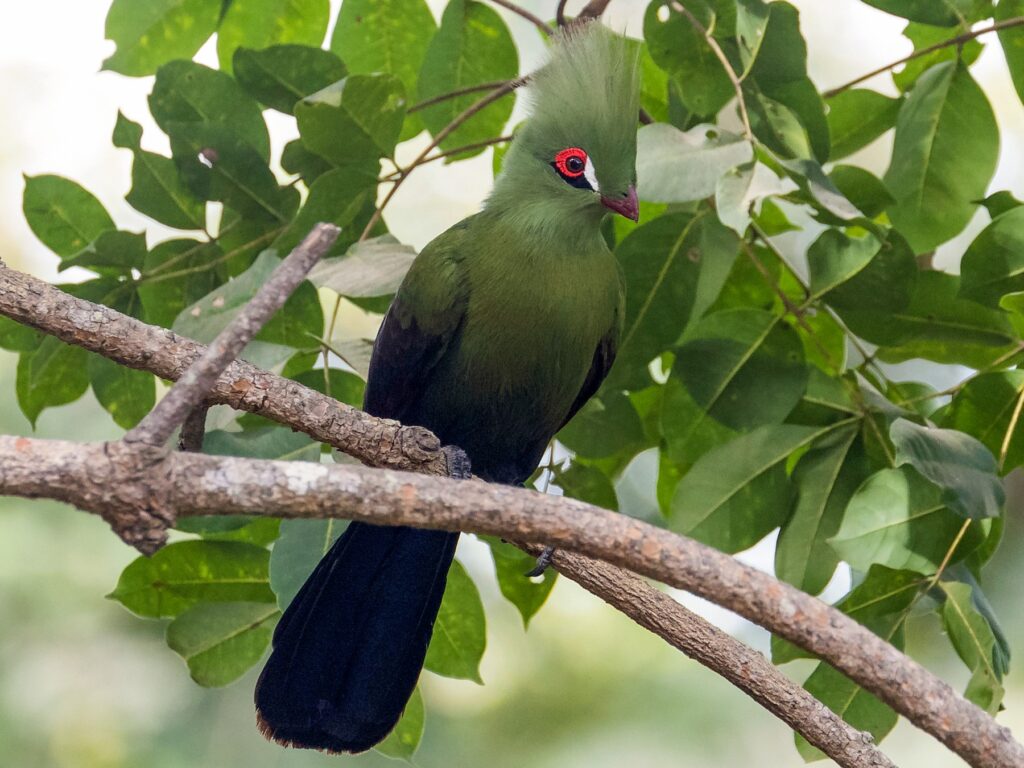
Among the nation’s most colorful and celebrated avifauna is the Guinea turaco, an eye-catching resident of Ghana’s tropical forest canopies.
Fish and Amphibians of Ghana
According to current biological records, Ghana is home to 91 amphibian species, positioning it 38th worldwide.
In aquatic biodiversity, the country records 709 fish species, with native tilapia species serving as a dietary and commercial mainstay. Nevertheless, 87 fish species face conservation threats.
Mammals of Ghana
Ghana hosts diverse mammal life, counting 275 mammal species. Of these, 23 species are under threat, underscoring the vital role of protected reserves like Mole and Kakum.
Globally, Ghana ranks 25th in total mammal species richness.
Reptiles of Ghana
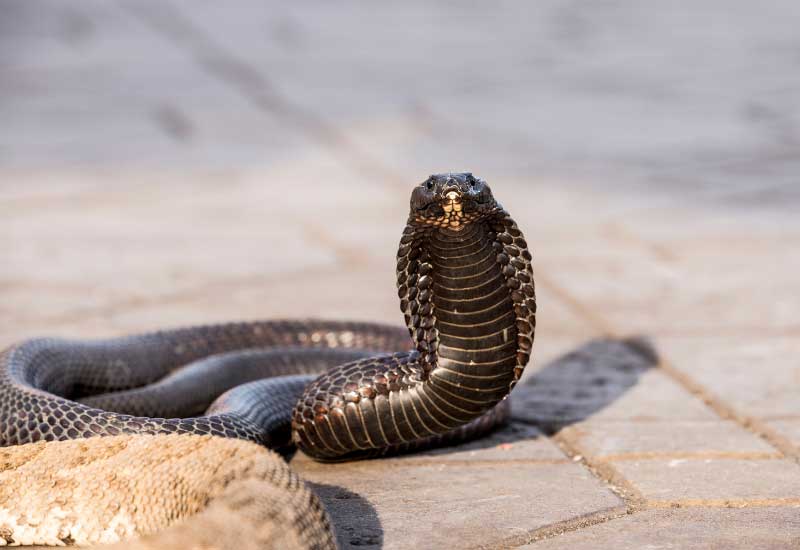
Ghana documents 187 reptile species, ranking 46th globally. Notable reptiles include the Senegalese cobra (Naja senegalensis), a venomous snake of the savannahs of northern Ghana.
Plants of Ghana
Ghana supports 2,971 registered vascular plant species, ranking 66th worldwide. Foremost among economically cultivated plants is the cocoa tree (Theobroma cacao), the crop that established Ghana’s global agricultural reputation.
Organizations Protecting or Studying Ghana’s Natural Resources
- Environmental Protection Authority (EPA Ghana): National authority that regulates, monitors, and improves Ghana’s environment.
- Forestry Commission of Ghana: State commission managing the regulation and conservation of forest and timber resources.
- Wildlife Division (Forestry Commission of Ghana): Division conserving wildlife, national parks, and protected reserves across Ghana.
- Water Resources Commission of Ghana: National body regulating and managing freshwater resources and river basins.
- A Rocha Ghana: Environmental NGO conserving critical habitats and community biodiversity.
- IUCN West and Central Africa (PACO): International conservation union operating regional resource programs in Ghana.
Ghana is the largest gold producer in Africa: in 2019 it surpassed South Africa by mining 142.4 tonnes that year, and by 2023 was producing approximately 4.2 million ounces—accounting for roughly 4% of global supply and ranking 6th in the world (Mining industry of Ghana, Wikipedia, citing production data; 2023).
Gold and the Environmental Cost of Galamsey
Alongside large-scale industrial mining, widespread artisanal and small-scale illegal gold mining—locally termed galamsey—uses uncontrolled mercury and cyanide, heavily polluting major river basins like the Pra, Ankobra, and Birim. Furthermore, commercial bauxite extraction near the Atewa Forest Reserve poses persistent threats to critical watersheds. Beyond gold, Ghana is a major producer of manganese (about 844,000 tonnes of manganese content in 2022, third in Africa after South Africa and Gabon, according to the USGS) and bauxite (~1.5 million tonnes) (Mining industry of Ghana, Wikipedia, 2022).
Cocoa: World’s Second-Largest Producer
Ghana is the world’s second-largest producer of cocoa, behind only Côte d’Ivoire: in 2018 it harvested 947,000 tonnes. Cocoa beans are a cornerstone of foreign revenue alongside gold, with mineral exports accounting for roughly 62.9% of exports in 2025 (Economy of Ghana, Wikipedia, 2018–2025). The industry relies on hundreds of thousands of smallholder farmers organized through COCOBOD (Cocoa production in Ghana, Wikipedia).
Lake Volta and Akosombo Dam
Completed in 1965 on the Volta River, the Akosombo Dam created Lake Volta: the world’s largest man-made reservoir by surface area, covering 8,502 km². The hydroelectric power station has an installed capacity of 1,038 MW, providing base-load electricity for Ghana and exporting power to neighboring Togo and Benin (Akosombo Dam, Wikipedia, 1965).
Sources Used
- Forest Area (km²) – World Bank
- Forest Area as Percentage of Land – World Bank
- Agricultural Land Area (km²) – World Bank
- Crude Oil Reserves – The Global Economy
- Coal Reserves by Country – Worldometers
- Water and Agricultural Statistics – FAO AQUASTAT
- Average Precipitation (mm) – World Bank
- Environmental Performance Index – Yale Center for Environmental Law & Policy
- Bird Species Richness – Mongabay
- Amphibian Species by Country – Mongabay
- Mammal Species Richness – Mongabay
- Endemic Mammal Species by Country – Our World in Data
- Vascular Plant Species – Mongabay
- Reptile Species by Country – Mongabay
- Endemic Bird Species by Country – Our World in Data
The World Bank noted in 2023 that Ghana is the second-largest cocoa producer in the world, contributing approximately 20% of global output, with mining and agriculture underpinning national prosperity.
Last updated: September 26, 2026
Leave a Reply