

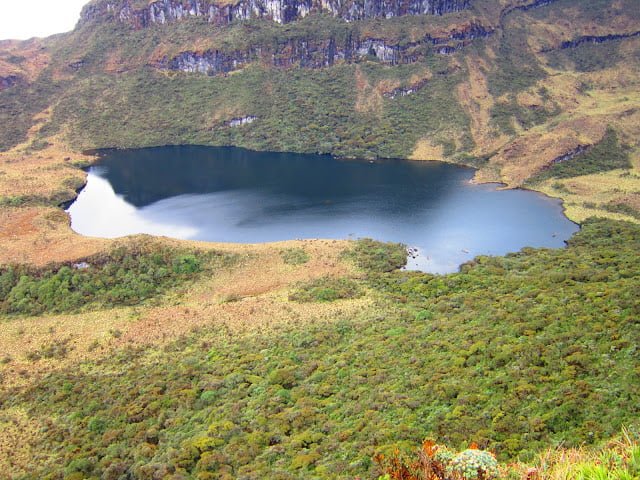
Colombia’s natural resources span water, biodiversity, minerals and hydrocarbons: it is the sixth country in the world by freshwater reserves, with 2,132 km³, and annual rainfall above 3,000 mm. It hosts close to 10% of the world’s biodiversity and ranks first for bird diversity, with 1,969 species. What are Colombia’s main natural resources?
Thanks to its geographic position, Colombia is an extremely rich country in natural resources. But which resources stand out here? What is the country’s natural wealth?
Table de contenidos
Since the Earth was first inhabited, humans and other forms of life have depended on resources — “things” that exist freely in nature — to survive.
These resources can be renewable or non-renewable, elements or an entity such as wind, complex beings such as an organism, or even resources that must be processed to be useful, such as oil.
Some natural resources are sunlight, the atmosphere, water, wind, land (including minerals and hydrocarbons) and all kinds of plants and animals.
What are the natural resources of Colombia?
Colombia has unmatched natural wealth, thanks to its geographic position and climatic diversity. Colombia’s natural resources include a wide variety of ecosystems, from the Amazon rainforest to the Andean páramos, which host great biodiversity of plants and wildlife.
Types of natural resources found in Colombia
Renewable resources, which can be restored by natural processes faster than the rate at which they are consumed: these include solar radiation, the tides of the country’s two oceans, wind, hydroelectric power from its many water sources, water when used properly, and its extensive plant and animal life.
Non-renewable resources such as hydrocarbons, metals and minerals.
Colombia’s main natural resources
Colombia: water, forest and protection
Key indicators of the country’s natural assets, with the reference year for each.
| Renewable fresh water per capita | 41,459 m³ per year2022 |
|---|---|
| Forest cover | 52.8% of the territory2023 |
| Annual change in forest area | −1,993 km² per year (2018–2023) |
| Protected land area | 17.2% of the territory2025 |
| Protected marine areas | 41.1% of its waters2025 |
| Threatened species | 1,266 mammals, birds, fish and plants2022 |
Map of Colombia’s natural resources by region
Colombia is divided into six natural regions — Caribbean, Andean, Pacific, Orinoquía, Amazon and Insular — and each concentrates distinct natural resources.
The San Andrés Archipelago (Insular region) lies in the Caribbean Sea, far from the mainland.
| Resource | Reserves / Production | Source |
|---|---|---|
| Fresh water | 2,132 km³; 6th in the world | FAO |
| Rainfall | >3,000 mm/year | World Bank |
| Biodiversity | ~10% of world biodiversity; megadiverse country | Mongabay |
| Birds | 1,969 species; 1st in the world | Mongabay |
Water resources of Colombia
Water is a vital resource for sustaining the country’s biodiversity, food production and energy production. While the population generally has no major difficulty accessing fresh water, a lack of infrastructure and other problems can leave parts of the country short of it. That is the case in La Guajira, in the north, where humanitarian crises caused by a lack of drinking water are common.
Colombia is one of the countries with the most fresh water in the world. It is the sixth country by water reserves, after Brazil, Russia, the United States, Canada and China. It is estimated to hold 2,132 km³ of fresh water.
It is also one of the countries with the most water-producing ecosystems. Most of its water resources (rivers, páramos, wetlands, basins and so on) are in the Amazon, Orinoquía and Pacific natural regions. The Nudo de Almaguer, or Colombian Massif, in the department of Cauca, is the source of the country’s four most notable rivers: the Magdalena, the Cauca, the Patía and the Caquetá.
Colombia has annual rainfall averaging more than 3,000 mm a year, above the world average of 900 mm and South America’s 1,600 mm.
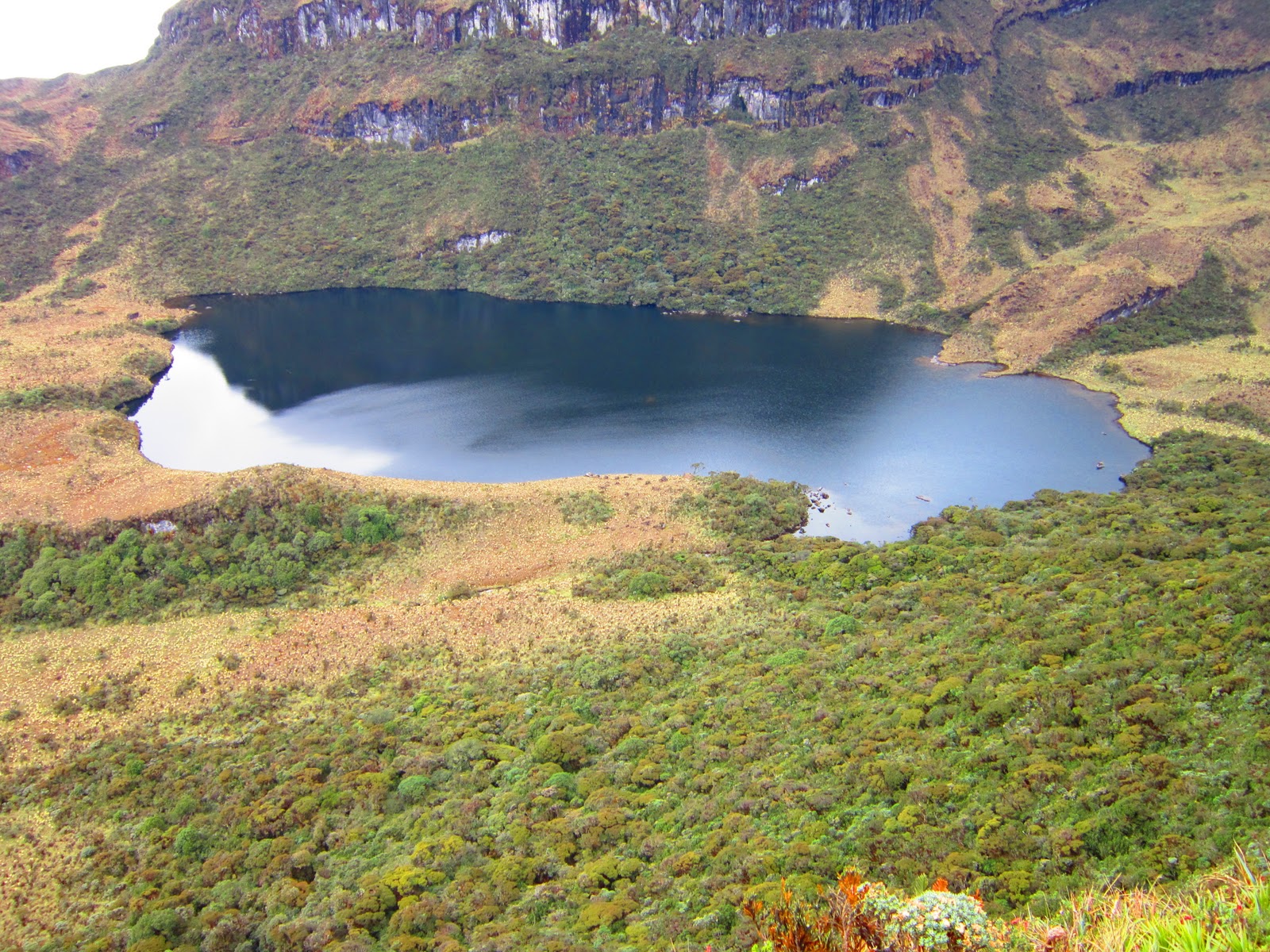
Biodiversity: animal and plant resources of Colombia
Colombian biodiversity by the numbers
- Colombia is the country with the greatest diversity of birds, orchids and butterflies in the world.
- Colombia is the second country for diversity of amphibians, freshwater fish, palms and bats.
- Colombia is the third country for plant diversity.
- Colombia is the sixth country for mammal diversity.
More: Biodiversity in Colombia
Birds of Colombia
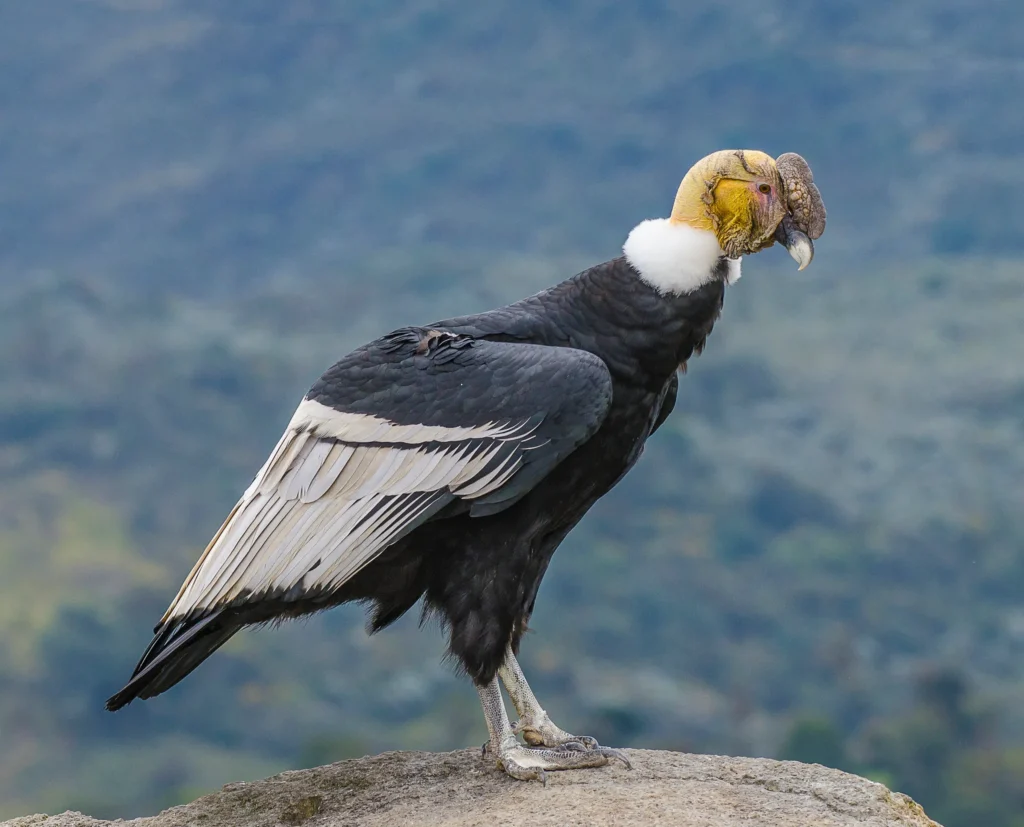
For its birdlife, its flagship species is the Andean condor. According to the official list of the Colombian Committee of Ornithological Records, in 2024 Colombia recorded 1,969 bird species, placing it first worldwide for bird diversity (Infobae, 2024). Of those species, at least 84 are endemic. However, 126 bird species are endangered.
Fish and amphibians of Colombia
In 2019, 771 amphibian species were recorded in the country, placing it second worldwide. Colombia also has a total of 2,053 fish species, ranking 16th worldwide. However, 99 fish species are threatened.
Among the flagship amphibian and fish species in Colombia are the tree frog and the bocachico.
Mammals of Colombia
Colombia is a country of great mammal diversity, with a total of 442 species as of 2016. Of those, however, 58 are threatened. Colombia had 45 endemic mammal species as of 2020.
Reptiles of Colombia
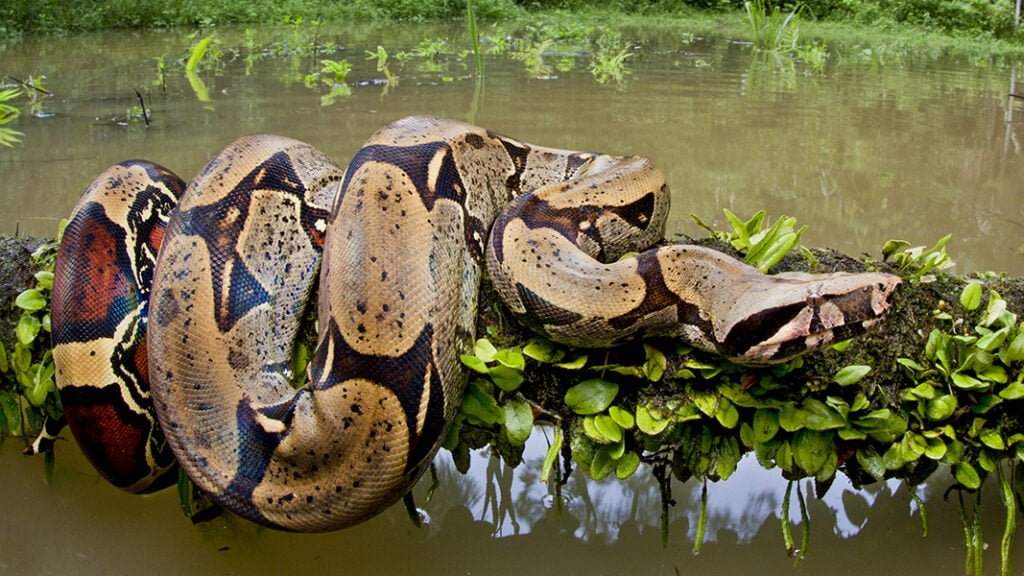
Colombia is a country of great reptile diversity, with a total of 601 species as of 2019, placing it seventh worldwide. This natural resource is of great importance to the country’s biodiversity, its flagship reptile being the boa constrictor, found across different regions of Colombian territory.
Plants of Colombia
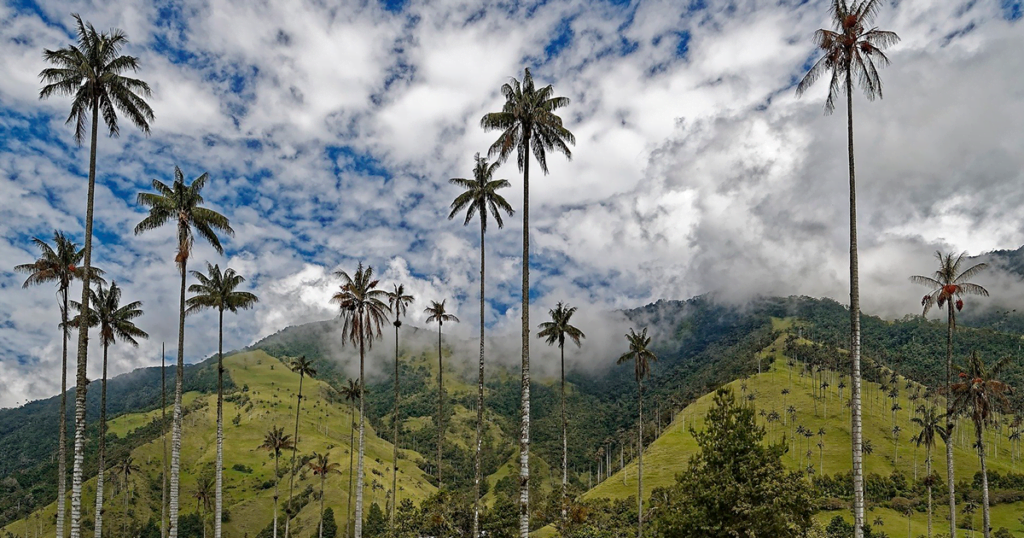
Colombia has great vascular plant diversity, with a total of 24,025 species recorded in 2020, placing it third worldwide. A representative species is the wax palm, considered a national symbol and protected for its cultural and ecological importance.
Mineral resources of Colombia
- It is the ninth-largest nickel producer worldwide.
Production of coal in Colombia in 2020 was 50.6 million tonnes, placing it twelfth (12th) in the world ranking. Coal reserves in Colombia in 2016 were about 4.88 billion tonnes, or 0.47% of the world’s coal reserves. Colombia is one of the world’s principal coal-producing regions.
In 2019, production of iron ore in Colombia reached 715 thousand tonnes, an important contribution to the country’s industrial sector. That figure places Colombia twenty-ninth in the world ranking for iron ore production. The main producing region for this resource in Colombia is the department of Boyacá, home to the Paz del Río iron ore mines.
Colombia produced 566 kilograms of platinum in 2017, placing it ninth in the global production ranking for this precious metal.

Colombia has substantial oil production, reaching around 777,000 barrels per day in 2023 (The Global Economy, 2023), a recovery on previous years. It also holds a great volume of oil reserves, estimated at 2,074 million barrels as of December 2022 (ANH).
the main oil-producing region in Colombia is the Llanos Orientales
Despite holding significant natural gas resources, Colombia is a mid-sized producer, with annual output of 10.1 billion cubic meters in 2024. The country sits forty-third (43rd) in the global ranking of natural gas producers (EIA, 2024).
Maps of Colombia’s natural resources
Map of Colombia’s national parks. Colombia has more than 50 Natural National Parks covering more than 12 million hectares, 12% of the country’s territory.

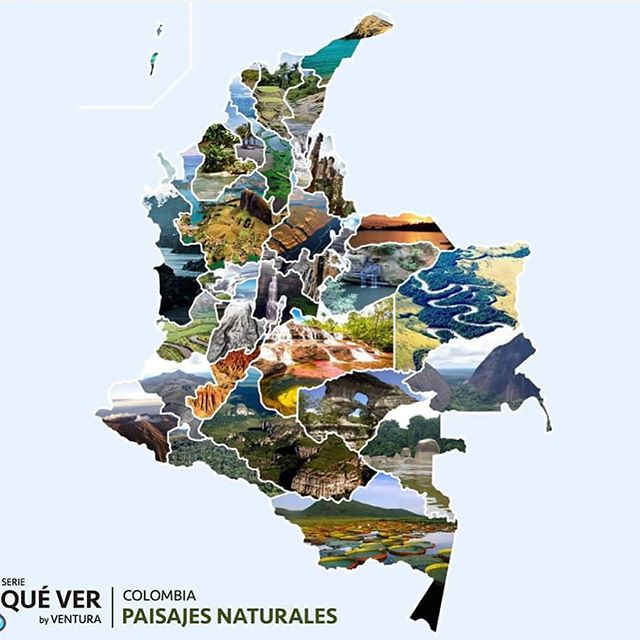
Some natural parks of Colombia: the hidden wealth of natural resources
Organizations that protect or study Colombia’s natural resources
- Ministry of Environment and Sustainable Development: the government body responsible for environmental policy in Colombia.
- Natural National Parks of Colombia: the government entity that administers and protects protected natural areas.
- WWF Colombia: international NGO working on the conservation of biodiversity and natural resources.
- Fundación Gaia Amazonas: NGO focused on protecting the Amazon and its Indigenous communities.
- Humboldt Institute: scientific research center on biodiversity and natural resources.
Colombia ranks first in the world for number of bird species and records 80,346 species in total, according to the Biodiversity Information System SiB Colombia, 2025. That leadership coexists with a mining and energy economy and with deforestation and illegal mining pressures that shape the management of its natural resources.
Colombia leads the world in birds, orchids and butterflies
With 80,346 species documented up to December 2024, Colombia is the fourth most biodiverse country, after Brazil, Indonesia and China SiB Colombia, 2025. The country leads three taxonomic groups globally.
- First in the world for birds, orchids and butterflies SiB Colombia, 2025.
- Second for amphibians, freshwater fish, palms and bats SiB Colombia, 2025.
- 63% of national biodiversity records are birds, contributed by observers on citizen science platforms SiB Colombia, 2025.
Coal, oil, gold and emeralds dominate mining and energy output
Colombia’s extractive base combines hydrocarbons, metal mining and precious stones. Official and industry figures set out the weight of each resource.
- Coal: Colombia was the thirteenth-largest producer worldwide in 2023, with 0.58% of global output; its coal exports fell 27.21% against 2022 GlobalData / Mining Technology, 2023.
- Oil: crude production reached 777,016 barrels a day in 2023, with proven reserves of 2,074 million barrels as of December 2022, equivalent to 7.5 years ANH, 2023.
- Gold: in 2022 the country exported 70.7 tonnes of gold for $2.9 billion ANM, 2022.
- Emeralds: Colombia is estimated to account for between 70% and 90% of the world emerald market Colombian emeralds, 2024.
Deforestation is concentrated in the Amazon departments
In 2024, Colombia lost 113,608 hectares of forest, 34% below the 2021 baseline, according to the Institute of Hydrology, Meteorology and Environmental Studies IDEAM, 2025. Deforestation is clustered in the Amazon.
- Caquetá: 25,263 hectares IDEAM, 2025.
- Meta: 21,107 hectares IDEAM, 2025.
- Guaviare: 16,908 hectares IDEAM, 2025.
- Putumayo: 5,443 hectares IDEAM, 2025.
In 2023, primary forest loss in Colombia had fallen close to 49% against 2022 WRI / Global Forest Watch, 2024.
Illegal mining and violence against environmental defenders
Colombia’s natural resources are the subject of conflicts documented by oversight bodies and international NGOs. The data is reported without interpretation.
- 85% of the gold exported by Colombia comes from illegal mining, according to the Office of the Comptroller General Contraloría General, 2022.
- In 2021, the country produced 55.3 tonnes of gold and exported 79.4 tonnes, a gap of 24.1 tonnes Contraloría General, 2022.
- In 2023, 79 environmental defenders were murdered in Colombia, more than a third of the world total of 196 Global Witness, 2024.
The electricity mix depends on hydropower
The Colombian electricity system rests on low-carbon sources. Hydropower dominates generation and exposes the country to climate variability.
- More than 73% of electricity comes from hydroelectric plants, and 80% from low-carbon sources; fossil fuels supply close to 20% Low Carbon Power, 2025.
- According to Ember, hydroelectric generation fell from 54.2 TWh in 2023 to 48.9 TWh in 2024, before recovering to 62.5 TWh in 2025, because of the effect of the El Niño and La Niña cycles on reservoirs Low Carbon Power, 2025.
Frequently asked questions
In which natural resource does Colombia rank first in the world?
Colombia leads the world in number of bird species, and also in orchids and butterflies, with 80,346 species recorded in total SiB Colombia, 2025.
What are Colombia’s main mining and energy resources?
Coal, oil, gold and emeralds. Colombia was the thirteenth-largest coal producer worldwide in 2023 GlobalData / Mining Technology, 2023 and accounts for between 70% and 90% of the world emerald market Colombian emeralds, 2024.
How much deforestation has Colombia recorded recently?
The country lost 113,608 hectares of forest in 2024, concentrated in Amazon departments such as Caquetá and Meta IDEAM, 2025.
Conclusion on Colombia’s natural resources
Colombia is recognized worldwide for the wealth of its water resources, wildlife and plant life. It is also known, to a lesser extent, for its gold, emeralds and coal, as well as its oil, copper, iron ore and natural gas.
More information:
Sources:
- Atlas of Economic Complexity (OEC)
- Wikipedia, coal
- Biodiversity by the numbers — SiB Colombia
- Annex: Countries by mineral production – Wikipedia
- Economic data by country – The Global Economy
- Forest area (km²) – World Bank
- Forest area as a percentage – World Bank
- Arable land area (km²) – World Bank
- Colombia’s oil reserves – The Global Economy
- Coal reserves – Worldometers
- Water and agriculture statistics – FAO
- Precipitation (mm) – World Bank
Last updated: September 26, 2026
Comentarios
Ultimas Publicaciones:
- Los 3 pilares del desarrollo sustentable —ambiental, social y económico— explicados con datos de la ONU, el Informe Brundtland […]
- Guía sobre la minería: sus tipos (a cielo abierto, subterránea y aluvial), qué se extrae, su impacto ambiental y […]
- Qué son los combustibles fósiles (petróleo, carbón y gas), cómo se forman y por qué son recursos no renovables […]
- El gas natural es un combustible fósil de metano: descubre cómo se forma, sus usos, las mayores reservas del […]
- El carbón mineral es un combustible fósil no renovable rico en carbono. Descubre sus tipos (antracita, hulla, lignito), cómo […]
- El petróleo es un combustible fósil no renovable formado durante millones de años. Descubre qué es, cómo se forma, […]
- La transición energética es el paso de los combustibles fósiles a fuentes limpias como la solar y la eólica. […]
- Guía práctica de autoconsumo solar: cómo funciona la energía solar en casa, componentes, costos, amortización y compensación de excedentes.
- Guía de los 6 tipos de energías renovables — solar, eólica, hidráulica, geotérmica, biomasa y marina— con datos de […]
- Ventajas y desventajas de las energías renovables: costos, emisiones, empleo, intermitencia y minerales críticos, con datos verificados de IRENA, […]
Leave a Reply