

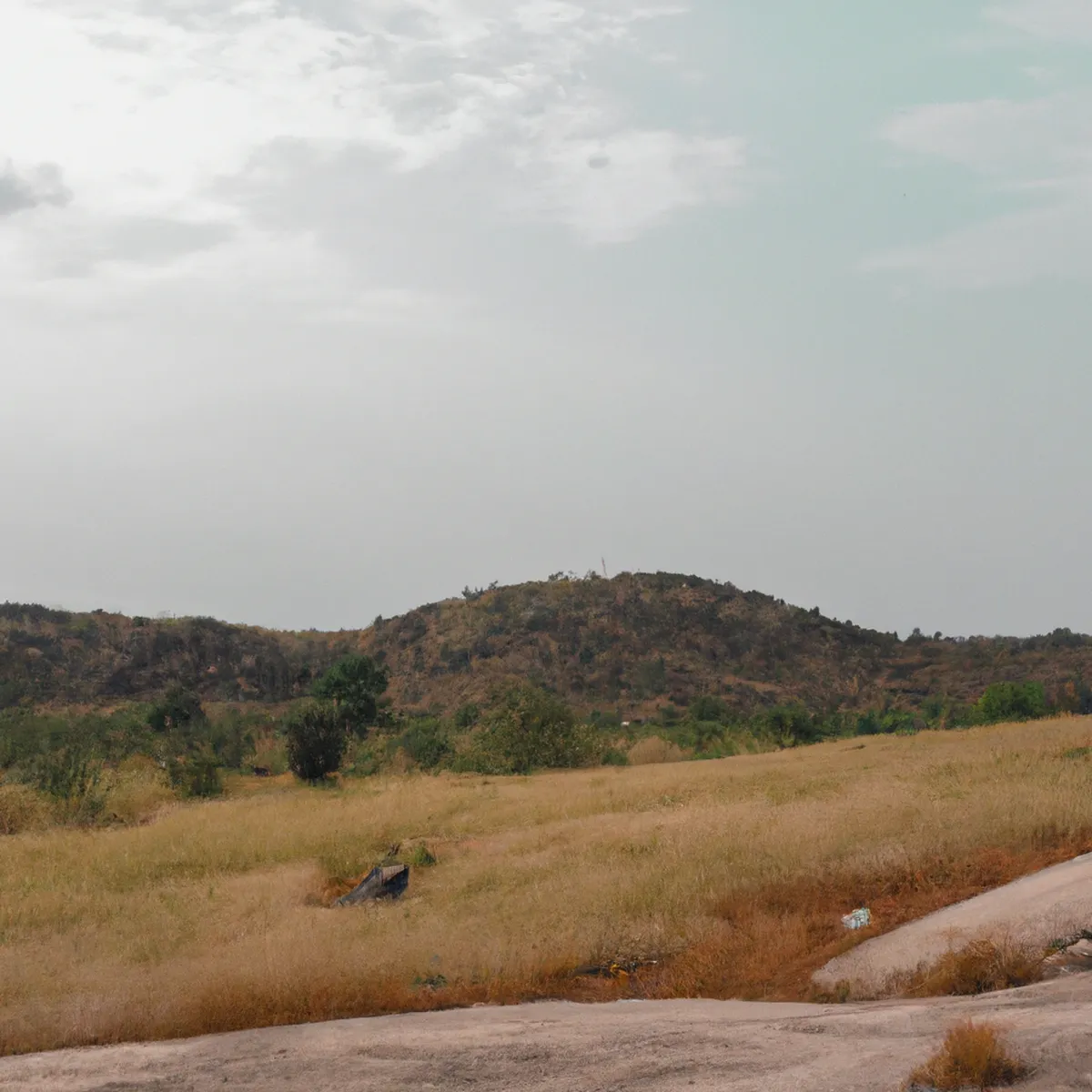
Nigeria’s natural resources stand out for its oil and natural gas reserves, with gas output of 39.1 billion cubic meters in 2024 placing it 19th in the world. The country holds 286.2 km³ of renewable fresh water, the Niger River and the 760 MW Kainji hydroelectric plant. What natural wealth does Nigeria hold?
Nigeria is a country rich in natural resources, on the west coast of Africa. Its vast rainforests, rivers, lakes and extensive oil and natural gas reserves are among the resources that make it an important player in the global economy.
Table de contenidos
Alongside its unique biodiversity, Nigeria also has a rich history and culture. Despite its abundance of natural resources, however, poverty and inequality remain a challenge for many Nigerians.
What are Nigeria’s most important natural resources? What natural wealth does the country hold? How many mineral resources does it have, and where does it rank worldwide? How diverse are Nigeria’s wildlife and plant life?
Natural Resources
Natural resources are materials or energy sources provided by or found on Earth that are useful to humans. Every product we manufacture is made up of natural resources.
- Renewable resources: these can be restored by natural processes faster than the rate at which they are consumed. Examples include solar radiation, wind, hydroelectric power, water when used properly, and plant and animal life.
- Non-renewable resources: once extracted, these are depleted and cannot regenerate. Examples include hydrocarbons, metals and minerals.
Examples of Nigeria’s main natural resources
Nigeria’s environmental indicators
Official data on forest, water, energy and threatened species.
| Forest cover | 23.2% of the territory2023 |
|---|---|
| Renewable fresh water per capita | 990 m³ per year2022 |
| Electricity from renewable sources | 22.2% of total generation2021 |
| Threatened species | 416 mammals, birds, fish and plants2022 |
| Protected land area | 13.9% of the territory2025 |
| Arable land | 40.5% of the territory2023 |
Gas resources in Nigeria
Nigeria has abundant natural gas resources, giving it annual output of 39.1 billion cubic meters in 2024. The country sits nineteenth (19th) in the world ranking of natural gas producers (EIA, 2024).
Examples of Nigeria’s mineral resources
Nigeria holds proven coal reserves of about 2.14 billion tonnes as of 2023. The main coal-producing region in Nigeria is Enugu State, in the southeast of the country.
Water resources of Nigeria
Nigeria holds total renewable freshwater resources of 286.2 km³, placing it thirty-third in the global ranking of water reserves as of 2020. This African country has a great many water resources, with the Niger and Benue rivers the main waterways crossing its territory.
Lake Chad is Nigeria’s largest lake and one of the most important in Africa.

Average rainfall and soils of Nigeria
Nigeria has average annual rainfall of 1,150 mm, placing it seventy-eighth worldwide. Because of that moisture, the country’s soils are mostly damp and fertile, which favors agriculture and food production.
Renewable electricity and hydropower production in Nigeria
In 2025, Nigeria generated 13.0 TWh of electricity from renewable sources — 31% of its total generation of 41.5 TWh — and hydropower alone supplied 12.8 TWh (Ember, 2025). The country’s main hydroelectric plant is Kainji, on the Niger River, with installed capacity of 760 MW.

That plant is central to electricity generation in Nigeria and has been fundamental to the country’s economic development.
Forest resources of Nigeria
Nigeria holds considerable forest wealth, its main forest region being Cross River. According to the World Bank (2022), the country’s forest area reaches 23.39% of its land area, equivalent to some 213,003.5 km².
That places Nigeria 26th worldwide for forest area.
Environmental performance and protection of Nigeria’s natural resources
Nigeria is a country with a great variety of natural resources. On the Environmental Performance Index (EPI 2024), Nigeria scored 37.9 and ranked 140th. Protected land and marine areas account for 11.61% of the country’s total territorial area. The relationship between protected areas and its position on the environmental performance index is crucial to guaranteeing the conservation of natural resources.
Natural parks of Nigeria: the hidden wealth of natural resources
Biodiversity: animal and plant resources of Nigeria
Birds of Nigeria
Nigeria is a country of great bird diversity, with 926 species in total, ranking 22nd in the world for number of bird species. It also has 3 endemic bird species.
It is worth noting, however, that 23 bird species are threatened.

Fish and amphibians of Nigeria
The country records 118 amphibian species, placing it 29th worldwide for number of species of this kind.
It also counts 803 fish species, the flagship species being the African catfish. 102 fish species are threatened in the country.
Mammals of Nigeria
Nigeria is a country of rich biodiversity, with a total of 315 mammal species, of which 35 are threatened. Worldwide, it sits around 26th for number of mammal species.
It also has 5 endemic mammal species, placing it thirty-eighth in the world ranking.
Reptiles of Nigeria
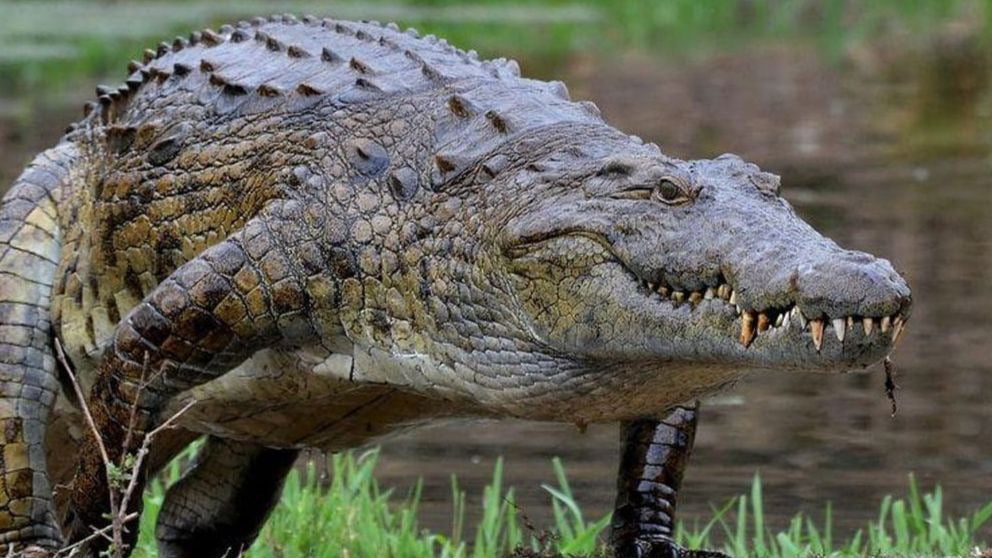
Nigeria is a country of great reptile diversity, with a total of 207 reptile species, placing it 46th worldwide. This natural resource is of great importance to the country’s biodiversity, notably the Nile crocodile, which lives in the rivers and lakes of the region.
Plants of Nigeria
Nigeria has great vascular plant diversity, with a total of 3,378 recorded species, placing it 71st worldwide. Among the most notable is the oil palm, a plant of great economic and cultural importance in the country.
Nigeria holds the largest proven natural gas reserves in Africa, estimated at some 210 trillion cubic feet, and is also the continent’s largest oil producer, according to the U.S. Energy Information Administration, 2025.
Oil and gas: the continent’s engine
The country produced around 1.5 million barrels a day of crude and condensate in 2024, keeping it Africa’s leading oil producer. Its gas reserves stand at around 211 trillion cubic feet, the largest in Africa, according to the EIA Country Analysis Brief, 2025.
An economy dependent on resources
Total natural resource rents represented 8.55% of Nigerian GDP in 2021, with oil and gas the dominant components, according to indicators from the World Bank, 2021. That dependence exposes public finances to the volatility of international crude prices.
The Niger Delta and oil pollution
An independent assessment of the delta documented environmental impacts after more than 50 years of oil operations. In the community of Nisisioken Ogale, drinking water contained benzene at levels more than 900 times higher than WHO guidelines, according to the UNEP report on Ogoniland, UN, 2011. The study estimated a cleanup of 25 to 30 years.
Organizations that protect or study Nigeria’s natural resources
- Federal Ministry of Environment of Nigeria: the federal body coordinating environmental policy and natural resource conservation.
- Nigeria National Park Service: manages and protects the country’s national parks and their wildlife.
- NESREA – National Environmental Standards and Regulations Enforcement Agency: the federal agency that enforces the country’s environmental standards and regulations.
- Nigerian Conservation Foundation (NCF): pioneering NGO dedicated to nature conservation and sustainable development.
- Wild Africa: international organization running wildlife conservation campaigns in Nigeria.
Frequently asked questions
Where does Nigeria rank for oil and gas within Africa? It is the continent’s largest crude producer and holds its largest proven natural gas reserves, some 210 trillion cubic feet, according to the EIA, 2025.
How is Nigeria rated on environmental performance? The 2024 Environmental Performance Index placed it 140th with a score of 37.9, according to Yale University, 2024.
Sources used
- Annex: Countries by mineral production – Wikipedia
- Economic data by country – The Global Economy
- Forest area (km²) – World Bank
- Forest area as a percentage – World Bank
- Coal reserves – Worldometers
- Water and agriculture statistics – FAO
- Precipitation (mm) – World Bank
- Environmental performance index – Environmental Performance Index
- Bird species – Mongabay
- Amphibian species by country – Mongabay
- Mammal species – Mongabay
- Plant species – Mongabay
- Reptile species by country – Mongabay
- Endemic bird species by country – Our World in Data
The World Bank noted in 2023 that Nigeria is Africa’s largest oil producer and the continent’s biggest economy, with the hydrocarbon sector accounting for close to 90% of its export earnings.
Last updated: September 26, 2026
Leave a Reply