


Russia’s natural resources make it an energy and mining power, ranking second worldwide in natural gas production and pumping some 10.5 million barrels of oil a day in 2024. It has the largest forest area on the planet, roughly 8,153,000 km², and the world’s second-largest freshwater reserve. What natural resources does Russia have besides hydrocarbons?
Russia is one of the planet’s richest countries in natural resources. The vast extent of its territory hosts a wide variety of ecosystems, climates and wildlife, as well as major deposits of minerals and fossil fuels.
Table de contenidos
Natural gas and oil, two non-renewable natural resources, are central to Russia.
The wealth of Russia’s natural resources has been central to its economic and political development, and has drawn the interest of other nations. It has also created challenges in terms of conservation, extraction and the equitable distribution of those resources.
Which natural resources in Russia stand out most? What makes up the country’s natural wealth? Which mineral resources are available, and where does Russia sit in the global rankings? How much water is available, and which resources are used to generate power?
Natural Resources
Natural resources are materials or energy sources provided by or found on Earth that are useful to humans. Every product we manufacture is made up of natural resources.
- Renewable resources: these can be restored by natural processes faster than the rate at which they are consumed. Examples include solar radiation, wind, hydroelectric power, water when used properly, and plant and animal life.
- Non-renewable resources: once extracted, these are depleted and cannot regenerate. Examples include hydrocarbons, metals and minerals.
Examples of Russia’s main natural resources
What Russian territory produces
Natural resource rents, fisheries and farm use, alongside conservation status.
| Total natural resource rents | 18.5% of GDP2021 |
|---|---|
| Capture fisheries | 5,018,710 t per year2024 |
| Agricultural area | 13.2% of the territory2023 |
| Arable land | 7.4% of the territory2023 |
| Forest cover | 49.8% of the territory2023 |
| Protected land area | 11.5% of the territory2025 |
| Resource | Reserves / Production | Source |
|---|---|---|
| Oil | ≈10.5 million barrels/day (2024); global top 3 | Statista |
| Natural gas | world’s No. 2 producer | EIA |
| Coal | 399.8 million t (2020); 6th in the world | USGS |
| Aluminum | 3,600 thousand t (2019); 3rd in the world | USGS |
| Iron ore | 99,000 thousand t (2019); 5th in the world | USGS |
| Forest area | ≈8,153,000 km²; the largest on the planet | World Bank |
Oil and gas resources in Russia
Russia is one of the world’s leading oil producers. In 2024 its oil output held at around 10.5 million barrels a day, keeping it among the three largest oil producers worldwide (Statista).
It also holds a great volume of oil reserves, estimated at 80,000,000,000 barrels as of 2022, placing it eighth (8th) in the global ranking of oil reserves.
Russia also has abundant natural gas resources, giving it dry natural gas output of 642.0 billion cubic meters in 2024 (EIA). The country sits second (2nd) in the world ranking of natural gas producers.
Examples of Russia’s mineral resources
Russia is one of the world’s leading producers of coal worldwide. In 2020 its output reached 399.8 million tonnes, placing it sixth in the global ranking. It also holds a great volume of coal reserves, totaling about 160.4 billion tonnes as of 2016, or 15.50% of world reserves. The main coal-producing region in Russia is Siberia.
In 2019, production of aluminum in Russia reached 3,600 thousand tonnes, placing it third in the global ranking. The main aluminum-producing region in Russia is Siberia.
In 2020, production of copper in Russia reached 850 thousand tonnes, placing it seventh in the global production ranking for this resource. The main copper-producing region in Russia is the Urals, where major deposits of this metal are found.
In 2019, production of iron ore in Russia reached 99,000 thousand tonnes, placing it fifth in the global production ranking for this resource. The main iron-ore-producing region in Russia is Kursk, in the southwest of the country.
In 2018, Russia produced a total of 2,100 tonnes of silver, placing it fourth in the global production ranking for this precious metal. The main silver-producing region in Russia is Siberia.
Russia is the world’s second-largest producer of platinum with output of 22,000 kilograms in 2019. The country’s main producer is Norilsk Nickel, responsible for most of Russia’s platinum production.
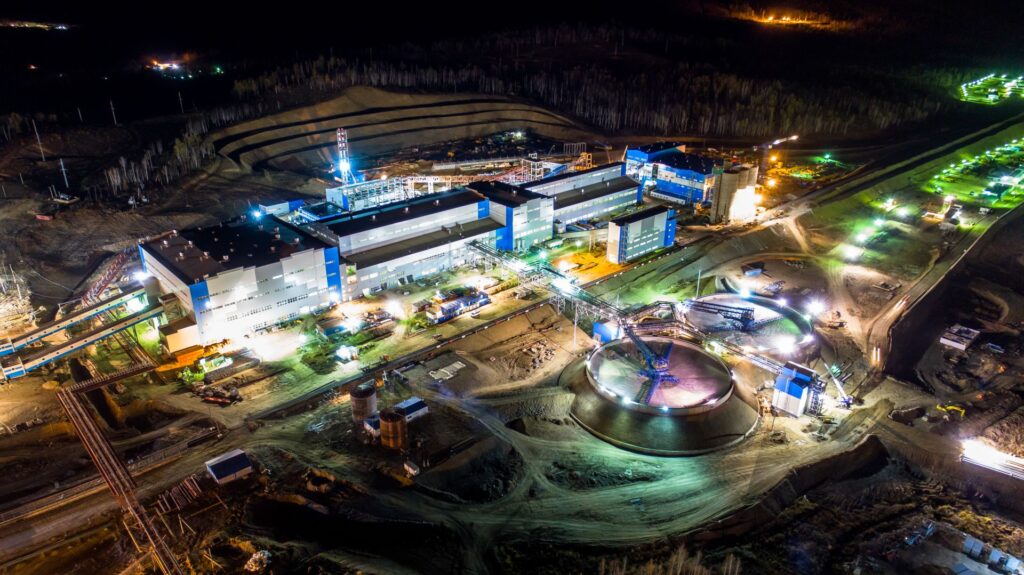
Russia is also the third-largest producer of gold worldwide, with output of 300 tonnes in 2020, and holds reserves of gold of 5,300 tonnes. The country’s main mine is the gold mine at Olimpiada, in the Krasnoyarsk region.
Water resources of Russia
Russia holds an impressive freshwater reserve of 4,508 km³, placing it second in the global ranking of water reserves as of 2020. That volume of water is fundamental to the development and wellbeing of the Russian population, as well as to agriculture and industry.
Among the country’s main bodies of water are the Volga and Lena rivers, along with Lake Baikal, considered the deepest lake in the world.

Average rainfall and soils of Russia
Russia has average annual rainfall of 460 mm, placing it one hundred and twenty-seventh (127th) worldwide on this climate factor. Because of the country’s actual humidity, Russian soils range from boggy to dry and arid, depending on the region.
Renewable electricity and hydropower production in Russia
In 2025, Russia generated 207.0 TWh of electricity from renewable sources — 17% of its total generation of 1,192.8 TWh — and hydropower alone supplied 199.7 TWh (Ember, 2025). The Sayano-Shushenskaya plant is Russia’s largest.
That plant, in Siberia, has installed capacity of 6,400 MW and is one of the largest in the world.
Forest resources of Russia
Russia is the country with the largest forest area in the world, totaling some 8,153,000 km² according to 2023 data (World Bank), which represents a significant share of its land area. This natural resource is of great importance to the country’s economy, since it is used in timber and paper production as well as in generating renewable energy.

Environmental performance and protection of Russia’s natural resources
Russia has an Environmental Performance Index (EPI 2024, Yale University) of 46.7 and ranks 83rd of 180 countries on the index. It also has 8.57% of protected land and marine areas relative to its total territorial area, showing its commitment to conserving natural resources.
Natural parks of Russia: the hidden wealth of natural resources
Biodiversity: animal and plant resources of Russia
Birds of Russia
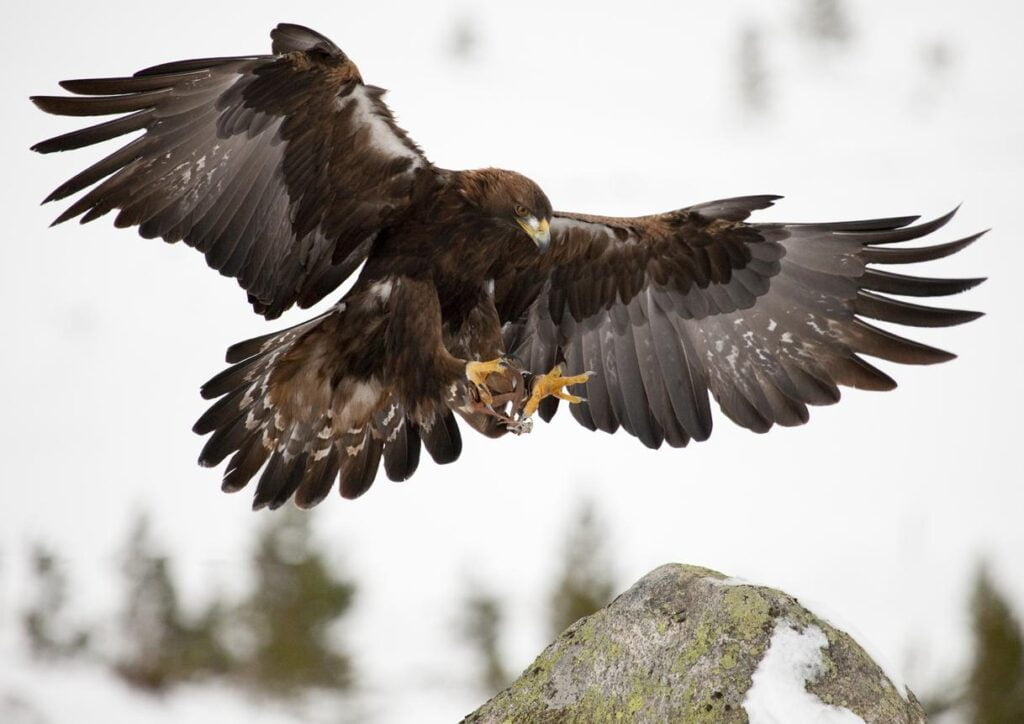
Russia is a country of great bird diversity, with a total of 661 species as of 2018, placing it 46th worldwide for number of bird species.
It also has 57 threatened bird species; the Siberian crane stands out among them.
Fish and amphibians of Russia
In 2019, 33 amphibian species were recorded in the country, placing it 68th worldwide for number of species of this kind.
Russia has a total of 956 fish species, ranking 56th worldwide. Of those species, however, 39 are threatened.
The country’s flagship amphibian and fish species are the Siberian wood frog and the Siberian sturgeon, respectively.

Mammals of Russia
Russia has great mammal diversity, including 21 endemic species.
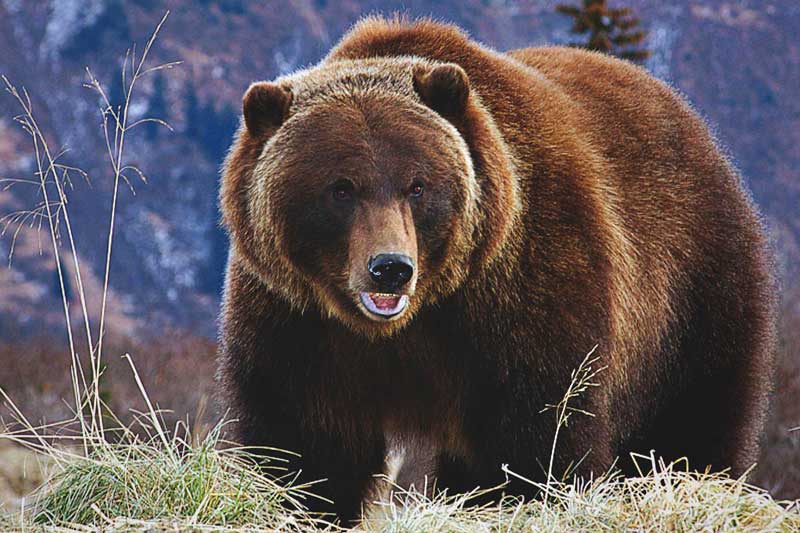
Among the most notable is the brown bear, considered the country’s flagship mammal. Although Russia ranks twentieth for endemic mammals, continued work to protect these species matters for their survival.
Reptiles of Russia
Russia has a total of 89 reptile species, ranking 83rd worldwide for diversity of these animals. This natural resource is of great importance to the country, notably the viviparous lizard, found across various regions of Russia.
Organizations that protect or study Russia’s natural resources
- Ministry of Natural Resources and Environment of Russia: the Russian ministry that regulates the use and protection of natural resources.
- Roszapovedcentr (Center for Protected Natural Areas): the state center that manages Russia’s nature reserves and national parks.
- Russian Geographical Society: historic society researching the country’s geography, nature and ecology.
- Severtsov Institute of Ecology and Evolution (RAS): institute of the Russian Academy dedicated to ecology and biodiversity.
- Russian Academy of Sciences: scientific academy coordinating ecological and natural resource research.
- International Union for Conservation of Nature (IUCN): international union that conserves nature and assesses threatened Russian species.
The largest forest in the world
Russia holds some 815 million hectares of forest, 20.1% of the planet’s forest area and the largest of any country, according to FAO data compiled by FAO, 2022. The Siberian taiga dominates that boreal mass.
World leader in palladium
The country is the world’s leading palladium producer, with close to 89,000 kilograms extracted in 2024, according to the United States Geological Survey cited by USGS, 2025. Nornickel leads that production, which is critical for automotive catalytic converters.
The largest wheat exporter
Russia is the world’s largest wheat exporter. In the 2023/24 season it shipped a record close to 53 million tonnes, around 26% of global trade, according to the FAO, 2025. Its lead shapes prices across the Middle East and North Africa.
Environmental performance
Despite its enormous resource endowment, Russia ranks 83rd with a score of 46.7 on the Environmental Performance Index, according to Yale EPI, 2024. The figure reflects the challenge of managing such a broad natural estate.
Frequently asked questions
Which country has the largest natural gas reserves? Russia leads with around 47,800 km³ of proven reserves, ahead of Iran and Qatar (EIA, 2021).
How much forest does Russia have? Close to 815 million hectares, 20.1% of the world’s forest area and the largest of any country (FAO, 2022).
Leave a Reply