


Latvia’s natural resources center on its forests, which cover 55% of the territory (34,224 km²), along with freshwater, peat and fertile soils. The country has 35.45 km³ of renewable freshwater resources and generated 4.7 TWh of electricity from renewable sources in 2025 (Ember). What biodiversity do Latvia’s natural resources support? The country has recorded 327 bird species and 1,648 vascular plants, and it has an environmental performance index score of 60.2.
Latvia is a country on the Baltic Sea coast in northern Europe. Its landscape is largely forested, with rich biodiversity and a variety of natural resources.
Table de contenidos
The country’s economy depends heavily on the exploitation of these resources, including forests, peat, fertile soil, clean air and freshwater. Latvia is also known for its unique flora and fauna, with species such as the Eurasian lynx, the osprey and the marsh orchid.
Preserving these resources is essential for Latvia’s sustainable development.
What are Latvia’s most important natural resources? How rich is the country’s natural wealth? How much water does it have, and what are its energy sources? What animals and plants are found in Latvia?
Natural resources
Natural resources are materials or energy sources provided by or found on Earth that are useful to humans. Every product we manufacture is made up of natural resources.
- Renewable resources: these can be restored by natural processes faster than the rate at which they are consumed. Examples include solar radiation, wind, hydroelectric power, water when used properly, and plant and animal life.
- Non-renewable resources: once extracted, these are depleted and cannot regenerate. Examples include hydrocarbons, metals and minerals.
Examples of Latvia’s main natural resources
Latvia in figures: land and conservation
Area, land use and protected areas, with their reference year.
| Land area | 62,230 km²2023 |
|---|---|
| Protected land area | 18.8% of land area2025 |
| Marine protected areas | 16.4% of its waters2025 |
| Forest cover | 55.0% of land area2023 |
| Agricultural land | 31.7% of land area2023 |
| Threatened species | 21 mammals, birds, fish and plants2022 |
Water resources of Latvia
Latvia has 35.45 km³ of renewable freshwater resources, which places it 92nd in the world ranking. This Baltic country has a significant amount of freshwater; its most important rivers are the Daugava and the Gauja, and its largest lake is Lake Lubāns.

Average rainfall and soils of Latvia
Latvia has an average annual rainfall of 667 mm, which placed it 100th in the world ranking for average annual rainfall in 2020. Because of this moisture, Latvia’s soils are mainly peat and clay, which makes them very fertile and suitable for agriculture.
Renewable electricity and hydropower production in Latvia
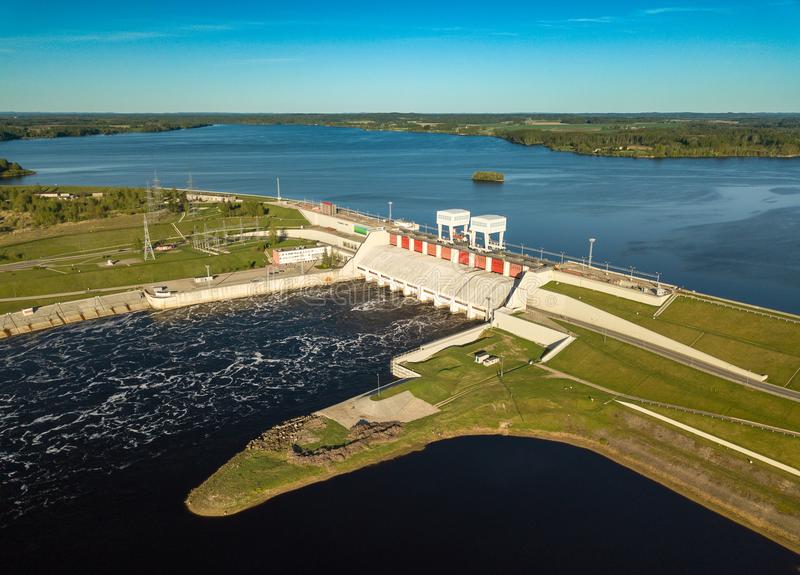
In 2025, Latvia generated 4.7 TWh of electricity from renewable sources — 74% of its total generation of 6.3 TWh — and hydropower alone supplied 3.0 TWh (Ember, 2025). The country’s main hydroelectric plant is the Pļaviņas hydroelectric power plant on the Daugava River, which has an installed capacity of 908 MW.
Forest resources of Latvia
Latvia is a country rich in forest resources, and its main forest region is Vidzeme. In 2023, the country’s forest area accounted for 55.0% of its land area, equivalent to 34,224 km² (The Global Economy).
Globally, Latvia ranks 79th in forest area.
Environmental performance and protection of Latvia’s natural resources
Latvia has an Environmental Performance Index (2024) score of 60.2 and ranks 30th on the Environmental Performance Index. In addition, terrestrial and marine protected areas make up 17.53% of its total territorial area, which shows its commitment to conserving natural resources.
Natural parks of Latvia: the hidden wealth of natural resources
Biodiversity: animal and plant resources of Latvia
Birds of Latvia
Latvia has a rich diversity of birds, with a total of 327 species recorded in 2024 (World Rainforests).
However, 11 of these species are endangered, so it is essential to protect and conserve this natural resource. Among the most notable species is the osprey, while the country’s national bird is the white wagtail.

Fish and amphibians of Latvia
Latvia has a diversity of amphibian and fish species, notably the common frog and the Atlantic salmon. In 2024, 13 amphibian species and 119 fish species were recorded in the country (World Rainforests).
However, 6 threatened fish species have been identified in the country.
Reptiles of Latvia
Latvia has a total of 7 reptile species, which places it 136th in the world ranking for number of reptile species. This natural resource is very important for the country’s biodiversity, and a notable species is the viviparous lizard.
Plants of Latvia
Latvia has a great diversity of vascular plants, with a total of 1,648 species recorded in 2020, placing it 93rd in the world. Among the most notable species is the small-leaved linden (Tilia cordata), known as Latvia’s national tree, which is characterized by its heart-shaped leaves and fragrant yellow flowers.

Organizations that protect or study Latvia’s natural resources
- Nature Conservation Agency of Latvia – Manages Latvia’s protected nature areas and the protection of its species and habitats.
- Latvian Fund for Nature – Protects Latvia’s biodiversity and ecosystems.
- Greenpeace Latvia – Promotes environmental protection and sustainability in Latvia.
- Ministry of Smart Administration and Regional Development of Latvia – Manages and promotes environmental protection and sustainability in Latvia.
Latvia is one of the most forested countries in the European Union: forest covers more than half of its territory (about 53%), with some 677 million cubic meters of standing timber, and wood products are its leading export sector, worth €3,300 million, or 17.3% of the total value of exports in 2023, according to the Investment and Development Agency of Latvia (LIAA, 2023).
Timber: the top export product
With 677 million cubic meters of standing timber, the wood industry leads Latvia’s foreign trade. In 2023, exports of wood and wood products totaled €3,300 million, 17.3% of all exports, with a positive trade balance of €2,300 million (LIAA, 2023). Wood processing accounts for around 20% of the country’s exports (WorldAtlas).
Peat: peatlands cover about 10% of the territory
Peatlands cover about 6,400 square kilometers, around 10% of Latvia’s territory. The country has more than 10,000 peat deposits, with the capacity to produce more than 1.7 million tonnes a year, mostly exported to Western Europe (WorldAtlas).
Electricity: the Daugava drives the grid
About 66% of the electricity consumed in Latvia is low-carbon, and hydropower supplies more than a third of it, making it the largest single source (Low Carbon Power, 2025-2026). Most of it comes from three plants on the Daugava River, Pļaviņas, Ķegums and Rīga (Energy in Latvia, Wikipedia), and Pļaviņas, at 908 MW, is the largest hydroelectric plant in the Baltic states (Pļaviņas HPP, Wikipedia).
Sources used
- Economic data by country – The Global Economy
- Forest area (km²) – World Bank
- Forest area (% of land area) – World Bank
- Water and agriculture statistics – FAO
- Precipitation (mm) – World Bank
- Environmental Performance Index – Environmental Performance Index
- Bird species – Mongabay
- Amphibian species by country – Mongabay
- Plant species – Mongabay
- Reptile species by country – Mongabay
- Endemic bird species by country – Our World in Data
The Ministry of Smart Administration and Regional Development of Latvia reported in 2023 that forests cover more than 54% of the territory, making timber and wood products a strategic resource.
Last updated: September 26, 2026
Leave a Reply