


Barbados’s natural resources are above all its beaches, coral reefs and marine biodiversity, rather than its tiny oil and gas reserves. What are the most important natural resources of Barbados? The 430 km² island has 0.08 km³ of renewable freshwater resources, forest cover of 14.65% and 529 fish species, along with endemic birds such as the Barbados bullfinch.
Barbados is a 430 km² Caribbean island located in the Atlantic. Its tropical climate and limestone soil make it a paradise for biodiversity.
Table de contenidos
The natural resources of Barbados include white-sand beaches, coral reefs, mangroves and tropical forests. It also has small reserves of oil and natural gas: about 2 million barrels of crude oil and 113 million cubic meters of gas (2021 estimates).
The economy of Barbados depends heavily on the exploitation of these resources, with tourism as its leading sector.
What are the natural resources of Barbados? What is the country’s natural wealth like? How much water does it have, and how much energy does it generate? Is there a variety of wildlife and plants in Barbados? What is done with its soils, and how is biodiversity protected?
Natural resources
Natural resources are materials or energy sources provided by or found on Earth that are useful to humans. Every product we manufacture is made up of natural resources.
- Renewable resources: these can be restored by natural processes faster than the rate at which they are consumed. Examples include solar radiation, wind, hydroelectric power, water when used properly, and plant and animal life.
- Non-renewable resources: once extracted, these are depleted and cannot regenerate. Examples include hydrocarbons, metals and minerals.
Examples of Barbados’s main natural resources
What the subsoil of Barbados is worth
The economic weight of the country’s natural wealth and the conservation status of its territory.
| Natural resource rents | 0.3% of GDP2021 |
|---|---|
| Oil rents | 0.3% of GDP2021 |
| Forest cover | 14.7% of land area2023 |
| Protected land area | 1.1% of land area2025 |
| Land area | 430 km²2023 |
Oil and gas resources in Barbados
Barbados produced 1,000 barrels of oil per day in 2021, which places it 67th in the world ranking of oil production. It also had oil reserves of 2,315,000 barrels in 2022, placing it 79th in the world ranking of oil reserves.
Despite these figures, Barbados is not known as an oil-producing region, since its main natural resources are its beaches and its tourism.
Its natural gas production was about 8 million cubic meters in 2023 (CIA World Factbook estimate).
Water resources of Barbados
Barbados has 0.08 km³ of renewable freshwater resources, which places it 149th in the world ranking of water reserves. Although this is a limited amount, the island has put measures in place to guarantee its population access to drinking water.
Its best-known river is the Constitution River, also known as the Careenage, which runs through the center of Bridgetown, and its main wetland is Graeme Hall Swamp, a brackish Ramsar site.

Average rainfall and soils of Barbados
Barbados has an average annual rainfall of 1,422 mm, which places it 54th in the world for precipitation. Soils in Barbados vary with the country’s actual moisture levels: they are wetter where rainfall is higher and drier where rainfall is lower.
Forest resources of Barbados
Barbados has forest area covering 14.65% of its territory, equivalent to 63 km². Although this is not a large area, this forest region is an important resource for the island, as it helps conserve biodiversity and maintain the ecological balance.
Globally, Barbados ranks 160th for forest area. One of its most important forests is Turner’s Hall Wood, a national forest and nature reserve in the parish of Saint Andrew.

Environmental performance and protection of Barbados’s natural resources
As of 2024, Barbados has an Environmental Performance Index (EPI) score of 53.1 and ranks 46th in the world. It also has protected areas covering only 1.1% of its land area (World Bank, 2025). More: Environmental Performance Index 2024 (Yale).
Natural parks of Barbados: the hidden wealth of natural resources
Biodiversity: animal and plant resources of Barbados
Birds of Barbados
Barbados has a rich diversity of birds, with a total of 207 species in 2018, placing it 157th in the world. It also had one endemic bird species in 2020 and four threatened bird species in 2018.
Conserving these species is an invaluable resource for the country, especially its flagship bird, the Barbados bullfinch.

Fish and amphibians of Barbados
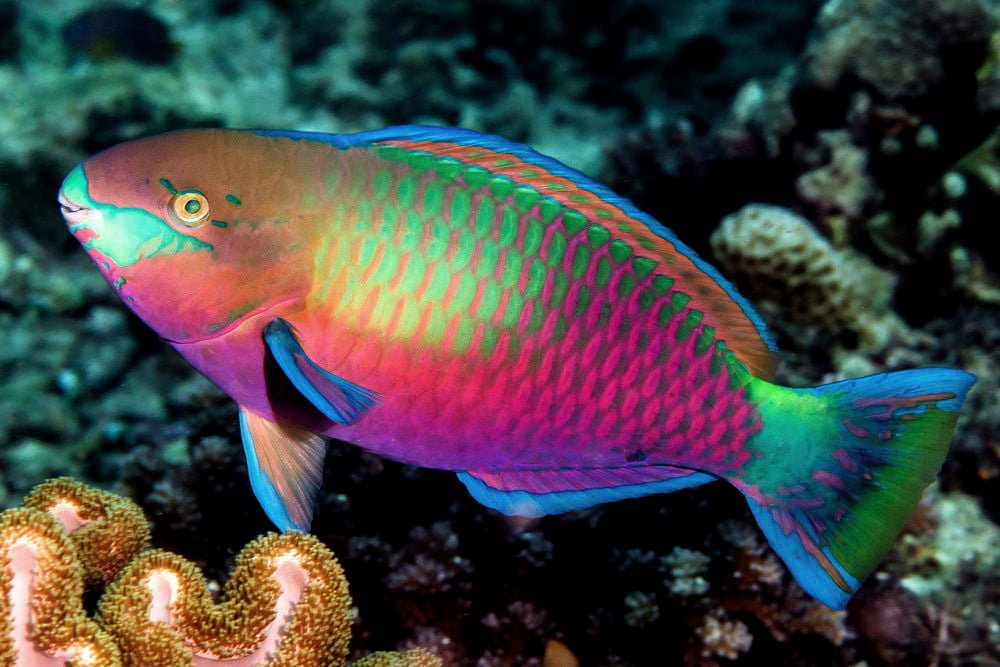
Barbados has rich biodiversity, with 2 amphibian species and 529 fish species; its flagship amphibian is the Barbados whistling frog (Eleutherodactylus johnstonei) and its flagship fish is the parrotfish. Despite its large number of fish species, 29 of them are threatened.
Globally, Barbados ranks 95th for number of amphibian species and 108th for number of fish species, which shows the importance of conserving this natural resource.
Mammals of Barbados
Barbados has a great diversity of animal species, but the situation is different when it comes to mammals. According to 2016 data, there are 3 threatened mammal species on the island.
In addition, no endemic mammals were recorded in Barbados in 2020, which places it 86th in the world ranking of countries by endemic mammals.
Reptiles of Barbados
Barbados has a diversity of reptiles totaling 12 species, placing it 131st in the world ranking. This natural resource is very important for the island, and its flagship species is the Barbados anole (Anolis extremus), native to the island.
Organizations that protect or study Barbados’s natural resources
- Future Centre Trust – Promotes sustainability and environmental education in Barbados.
- Caribbean Community Climate Change Centre – Studies and addresses the impacts of climate change in Barbados and the wider Caribbean region.
- Global Water Partnership Caribbean – Promotes sustainable water management in Barbados and the Caribbean.
- Caribbean Birding Trail – Supports the conservation of birds and their habitats in Barbados and the Caribbean.
Barbados is the birthplace of rum: the earliest known record of rum production (setting aside Brazilian cachaça) comes from the island, in a 1651 document describing a sugarcane spirit called “Rumbullion.” The Mount Gay distillery, whose oldest deed dates from 1703, is the oldest commercial rum company in the world (Rum, Wikipedia, 1651 document; Mount Gay Rum, Wikipedia, 1703).
Sugar and rum: the agro-industrial backbone
Sugarcane sustained the Barbadian economy for centuries and still carries weight in its exports. In 2001, sugar exports totaled $22 million, 8.4% of total exports, while sugarcane production had fallen to 500,000 tonnes in 1999, down from an annual average of 584,000 tonnes between 1989 and 1991. Rum is the country’s second-largest export, behind only petroleum products, and is made in four commercial distilleries (Economy of Barbados, Wikipedia, 1999–2001 data).
Onshore oil and gas
Despite its size, Barbados extracts hydrocarbons from its own soil. By 2025 it had about 257 onshore oil wells, of which only 50 to 55 were still operating. Natural gas produced on the island covered about 30% of domestic demand in 2025, according to the state-owned oil company BNOC (Economy of Barbados, Wikipedia, 2025).
Solar water heaters: energy from the rooftops
Barbados is among the world’s top five countries for installed solar water heating capacity per capita, along with Austria, Cyprus, Israel and Greece. The technology uses the Caribbean sun to heat water without imported fuels, and it has become an everyday energy resource on the island’s rooftops (Solar water heating, Wikipedia).
Sources used
- List of countries by mineral production – Wikipedia
- Economic data by country – The Global Economy
- Forest area (km²) – World Bank
- Forest area (% of land area) – World Bank
- Arable land area (km²) – World Bank
- Oil reserves – The Global Economy
- Coal reserves – Worldometers
- Water and agriculture statistics – FAO
- Precipitation (mm) – World Bank
- Environmental Performance Index – Environmental Performance Index
- CO2 emissions (tonnes per capita) – World Bank
- Bird species – Mongabay
- Amphibian species by country – Mongabay
- Mammal species – Mongabay
- Endemic mammal species – Our World in Data
- Plant species – Mongabay
- Reptile species by country – Mongabay
- Endemic bird species by country – Our World in Data
Last updated: September 26, 2026
Leave a Reply