


Honduras’s natural resources include gold, silver, zinc, timber, and abundant freshwater reserves. Forest cover spans 56.27% of the national territory (62,964 km²), supporting 739 bird species across rich tropical biomes. The Francisco Morazán hydroelectric facility provides 300 MW of installed generating capacity. What are the principal natural resources of Honduras, and how does the nation manage its water, mineral, and agricultural wealth?
Honduras is a Central American nation endowed with an exceptional variety of natural resources. Situated at the core of the Central American isthmus, its diverse geography encompasses rugged mountain ranges, fertile alluvial valleys, major river systems, and coastlines along both the Caribbean Sea and the Pacific Ocean. This varied terrain has fostered extraordinary biological diversity, including numerous endemic species. Within the wider framework of Latin America’s natural resources, Honduras occupies a strategic ecological crossroads.
Table de contenidos
The country’s primary natural resources include metallic minerals such as gold, silver, lead, and zinc, alongside valuable timber and non-timber forest products. Furthermore, Honduras possesses substantial potential for renewable power generation, particularly through hydroelectricity, solar photovoltaics, and biomass. Understanding the distribution of these assets is essential for global comparisons, as analyzed in our comprehensive guide to natural resources by country.
The protection and sustainable management of Honduran resources is vital to ensure conservation and responsible utilization for current and future generations. Where does Honduras rank globally in mineral reserves and production? What is its freshwater availability and renewable energy capacity? What is the status of its bird, reptile, mammal, fish, amphibian, and plant biodiversity, and how are land-use pressures impacting its ecosystems?
Natural Resources
Natural resources are materials or energy sources provided or found in the natural environment of the Earth that are useful to human society. All goods manufactured across modern civilization originate ultimately from natural resources, as classified in our overview of the types of natural resources.
- Renewable resources: can be replenished through natural biogeochemical cycles faster than their rate of consumption. Examples include solar radiation, wind currents, hydroelectric power flows, freshwater when managed sustainably, and biological flora and fauna (see renewable vs non-renewable resources).
- Non-renewable resources: once extracted and consumed, they cannot regenerate within human timescales and are permanently depleted. Examples include fossil hydrocarbons, metallic ores, and non-metallic minerals.
Examples of the Main Natural Resources of Honduras
Environmental Profile of Honduras
Land use, available freshwater, and clean energy in comparable metrics.
| Agricultural land | 32.0% of land area2023 |
|---|---|
| Arable land | 9.1% of land area2023 |
| Forest cover | 56.3% of land area2023 |
| Renewable internal freshwater per capita | 8,664 m³ annually2022 |
| Renewable electricity share | 64.6% of total generation2021 |
| Protected terrestrial area | 23.0% of land area2025 |
Map of Natural Resources in Honduras by Region
Honduras is divided into major geographic regions, each characterized by distinct natural endowments.
The Bay Islands (Islas de la Bahía) are located in the Caribbean Sea off the northern coast.
| Resource | Reserves / Production | Source |
|---|---|---|
| Freshwater | 95.93 km³ (2020); 66th worldwide | FAO |
| Precipitation | 1,976 mm/year; 30th worldwide | World Bank |
| Renewable electricity | 8,783 GWh (2,353 GWh hydro) | EIA |
| Forests | 56.27% (62,964 km², 2023) | World Bank |
| Environmental performance | EPI 40.2; rank 123/180 | Yale EPI 2024 |
| Birds | 739 species | Mongabay |
Water Resources of Honduras
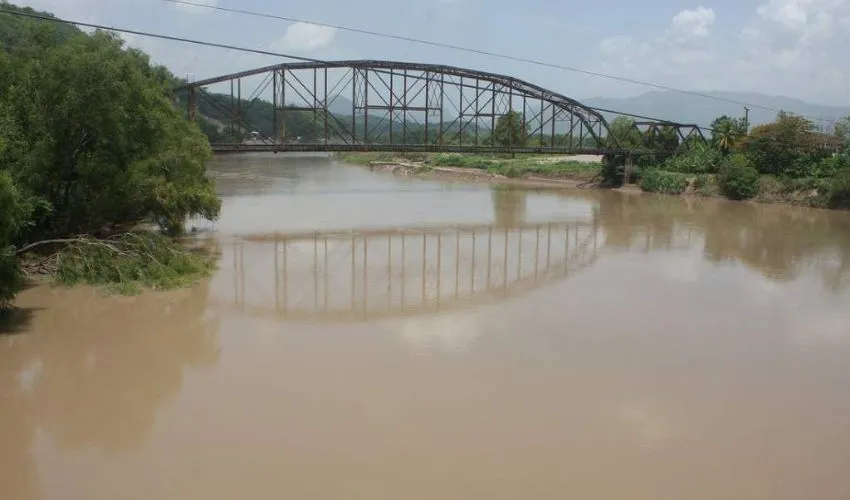
Honduras possessed internal renewable freshwater reserves of 95.93 km³ in 2020, positioning it 66th globally according to FAO AQUASTAT. This water resource endowment is vital for human consumption, municipal supply, intensive irrigation, and industrial processes.
The country is drained by an extensive network of rivers and lake basins, with the most prominent hydrological systems being the Ulúa River, the Choluteca River flowing into the Gulf of Fonseca, the Patuca River in the east, and Lake Yojoa, the nation’s largest natural inland freshwater body.
Average Precipitation and Soils of Honduras
Honduras receives an average annual precipitation of 1,976 mm, placing it 30th globally in precipitation levels as of 2020. As a result of this abundant rainfall, Honduran soils are predominantly humid, loamy, and nutrient-rich in alluvial valleys and volcanic highlands, creating prime conditions for commercial agriculture and agroforestry.
Renewable Electricity Generation and Hydropower in Honduras
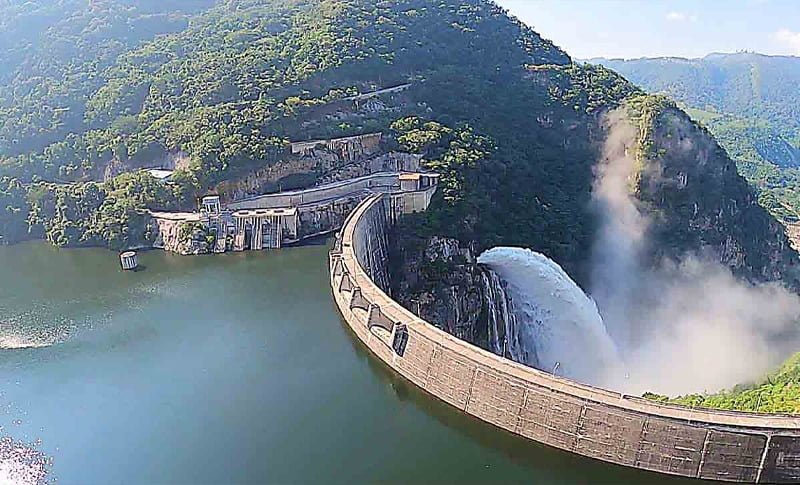
Honduras generated 8,783 GWh of renewable electricity, of which 2,353.6 GWh originated from hydroelectric facilities, reflecting a strategic shift in the national energy resources mix. The flagship hydroelectric installation in the country is the Francisco Morazán Hydroelectric Plant (popularly known as El Cajón), situated in the department of Cortés, which boasts an installed capacity of 300 MW and plays a central stabilizing role in the national power grid.
Forest Resources of Honduras
The primary contiguous forest region of Honduras is concentrated in the eastern and northern sectors, specifically within the expansive wilderness of La Mosquitia and the department of Gracias a Dios.
In 2023, Honduran forest cover encompassed 56.27% of the total national land surface, representing 62,964 km² of woodlands according to World Bank indicators. These forest resources include upland pine forests (principally Pinus caribaea and Pinus oocarpa) as well as lowland tropical rainforests rich in broadleaf timber species.
Environmental Performance and Natural Resource Protection in Honduras
The Environmental Performance Index (EPI 2024, Yale University) awards Honduras a score of 40.2, ranking the country 123rd out of 180 evaluated nations. Protected terrestrial and marine areas officially cover 10.99% of total territory, underscoring formal institutional commitments to biodiversity conservation, though enforcement and territorial control remain challenging.
National Parks of Honduras: The Protected Wealth of Natural Resources
Biodiversity: Animal and Plant Resources of Honduras
Birds of Honduras
Honduras hosts an impressive diversity of avifauna, registering 739 bird species and ranking 38th globally. However, 14 bird species face conservation threats due to habitat fragmentation and deforestation.
These figures underscore the urgency of protecting critical habitats. Among native species, the scarlet macaw (Ara macao) stands as an iconic emblem of Honduran biodiversity and the official national bird.

Fish and Amphibians of Honduras
Honduras records 149 amphibian species, ranking 24th globally. These amphibians include critically endangered tree frogs and salamanders restricted to cloud forest peaks.
In aquatic ecosystems, Honduras documents 1,027 fish species across inland river systems and coastal marine zones, with tilapia supporting widespread commercial aquaculture. Concurrently, 45 fish species are cataloged as threatened.
Mammals of Honduras
Honduras sustains 212 mammal species, including six endemic species restricted to national territory. Prominent mammals include the jaguar (Panthera onca), Baird’s tapir, howler monkeys, and diverse bat and rodent assemblages inhabiting pristine forest zones.
Reptiles of Honduras
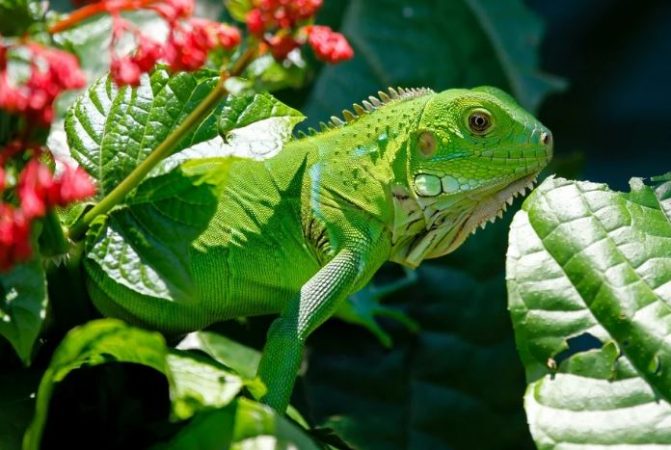
Honduras features a rich reptile biodiversity, with 280 species documented in 2019, placing it 28th globally. The green iguana (Iguana iguana) represents one of the most culturally emblematic and ecologically vital reptiles throughout riverine habitats.
Plants of Honduras
Honduras supports an extraordinary flora of vascular plants, with 7,188 species recorded in 2020, ranking 25th in the world. Among its most prominent trees is the Honduran pine (Pinus oocarpa), the national tree and the foundational species of the country’s commercial forestry sector.
Organizations Protecting or Researching Natural Resources in Honduras
- Secretaría de Recursos Naturales y Ambiente (SERNA): Government ministry formulating national environmental policy, regulatory frameworks, and natural resource stewardship.
- Instituto de Conservación Forestal (ICF): State institute overseeing forest administration, national protected areas, and wildlife management across Honduras.
- Fundación Hondureña de Ambiente y Desarrollo Vida (Fundación Vida): Leading Honduran non-governmental organization promoting natural resource conservation and sustainable community development.
- Proyecto Aldea Global (PANACAM): Conservation NGO administering and protecting the Cerro Azul Meámbar National Park.
- Fundación Cuero y Salado (FUCSA): Conservation foundation managing the Cuero y Salado Wildlife Refuge along the northern coast.
Coffee Anchors the Honduran Export Economy
Coffee cultivation accounts for approximately 5% of Honduras’s gross domestic product (GDP) and generates more foreign exchange and rural employment than any other single agricultural activity, according to IHCAFE, 2025. Cultivation is concentrated across high-altitude agroecological zones in Ocotepeque, Copán, Lempira, and El Paraíso.
- Coffee exports for the 2024/25 harvest reached 5.36 million 60-kg bags, with 2025/26 forecasts projecting 5.5 million bags (USDA FAS, 2025).
- Leading export destinations in 2024 included the United States (1.33 million bags), Germany (911,000 bags), and Belgium (484,000 bags), according to the USDA FAS, 2025.
- Honduras stands as the largest coffee producer in Central America and the eighth-largest exporter globally (USDA FAS, 2025).
Forest Cover Depletion and Pressures on the Río Plátano Reserve
Honduras lost 1.40 million hectares of tree cover between 2001 and 2023, representing an 18% reduction relative to tree cover in 2000, according to Global Forest Watch, 2024. Humid primary forest declined by 24% over the same timeframe, with 509,000 hectares permanently cleared.
- Shifting agriculture accounts for 74% of tree cover loss, while commodity-driven deforestation represents 25% (Global Forest Watch, 2024).
- The Río Plátano Biosphere Reserve, a UNESCO World Heritage site in La Mosquitia, lost 13% of its primary forest between 2002 and 2020 (Mongabay, 2021).
- Cattle ranching was responsible for approximately 85% of total deforestation within the biosphere reserve between 2016 and 2020 (Mongabay, 2021).
Mesoamerican Biodiversity Faces Threatened Species Pressures
Honduras forms an integral segment of the Mesoamerican Biological Corridor and borders the southern edge of the Mesoamerican Barrier Reef System. The IUCN Red List identified numerous threatened species within Honduran borders, as documented in data compiled by Statista based on IUCN, 2023.
- 216 plant species and 89 fish species are cataloged as threatened (IUCN Red List, via Statista, 2023).
- 36 endemic amphibian species are listed as threatened under IUCN assessments via Statista, 2023.
Protected Areas Cover Dozens of Ecosystems with Management Gaps
Honduras maintains 120 legally gazetted protected areas, according to Protected Planet, 2024. However, only 33 of these areas have formal management effectiveness evaluations, exposing operational and financial constraints within the National System of Protected Areas (SINAPH).
- Among 31 recognized Key Biodiversity Areas, 9 are completely covered by protected designations, 19 are partially covered, and 3 remain entirely unprotected (UNEP-WCMC, 2023).
High Lethality and Violence Against Environmental Defenders
Territorial disputes over land tenure, water rights, and mining concessions have generated acute violence against frontline ecological defenders. Global Witness documented 18 environmental defenders killed in Honduras during 2023, representing the highest per capita murder rate in the world for environmental activism that year, according to Global Witness, 2024.
- In 2024, 5 defenders were killed and 1 disappeared, with four lethal incidents occurring in the department of Colón, according to Global Witness, 2024.
- Victims in 2024 included prominent anti-mining activist Juan López, who championed the defense of the Guapinol and San Pedro rivers (Global Witness, 2024).
Frequently Asked Questions
What is Honduras’s primary natural resource export?
Coffee. The 2024/25 harvest generated US$1.878 billion in foreign exchange, representing approximately 5% of national GDP (IHCAFE, 2025). Honduras ranks as the eighth-largest coffee exporter in the world (USDA FAS, 2025).
How much forest has Honduras lost in recent decades?
Honduras lost 1.40 million hectares of tree cover between 2001 and 2023, an 18% decline compared to forest extent in 2000, according to Global Forest Watch, 2024. Small-scale shifting agriculture and cattle ranching drove 74% and 25% of that loss respectively.
Why is Honduras considered high-risk for environmental defenders?
Resource conflicts surrounding land ownership, hydro-energy projects, and mining operations led to the murder of 18 defenders in 2023 alone—the highest per capita casualty rate globally, according to Global Witness, 2024.
Sources and References Used
- Economic Data by Country – The Global Economy
- Forest Area (km²) – World Bank
- Forest Area (% of Land Area) – World Bank
- AQUASTAT Water and Agriculture Statistics – FAO
- Average Precipitation in Depth (mm) – World Bank
- Environmental Performance Index (EPI 2024) – Yale University
- Bird Species by Country – Mongabay
- Amphibian Species by Country – Mongabay
- Mammal Species by Country – Mongabay
- Endemic Mammal Species by Country – Our World in Data
- Plant Species by Country – Mongabay
- Reptile Species by Country – Mongabay
- Endemic Bird Species by Country – Our World in Data
The FAO reported in 2023 that Honduras stands out as one of Central America’s foremost agricultural producers, particularly in specialty coffee, while maintaining expansive pine forest reserves across its mountainous terrain.
Last updated: August 19, 2026 (Review of official indicators and natural resource technical factsheet)

Leave a Reply