


El Salvador’s natural resources are characterized by fertile volcanic soils, 25.23 km³ of freshwater, and world-class geothermal energy reservoirs that provide 23% of national electricity. The country maintains an average annual precipitation of 1,784 mm, producing 5,984 GWh of renewable power while forest cover occupies roughly 27.53% of its land area. What are the primary natural resources of El Salvador?
El Salvador, located along Central America’s Pacific coast, possesses a distinctive endowment of natural resources essential to its national economy and rural population. From its volcanic mountain slopes and highland crater lakes to its coastal estuaries, the country displays impressive biological resilience despite its high population density.
Table de contenidos
The natural resources of El Salvador feature highly fertile volcanic soils for specialty agroforestry, vital freshwater river networks anchored by the Lempa River, and subterranean geothermal fields that position the nation as a regional pioneer in clean energy.
What natural resources does El Salvador hold, and what role do they play in its development? What is the country’s natural wealth? How much water is available, and how is renewable electricity produced? What wildlife and plant species inhabit El Salvador?
Natural Resources
Natural resources are materials or energy forms provided by the Earth that are indispensable for human society and economic activity. All infrastructure, food systems, and consumer goods depend upon natural resources.
- Renewable resources: resources that naturally regenerate through biogeochemical cycles faster than their rate of consumption, such as solar radiation, wind, hydroelectric flows, volcanic geothermal heat, and agricultural crops.
- Non-renewable resources: finite geological assets that cannot replenish on human timescales once consumed, such as fossil fuels and metallic mineral deposits. Compare both categories in our guide to renewable vs. non-renewable resources.
Examples of the Main Natural Resources of El Salvador
El Salvador in Data: Water and Energy
Key official indicators on freshwater availability, clean electricity, and environmental conservation.
| Renewable freshwater per capita | 2,489 m³ per year2022 |
|---|---|
| Renewable electricity share | 95.6% of total generation2021 |
| Forest cover | 27.5% of territory2023 |
| Protected terrestrial area | 8.3% of territory2025 |
| Total land area | 20,720 km²2023 |
| Threatened species | 143 mammals, birds, fish and plants2022 |
Natural Resources Map of El Salvador by Region
Regional distribution of the nation’s primary agricultural, geothermal, and coastal wealth.
| Resource | Reserves / Production | Source |
|---|---|---|
| Freshwater | 25.23 km³ (2020); 102nd globally | FAO |
| Precipitation | 1,784 mm/year; 36th globally | World Bank |
| Renewable electricity | 5,984 GWh (5 de Noviembre plant, 80 MW) | EIA |
| Forest cover | 27.53% of territory (5,704 km²); 2023 | World Bank 2023 |
| Arable land | 33.0% of territory (6,838 km²) | World Bank |
| Threatened species | 143 species (2022) | World Bank |
Water Resources of El Salvador
El Salvador holds total renewable freshwater reserves of 25.23 km³ (2020), placing it 102nd globally according to FAO AQUASTAT. For comparative insights on international freshwater wealth, explore our guide to water resources.
The Lempa River is the defining hydrological artery of El Salvador, traversing nearly the entire nation and supplying over half of its domestic water consumption and the vast majority of its hydroelectric generation. Other vital systems include the Río Grande de San Miguel, Lake Ilopango (a large volcanic crater lake), and Lake Coatepeque.
Average Rainfall and Soils of El Salvador
El Salvador receives an average annual precipitation of 1,784 mm, ranking 36th in the world for rainfall intensity according to the World Bank. The rainy season (May through October) delivers over 85% of total annual volume.
Due to widespread volcanic activity along the active Pacific Rim, Salvadoran soils are predominantly andosols—rich in mineral ash, highly permeable, and fertile—creating optimal conditions for shade-grown coffee, sugarcane, and basic grains.
Renewable Electricity and Hydropower Production in El Salvador
According to official data from the EIA and national authorities, El Salvador produces 5,984 GWh of renewable electricity annually, with 1,343 GWh supplied by hydropower and substantial contributions from geothermal energy. Flagship installations include the 5 de Noviembre Hydroelectric Complex on the Lempa River, boasting an installed capacity of 80 MW and generating roughly 446 GWh per year. Discover more about sustainable power in our guide to energy resources.

Forest Resources of El Salvador
According to the World Bank, in 2023 forest cover represented 27.53% of El Salvador’s land area, equivalent to 5,704 km², ranking 149th globally. Explore our detailed guide on forest resources.
Historic demographic pressures and agricultural expansion have made El Salvador one of the most deforested countries in continental the Americas. Remaining woodlands consist largely of shade-coffee agroforestry plantations—which provide critical secondary ecological functions—alongside relic cloud forests in the northern mountains and coastal mangroves in the Jiquilisco Bay Biosphere Reserve.
Environmental Performance and Protection of Natural Resources in El Salvador
In the 2024 Environmental Performance Index (EPI) from Yale University, El Salvador obtained a score of 41.6, ranking 116th among 180 evaluated countries. Terrestrial protected areas encompass roughly 8.3% of the national territory, reflecting urgent ongoing efforts to expand biological corridors.
Natural Parks of El Salvador: The Hidden Wealth of Natural Resources
Biodiversity: Animal and Plant Resources of El Salvador
Birds of El Salvador
El Salvador hosts approximately 576 documented bird species. The national bird is the Torogoz (Turquoise-browed Motmot, Eumomota superciliosa), renowned for its iridescent plumage and distinctive racket-tipped tail feathers.

Fish and Amphibians of El Salvador
Freshwater systems shelter roughly 100 fish species, including native mojarras, guapotes, and sea catfish, while Pacific coastal estuaries support vital shrimp and red snapper fisheries. Amphibians exceed 30 species, including tree frogs and salamanders adapted to cloud forests in Montecristo and El Imposible.

Mammals of El Salvador
More than 135 mammal species are documented in El Salvador, predominantly bats and rodents, alongside ocelots, margays, white-tailed deer, and Central American agoutis.
Reptiles of El Salvador
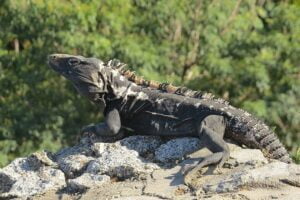
Over 130 reptile species inhabit El Salvador, including sea turtles (Olive Ridley, Hawksbill, and Green turtles nesting on Pacific beaches) and the spiny-tailed iguana (Ctenosaura pectinata).
Plants of El Salvador
The native flora of El Salvador includes over 3,000 vascular plant species. National emblems include the Maquilishuat tree (Tabebuia rosea, national tree) with its pink blossoms, and the Izote flower (Yucca gigantea, national flower).
Organizations Protecting or Studying El Salvador’s Natural Resources
- Ministerio de Medio Ambiente y Recursos Naturales (MARN): Government ministry responsible for environmental policy, climate adaptation, and water governance.
- Fundación SalvaNATURA: Conservation NGO with extensive experience managing national parks such as El Imposible and Montecristo.
- Fondo de Inversión Ambiental de El Salvador (FIAES): Environmental fund financing watershed restoration and coastal marine conservation.
- Fundación Friedrich Ebert / Redes Ambientales: Civil society networks promoting ecological justice and sustainable natural resource management.
- Asociación Territorios Vivos El Salvador (ATVES): Non-profit association conserving native ecosystems, bats, and biodiversity through local community restoration projects.
Geothermal Energy and Low-Carbon Electricity
In 2024, low-carbon power sources generated more than 80% of El Salvador’s electricity, according to Ember, 2024. Hydropower supplied approximately 32%, solar photovoltaics contributed roughly 15%, and geothermal generation accounted for 23%—the highest geothermal share in Central America. Geothermal generation capitalizes on the country’s intense volcanic activity along the volcanic cordillera, operating major steam fields at Ahuachapán and Berlín. Explore our guide to energy resources.
Coffee: The Historic Anchor of Agricultural Exports
Coffee exports generated approximately US$147 million in foreign exchange in 2023, according to the Observatory of Economic Complexity (OEC, 2023). The United States absorbed approximately 44% of total export value. Salvadoran coffee is produced almost exclusively as high-altitude, shade-grown Arabica (Bourbon and Pacamara varieties), providing critical ecological canopy cover in the absence of primary forests.
Reduced Forest Cover and Reforestation Imperatives
Forests covered 27.53% of national land area in 2023, according to World Bank / FAO, 2023, down slightly from 27.7% in 2022. El Salvador remains one of the most deforested countries in continental the Americas, creating acute vulnerability to tropical storms, flash flooding, and topsoil loss.
Environmental Performance and Metallic Mining Legislation
El Salvador achieved a score of 41.6 in the 2024 Environmental Performance Index, ranking 116th out of 180 nations (Yale EPI, 2024). In 2017, El Salvador made international history by becoming the first country in the world to ban metallic mining in order to safeguard its fragile freshwater aquifers. However, in December 2024, the Legislative Assembly repealed that landmark ban and approved a new metallic mining regulatory framework (Mongabay, 2025). Discover our guide to mineral resources.
Frequently Asked Questions
How much electricity does El Salvador generate from geothermal resources?
Geothermal plants generated approximately 23% of El Salvador’s total electricity in 2024—the largest proportion in Central America—leveraging active volcanic steam fields (Ember / Low Carbon Power, 2024).
Is metallic mining still prohibited in El Salvador?
No. The Legislative Assembly repealed the landmark 2017 ban in December 2024 and enacted a new metallic mining regulatory regime (Mongabay, 2025).
Authoritative Information Sources Used
- Wikipedia: Lists of Countries by Mineral Production
- The Global Economy: Economic Data by Country
- World Bank: Forest Area (sq. km) – El Salvador
- World Bank: Forest Area (% of Land Area) – El Salvador
- World Bank: Agricultural Land Area (sq. km) – El Salvador
- Worldometer: Global Coal Reserves by Country
- FAO AQUASTAT: Global Information System on Water and Agriculture
- World Bank: Average Precipitation in Depth (mm per year) – El Salvador
- Yale University: Environmental Performance Index (EPI 2024)
- Our World in Data: Endemic Bird Species by Country
According to official data from the electricity regulator (SIGET) and regional market operators, El Salvador continues to expand solar, wind, and geothermal investments to achieve a resilient, 100% renewable power grid. Explore our complete directory of Natural Resources by Country or read our regional guide to Latin America’s natural resources.
Last updated: June 13, 2026. Data verified against official environmental and economic records.

Leave a Reply