


Ukraine’s natural resources are defined by world-class chernozem black soils, immense iron ore reserves, and historical coal basins that powered Eastern Europe’s heavy industry. What are Ukraine’s most prominent natural resources? The country produced 62 million tonnes of iron ore in 2019 (ranking 7th globally, USGS) and holds 37.9 billion tonnes of coal reserves historically centered in the Donbas. Alongside 5,100 vascular plant species, Ukraine features 139.6 km³ of freshwater reserves and major hydroelectric assets along the Dnieper River cascade.
Ukraine, situated in Eastern Europe, is endowed with an extraordinary variety of strategic natural resources. Across its vast territory lie world-class deposits of iron ore, coal, oil, and natural gas, which historically enabled the development of one of Europe’s most substantial heavy industrial and energy complexes.
Table de contenidos
Beyond minerals, Ukraine possesses exceptionally fertile chernozem soils and remarkable biological diversity, harboring plant and animal communities characteristic of the Eurasian forest-steppe and Carpathian ecosystems. Its natural capital remains foundational to European food security and regional sustainable development.
What are Ukraine’s most strategic natural resources? What mineral wealth does the nation hold, and how does it rank internationally? How much freshwater does it store, what characterizes its energy system, and what wildlife species inhabit its steppes and mountain forests?
To examine Ukraine’s resources in a broader continental perspective, explore our guide to Europe’s natural resources and our global directory of natural resources by country.
Natural Resources
Natural resources are naturally occurring materials and energetic flows provided by the Earth that sustain human civilization and economic production.
- Renewable resources: Replenish through ongoing ecological or meteorological cycles faster than they are consumed, such as river runoff for hydropower, solar radiation, fertile agricultural soils, and living flora and fauna.
- Non-renewable resources: Formed over geological timescales, these finite reserves do not regenerate on human timeframes. Examples include petroleum, gas, coal, and metallic mineral resources.
Examples of Ukraine’s Main Natural Resources
Ukraine Conservation Factsheet
Protected territory share and threatened biodiversity status.
| Protected terrestrial area | 17.1 % of territory2025 |
|---|---|
| Marine protected areas | 21.6 % of waters2025 |
| Threatened species | 85 mammals, birds, fish and plants2022 |
| Forest cover | 16.8 % of territory2023 |
| Annual forest area change | +60 km² per year (2018–2023) |
| Agricultural land area | 71.3 % of territory2023 |
Oil and Natural Gas Resources in Ukraine
In 2021, Ukraine produced 33,235 barrels of crude oil per day, placing it 44th globally. As of 2022, estimated proven oil reserves stood at approximately 395 million barrels (52nd globally). While domestic oil output satisfies only a fraction of consumption, the country holds significant hydrocarbon infrastructure.
Ukraine is a notable regional producer of natural gas, yielding approximately 19 billion cubic meters annually (34th globally), predominantly extracted from onshore reservoirs in the Dnieper-Donets basin (principally Poltava and Kharkiv oblasts) and Western Ukrainian fields.
Historical and Geopolitical Context: Exploration of major offshore natural gas fields across the Black Sea continental shelf and the Sea of Azov was severely disrupted following the 2014 Russian annexation of the Crimean Peninsula, which transferred control of key offshore drilling assets. Furthermore, full-scale military conflict since 2022 resulted in localized damage to pipeline infrastructure and processing facilities, as detailed in monitoring assessments by the International Energy Agency (IEA) and the USGS.
Examples of Ukraine’s Mineral and Metal Resources
Ukraine has historically ranked among the world’s leading coal producers. In 2020, national coal production totaled 24.1 million tonnes (ranking 18th globally), backed by immense proven reserves of 37,891,906,250 tonnes recorded in 2016—representing 3.30% of total global coal reserves. The primary geological heartland for this extraction is the Donets Coal Basin (Donbas) in eastern Ukraine.
Donbas Operational Context: The Donbas basin historically supplied the vast majority of Ukraine’s anthracite and high-grade metallurgical coking coal. However, active hostilities and territorial partition since 2014, compounded by the 2022 Russian invasion, caused widespread flooding of deep mines, power loss, and physical destruction of extraction infrastructure across Donetsk and Luhansk oblasts, severely diminishing active domestic coal output as reported in USGS mineral yearbooks.
In 2019, Ukraine produced 62 million tonnes of iron ore, ranking 7th worldwide according to the USGS. The Kryvyi Rih iron ore basin (Kryvbas) in Dnipropetrovsk Oblast represents one of the largest iron formations on Earth, supplying domestic steel mills and export markets across Central Europe. Learn more in our guide on global mineral resources.
Water Resources of Ukraine
Ukraine holds an estimated renewable potable freshwater reserve of 139.6 km³, ranking 51st globally according to the FAO. The country’s surface hydrology is dominated by the Dnieper (Dnipro) River, which bisects the country from north to south, alongside the Dniester (Dnister), Southern Bug, and Seversky Donets. In northwestern Polesia, Lake Svityaz forms the largest natural karst lake. For an in-depth analysis of global hydrologic systems, consult our guide to water resources.
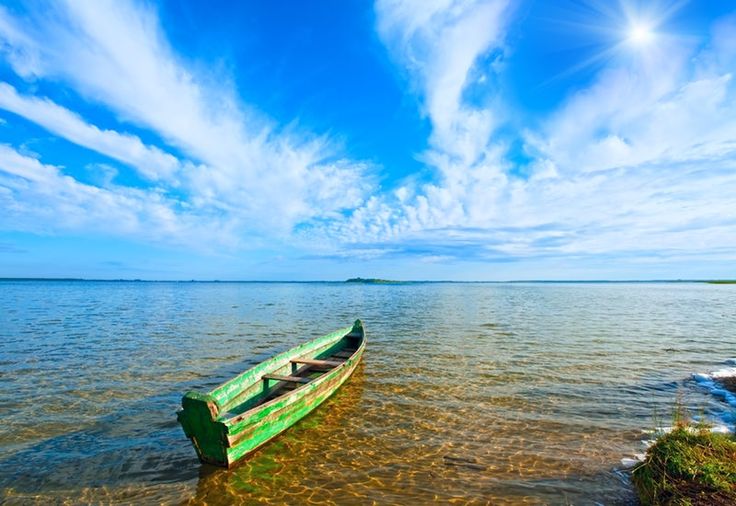
Average Rainfall and Soils of Ukraine
Ukraine receives an average annual precipitation of 565 mm, placing it 117th globally. Rainfall patterns follow a gradient from higher precipitation in the northwest (up to 700 mm) to semi-arid conditions in the southern Black Sea steppes (below 400 mm).
Ukrainian agricultural soils are world-renowned for their high organic content and moisture-holding capacity, forming the cornerstone of national agricultural wealth.
Renewable Electricity and Hydropower Production in Ukraine
Under pre-conflict operational baselines, Ukraine produced approximately 164.57 TWh of electricity, with hydroelectric stations generating 9,304 GWh of clean peaking power. The Dnieper Hydroelectric Station (DniproHES) in Zaporizhzhia—a landmark 1,569 MW facility built in the 1930s—anchors the 4,500 MW Dnieper River cascade. Read our full overview of energy resources.
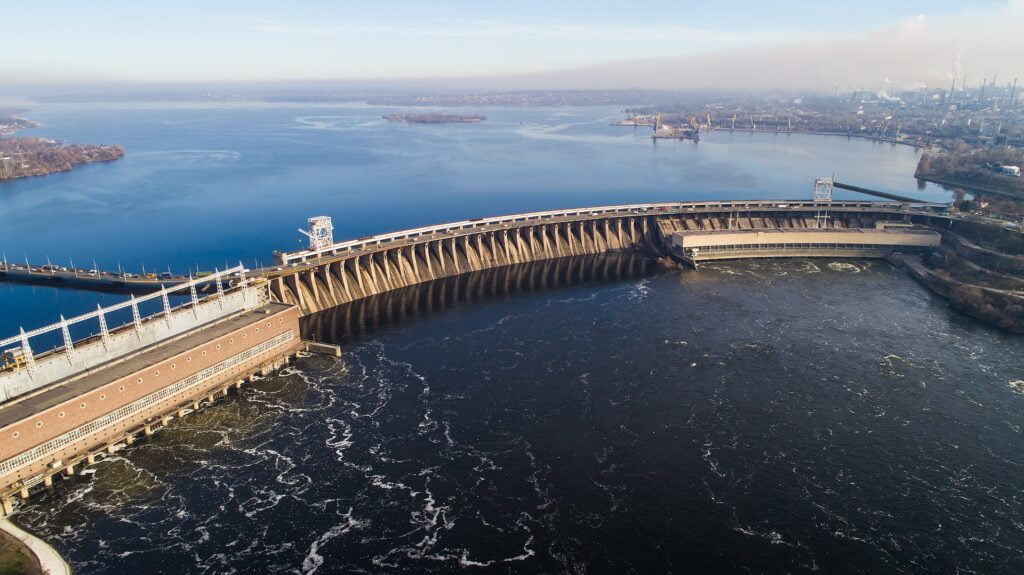
DniproHES and its sister dams along the cascade (Kremenchuk, Kamianske, Kaniv, and Kyiv) provide indispensable frequency control and seasonal flood buffering for the Ukrainian electrical transmission network.
Forest Resources of Ukraine
Ukraine contains 96,900 km² of forested area, representing 16.72% of its land surface as of 2023 (World Bank). The country ranks 50th globally in total forest area. The Ukrainian Carpathian Mountains and northern Polesia harbor over 70% of commercial timber reserves, featuring mixed stands of European beech, oak, Scots pine, and spruce. For global forestry dynamics, explore our report on forest resources.
Environmental Performance and Protection of Ukraine’s Natural Resources
On the 2024 Yale Environmental Performance Index, Ukraine earned a score of 54.6, ranking 41st globally and demonstrating an improvement of 8.3 points over the preceding decade (Yale EPI 2024). Protected terrestrial areas encompass 17.1% of national territory, while marine protected zones cover 21.6% of jurisdictional coastal waters.
Natural Parks of Ukraine: The Hidden Wealth of Natural Resources
Biodiversity: Animal and Plant Resources of Ukraine
Birds of Ukraine
Ukraine hosts 352 recorded bird species according to the latest biodiversity survey, ranking 114th globally. The Black Sea biosphere reserve and Azov coastal wetlands provide essential staging zones for waterfowl.
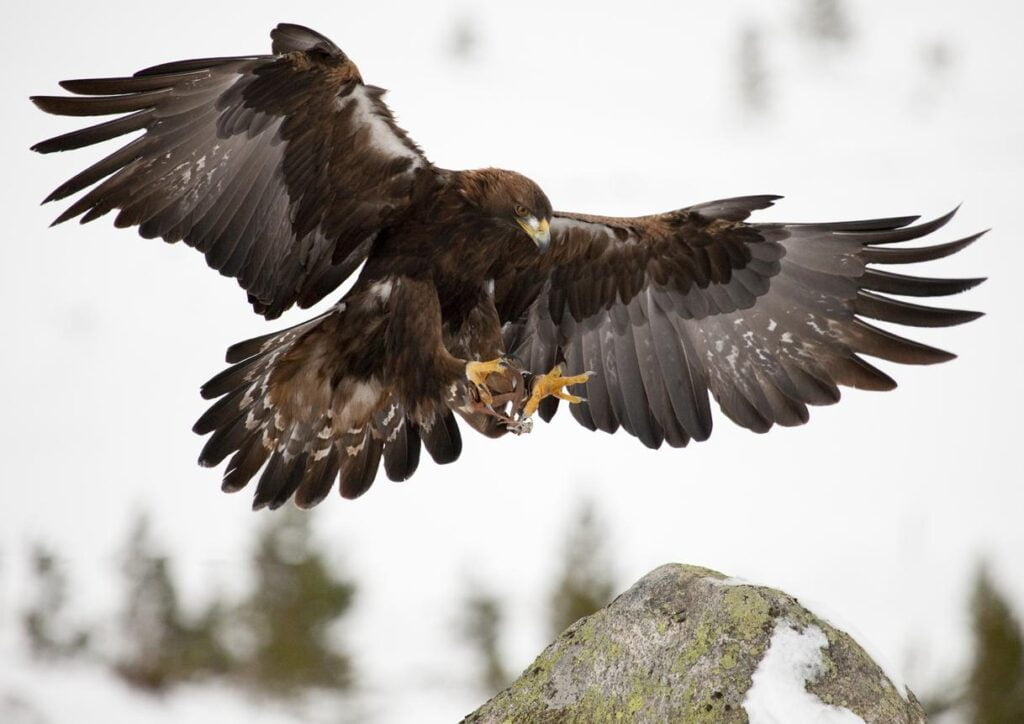
However, 17 bird species face regional extinction threats. The golden eagle (Aquila chrysaetos) and white-tailed sea eagle nest across undisturbed Carpathian crags and river bluffs.
Fish and Amphibians of Ukraine
Ukraine records 22 amphibian species (ranking 76th globally) and 246 fish species (ranking 166th) per official counts. Native fauna includes the European green toad and critically endangered Danube sturgeon (Huso huso), which faces severe habitat pressures from downstream impoundments.
Mammals of Ukraine
Ukraine hosts 112 mammal species, positioning it 70th worldwide. Large carnivores and herbivores include the Eurasian grey wolf (Canis lupus), brown bear, Eurasian lynx, and reintroduced European bison (wisent).
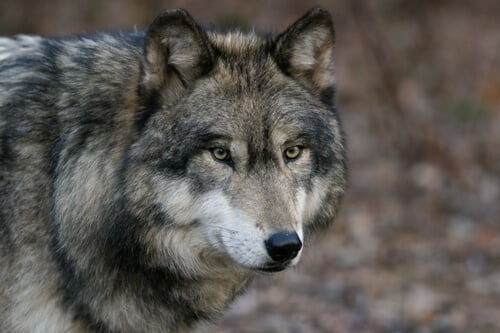
Three endemic mammal species inhabit regional micro-habitats, ranking Ukraine 50th globally for endemic mammalian species.
Reptiles of Ukraine
Ukraine registers 25 reptile species (120th globally) per wildlife counts, led by the European green lizard (Lacerta viridis) and the steppe viper (Vipera renardi), which inhabit warm river valleys and dry prairie steppe.
Plants of Ukraine
Ukraine boasts 5,100 species of vascular plants, placing it 45th globally. Its grasslands feature diverse medicinal flora, notably German chamomile (Matricaria chamomilla), alongside ancient steppic grasses (Stipa feather grass).
Organizations Protecting and Studying Ukraine’s Natural Resources
- Ecoaction (Ekodiya): Prominent civil organization advocating for environmental rights, clean energy, and post-war green reconstruction.
- WWF Ukraine: Conducts conservation programs restoring virgin beech forests, wetlands, and free-flowing rivers in the Carpathians and Danube delta.
- Greenpeace Ukraine: Actively monitors environmental contamination, radiation safety, and green renewable rebuilding.
- OSCE Environmental Monitoring: Documents industrial environmental risks, mine water hazards, and ecosystem damage in conflict-affected regions.
Ukraine contains nearly a quarter of the world’s total chernozem—the most fertile black soil on Earth—which has established the country as an agricultural superpower and the world’s leading exporter of sunflower oil (RESoil Foundation, 2023).
Chernozem: The Natural Breadbasket of Europe
Chernozem, or “black earth,” blankets over 65% of Ukraine’s arable acreage and contains between 4% and 16% rich organic humus. Ukraine hosts nearly 25% of the planet’s total chernozem reserves, a soil formation present across merely 1.8% of global terrestrial surface (RESoil Foundation, 2023).
Global Leader in Sunflower Oil and Agricultural Grains
This deep fertile soil underpins remarkable agricultural productivity. In 2021, Ukraine ranked as the world’s #1 exporter of crude sunflower oil, generating $5.59 billion—more than double that of the next largest exporter (World Bank WITS, 2021)—while supplying massive volumes of corn, wheat, and barley to international food markets.
Strategic Minerals: Titanium, Iron Ore and Critical Raw Materials
Ukraine’s subsoil represents another stratum of strategic value. In 2024, Ukraine remained the 9th largest producer of iron ore globally, holding approximately 2.1% of world extraction (USGS, 2024). Furthermore, Ukraine holds Europe’s largest identified reserves of titanium—roughly 7% of total global reserves (NATO ENSEC COE, 2024)—alongside significant lithium, graphite, and rare metal potential.
Nuclear Energy Matrix
Commercial nuclear generation defines Ukraine’s base-load electrical supply. In 2023, its operating nuclear reactors generated 52 TWh, satisfying 49% of national electricity demand with low-carbon power (World Nuclear Association, 2023), despite the temporary shutdown of the 6,000 MW Zaporizhzhia Nuclear Power Plant under military occupation.
Frequently Asked Questions
Why is Ukrainian soil exceptionally fertile? Ukrainian soils are predominantly chernozem (“black earth”), characterized by a deep humus layer with 4% to 16% organic matter and high moisture retention. Ukraine contains nearly 25% of the world’s total chernozem reserves (RESoil Foundation, 2023).
Where does Ukraine rank in global environmental performance? Ukraine ranked 41st on the 2024 Yale Environmental Performance Index with an overall score of 54.6, registering an improvement of 8.3 points over the preceding decade (Yale EPI, 2024).
Authoritative Data Sources Used
- Annex: Countries by mineral production – Wikipedia
- Economic indicators by country – The Global Economy
- Forest area (km²) – World Bank
- Forest area as a percentage of land – World Bank
- Proven petroleum reserves – The Global Economy
- Global coal reserves – Worldometers
- Water and agricultural statistics – FAO AQUASTAT
- Mean annual precipitation (mm) – World Bank
- Environmental Performance Index (EPI) – Yale University
- Avian species by country – Mongabay
- Amphibian species by country – Mongabay
- Mammalian species by country – Mongabay
- Endemic mammal species by country – Our World in Data
- Vascular plant species by country – Mongabay
- Reptile species by country – Mongabay
- Endemic bird species by country – Our World in Data
The World Bank confirmed in 2023 that Ukraine possesses Europe’s largest continuous reserves of black agricultural soil (chernozem), cementing its status as one of the world’s most critical grain and oilseed exporters.
Last updated: August 19, 2026 (Comprehensive review of official indicators and natural resource balance sheet)

Leave a Reply