

The OECD’s Environmental Outlook to 2050, published in 2012, projects a world population of more than 9 billion, with 70% living in urban areas. Without action, terrestrial biodiversity would shrink by 10%, water demand would grow by 55% and greenhouse gas emissions would rise by 50% by 2050. What will the world’s environment look like in 2050?
In recent decades there has been unprecedented economic development that has made higher living standards possible, and although all this progress has lifted millions out of poverty, it has come at the expense of the environment.If today we already struggle to provide the world’s population with the resources it needs and to guarantee everyone a decent life, supplying the more than 2 billion additional people who will be alive in 2050, while improving everyone’s quality of life, will be a real test of our ability to manage and restore resources.In its report Environmental Outlook to 2050: The Consequences of Inaction, published in March 2012, the OECD presents projections of what life will be like in the years ahead with respect to climate change, biodiversity, water and the health effects of pollution.Among the study’s findings: by 2050 the world’s population will reach more than 9 billion and enjoy higher living standards, and cities are likely to absorb population growth, with 70% of people projected to live in urban areas by 2050. Africa will remain the poorest continent, although it will achieve the world’s highest growth rate between 2030 and 2050. If current trends continue, huge biodiversity losses are also projected, especially in Asia, Europe and Southern Africa. Terrestrial biodiversity is expected to decline by 10% by 2050. Other findings cover the future causes of premature death, expected water demand and projected greenhouse gas emissions.
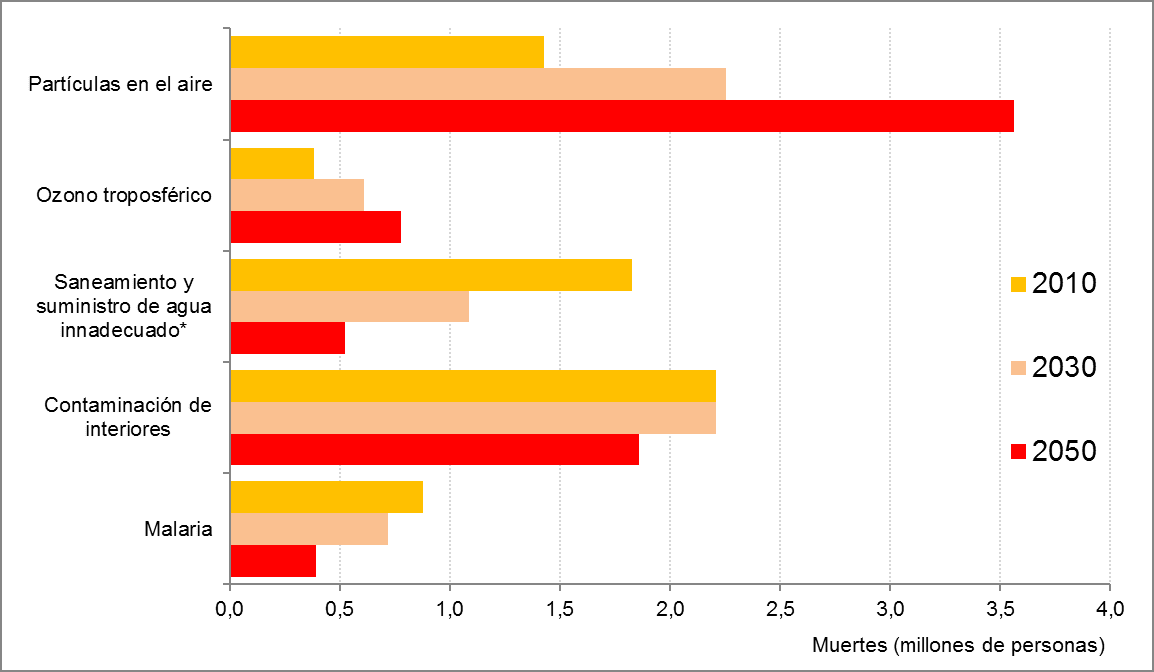
Premature deaths from environmental risks, 2010-2050
Global water demand, 2000 and 2050

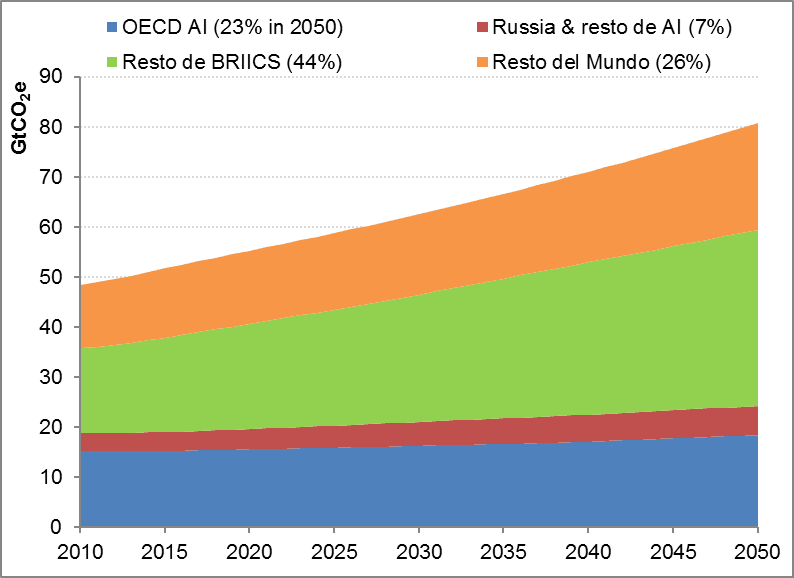
Greenhouse gas emissions by region, 2010-2050
Compare these projections with the UN Sustainable Development Goals toward 2030 here.
Report: Summary in Spanish
Last updated: September 26, 2026
Contents

Leave a Reply