

Sustainable development in Argentina shows clear strengths and clear shortcomings. How does the country measure up? It has great biodiversity, and its protected areas cover 8.8% of its land area, but fossil fuels still generated 58% of its electricity in 2025, and it ranked 81st in the 2024 Environmental Performance Index.
Argentina has an enormous diversity of wildlife and plants thanks to its size and its range of climates, which are shaped by factors as varied as latitude, altitude and soil conditions. This diversity gives the country many native species, such as the maned wolf, the Pampas fox, the tapeti, the huemul, the pudu and the pink fairy armadillo, among others.
Contents
- Plains in the central and northern part of the country, with areas of dense vegetation as well as extensive palm groves and grasslands.
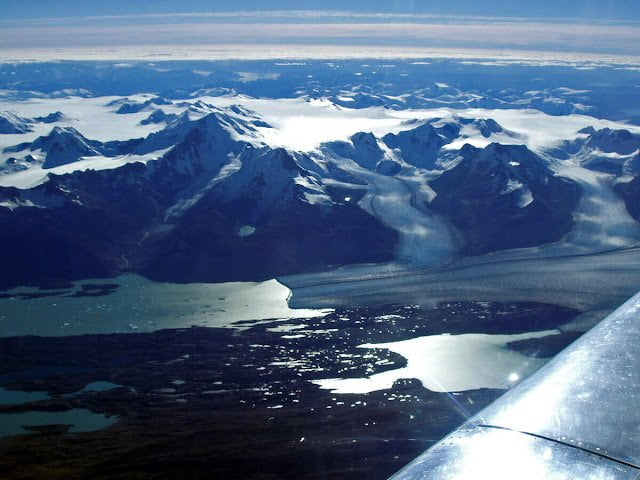
- Plateaus in the south, with tablelands and hill ranges (Patagonia).
- Mountains in the west, with mountainous and hilly terrain and sparse vegetation.
Natural parks of Argentina

Trends in sustainable development in Argentina
To understand how economic development and environmental degradation have unfolded in Argentina in recent years, it helps to look at a few trends and indicators that show how significant the country’s efforts to achieve sustainable development have been.
Per capita carbon dioxide emissions in Argentina and other countries

Electricity from fossil fuels in Argentina and other countries


Some figures on sustainable development in Argentina
- Life expectancy at birth: 77.4 years (UNDP, Human Development Report 2025, 2023 data)
- Education: 18.8 expected years of schooling (UNDP, HDR 2025, 2023 data)
- Income: GNI per capita of 25,876 (2021 PPP US$) (UNDP, HDR 2025, 2023 data)
- Multidimensional poverty rate: 0.4% (UNDP–OPHI Global MPI 2025, 2019/2020 survey, urban areas only)
- Homicide rate: 4.5 per 100,000 people (World Bank, 2023)
- CO2 emissions per capita: 4.0 t (World Bank, 2024)
- Forest area: 10.3% of land area (World Bank, 2023)
- Renewable energy consumption: 9.2% of total energy consumption (World Bank, 2021)
Argentina’s Environmental Performance Index
Human Development Index (HDI) of Argentina and other countries

Ecological footprint and biocapacity per person in Argentina

According to Global Footprint Network data as of 2017, the individual ecological footprint of Argentines had remained stable over the previous decades, while the country’s biocapacity per person had declined considerably.
Broadly speaking, then, given the country’s large biocapacity, its economic activities can be considered sustainable, at least in the short term.
Argentina’s ecological footprint compared with other countries in the region

The ecological footprint measures how much biologically productive land and water area an individual or population needs to produce the resources it consumes and absorb the waste it generates. It is measured in global hectares (gha).
After Chile, Argentina is one of the Latin American countries with the largest ecological footprint.
Sources:
Global Footprint Network
Google Public Data
HDI
Environmental Performance Index
Last updated: September 26, 2026

Leave a Reply